+1 470-260-7028
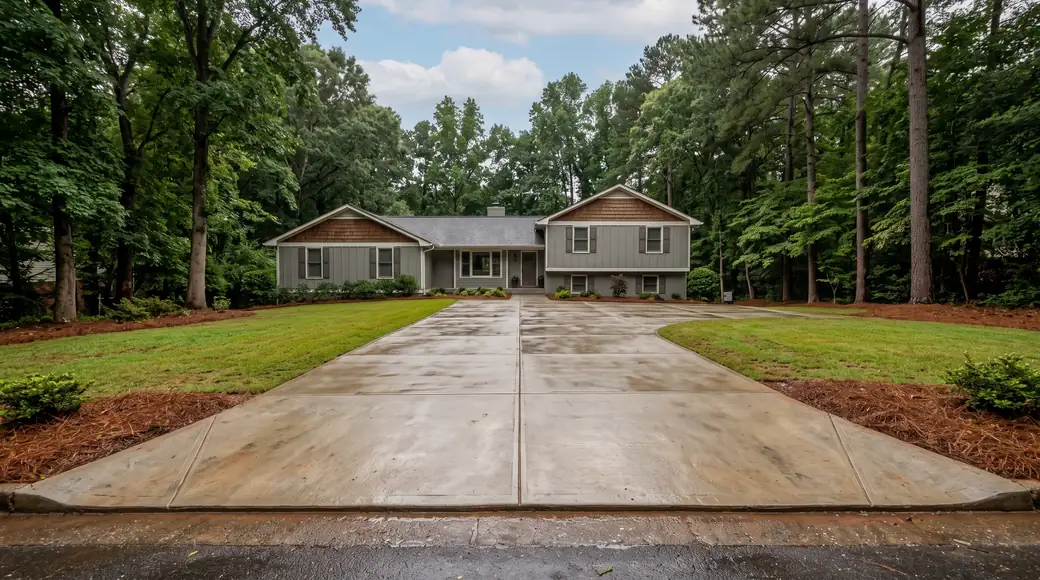
Wide view of finished concrete flatwork across the front of a home at a grey split-level home in Alpharetta, GA, after a rain shower.

Colored Concrete in Alpharetta, GA

We are a concrete contractor in Alpharetta, and colored concrete makes up a good share of what we pour: driveways, patios, pool decks, and the front sidewalk that carries people from the curb to the door. Color is usually the reason someone calls us instead of a plain gray flatwork crew. They have a brick they want a patio to sit beside, or a rear slab that reads cold against the house, or stamped concrete they saw somewhere and want poured right on their own lot.

Alpharetta has 66,855 people and a median home built in 1996, which means a lot of the original flatwork here has been in the ground a long while and is starting to show it. At a median home value of $605,700, owners here replace a bad slab rather than patch it. That is most of the color work we do: a driveway that cracked and stained, a patio poured too thin for what gets set on it, a front walk that settled at the joint. Replacement fills more of our schedule than new construction.

Color is the last thing that goes on and the first thing anybody judges, but it sits on top of ordinary concrete work and cannot rescue a bad slab. The base, the thickness, the rebar or wire mesh, the joint layout: all of it gets the same attention we would give a plain gray driveway. None of that shows once the pour is finished, which is exactly why it gets skipped. Integral color, exposed aggregate, stamped: we are straight about which finishes hold up under tires and which belong on a patio. Call for a free estimate.

Call +1 470-260-7028

Get a FREE Quote

Colored Concrete: What the Work Covers

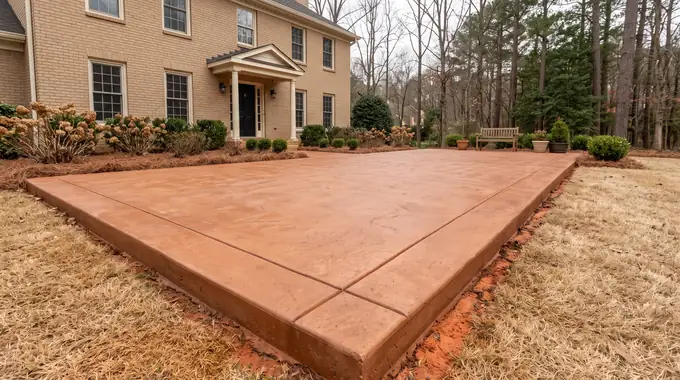
Concrete patio in terracotta integral colour running full depth at a tan-brick colonial in Alpharetta, GA, under an overcast sky.

Integral color concrete

Integral color is pigment mixed into the concrete at the plant, so the slab is the same shade all the way through. A chip or a spall shows color underneath instead of gray. We order it by dose per cubic yard and keep the mix, the water and the finishing consistent across every truck, because a wet load or a hard troweling darkens a panel and that difference stays visible.
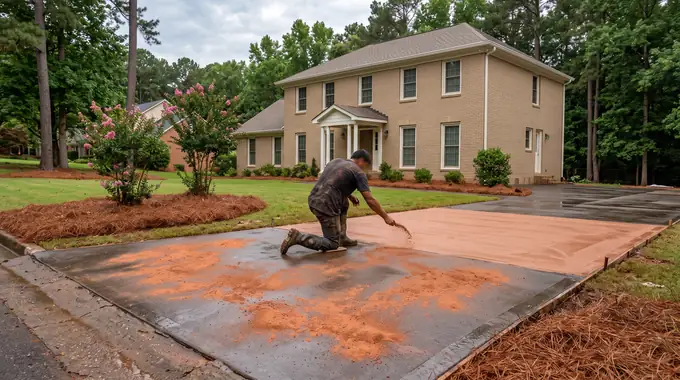
Dry-shake colour hardener being broadcast onto fresh concrete at a tan-brick colonial in Alpharetta, GA, after a rain shower.

Concrete color

Concrete color comes from three routes: integral pigment, dry-shake hardener broadcast on the surface, and stains applied after cure. Hardeners give the deepest tones and a tougher wearing surface, which matters on a driveway. Stains sit shallowest and fade fastest in sun. Curing method changes the result too, so we cure the whole pour the same way and hold back on sealer until the slab has dried out.

What Alpharetta Properties Need From Colored Concrete

Colored concrete in this part of metro Atlanta usually goes down next to a house that has been standing a good while. The median build year in Alpharetta is 1996, so most of what we pour replaces original flatwork instead of going in with new construction. Gray reads flat beside a house that has had time to settle into its finishes. Color lets the slab sit with the house rather than against it. That is most of why people call us. Buff, tan and charcoal cover most of it.

Most of that work is replacement, so we are working around a finished yard and a household that needs the driveway back. We stage the truck path to keep weight off irrigation lines and cut the old slab out in sections rather than all at once. A Roswell patio behind a fenced yard is a different day than an open driveway with room to turn a truck around. We walk the site first and plan the pour around what the access allows.

What goes wrong with color rarely shows on pour day. It shows months later. Integral color ordered short on one truck leaves a slab that changes tone partway across, and nothing corrects it after the fact. Efflorescence hazes a dark patio pale. Sealer rolled over concrete that has not dried out clouds and peels. Repairs are the hard part: a patch in colored concrete never matches, so a cracked section usually means replacing the whole panel rather than filling it. Most of the colored work we tear out failed for one of those reasons.

Doing it right is mostly ordering and prep, which happen before anyone sees color. We order the full yardage integral from one supplier so every truck carries the same batch, compact the subgrade, and set rebar or wire mesh so the slab holds its plane. Joints go in where we want the cracks to land. Sealer waits until the concrete has dried out, and it gets renewed on a schedule. Call for a free estimate on colored driveways, patios and sidewalks.

How a Colored Concrete Job Runs in Alpharetta

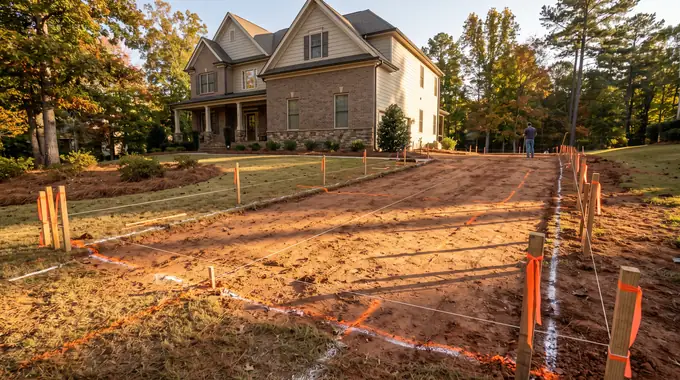
String lines and grade stakes laid out across a yard before a pour at a brick-and-siding two-story home in Alpharetta, GA, in late afternoon light.

Step 1: Site Evaluation

We walk the area with you and look at what the concrete has to sit on. Drainage direction, tree roots, how far the slab runs from the foundation, whether trucks can reach the pour. On driveways we check the approach grade and where water leaves the property. We measure square footage, note thickness needed, and talk through color while standing on the spot it goes.

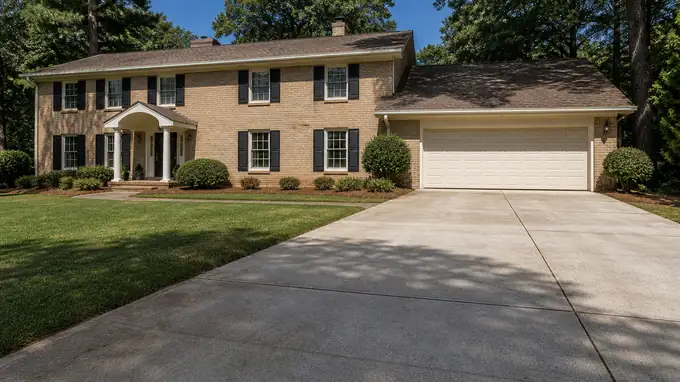
Settled garage approach slab the estimate would price to replace at a tan-brick colonial in Alpharetta, GA, in clear late-morning sun.

Step 2: Written Estimate and Permits

You get the scope in writing: square footage, slab thickness, reinforcement, color method, finish, joint layout, and what we haul away. Anything that could change once we open the ground gets named up front rather than buried. Permitting is handled before demolition starts, and we schedule the pour around inspection timing so nothing sits half-finished in your driveway.

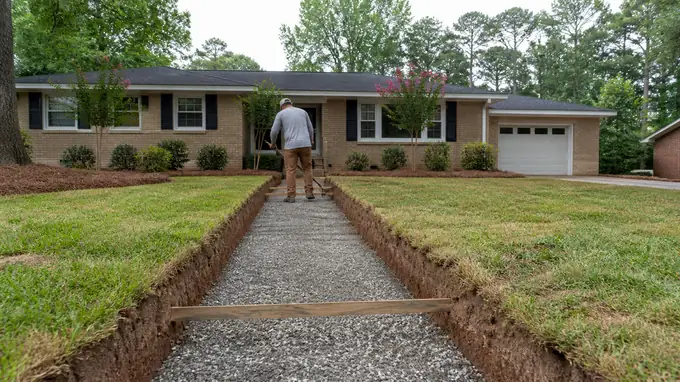
Front walkway removed and the trench squared out for a new pour at a buff-brick ranch home in Alpharetta, GA, under an overcast sky.

Step 3: Demolition and Base Prep

Old concrete comes out in sections and leaves the site. Then the real work starts: cutting subgrade to depth, removing soft spots and organic material, and bringing in graded aggregate base compacted in lifts. Most failed slabs we replace failed here, not in the mix. Base that was never compacted settles, the slab loses support, and it cracks in a line across the middle.

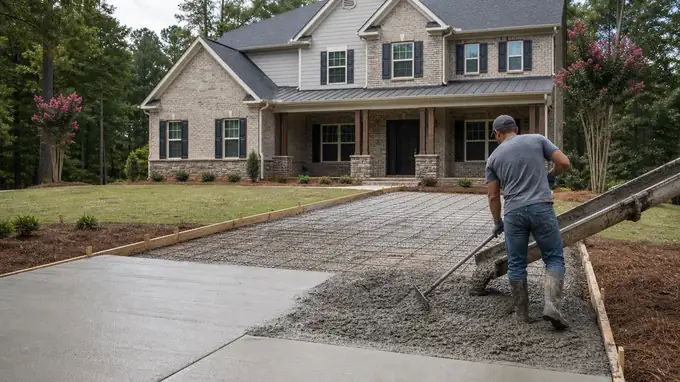
Concrete coming down the chute into formed driveway bays at a brick-and-siding two-story home in Alpharetta, GA, after a rain shower.

Step 4: Forming, Steel and the Pour

Forms go in staked and strung to a grade that moves water away from the house. Reinforcement depends on the slab: wire mesh on sidewalks, rebar on a concrete driveway carrying vehicle loads, tied and chaired so the steel sits mid-slab instead of on the dirt. Concrete installation runs continuously once the truck arrives, screeded and floated in sequence so no section sets ahead of the rest.

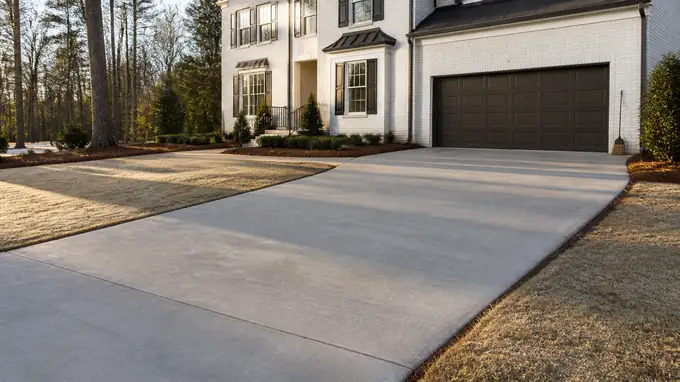
Cured driveway swept clean with the forms stripped away at a painted-white-brick two-story home in Alpharetta, GA, in early morning light.

Step 5: Finishing, Curing and Final Walkthrough

Timing is everything at this stage. Color and release get worked while the surface is right, then stamping, texturing or exposed aggregate wash depending on what you chose. Control joints get cut early so cracking happens where we put it. Curing compound goes on, and we tell you plainly how long to stay off it: foot traffic on sidewalks first, vehicles on driveways later. We walk the finished work with you.

What Decides the Price of Colored Concrete

A colored concrete estimate comes down to a few things you can walk outside and check yourself. Two driveways the same size can land far apart, and the difference is usually under the slab.

What changes the priceWhich wayWhy
Old slab already in the groundcosts moreBreakout, loading and haul-off come before any forming. With a median build year of 1996 in Alpharetta, much of what we pull out is original.
How close the truck can parkcosts less when closeA chute reaching the forms is the cheap way to move concrete. Wheelbarrowing or pumping around a house adds crew and hours.
Thickness the use calls forcosts moreA patio carries people, a driveway carries vehicles, and the extra depth is yardage on every load.
Rebar instead of wire meshcosts moreMesh suits light flatwork. Tied rebar sitting on chairs is more steel and more layout time.
What the subgrade is doingcosts more when softSoft or filled ground gets compacted or brought up with stone, or the slab will not sit flat.
Roots, irrigation and buried linescosts moreRoots under an edge and shallow lines mean hand digging and rerouting instead of running a machine.
The shape you are pouringcosts more with curvesStraight forms move fast. Curves, steps and a border in a second color are slower to form and slower to finish.
Which way water leaves the sitecosts more when it fights youGround falling toward the house needs grade built into the pour, and sometimes a drain.

Compare bids on what they specify, not on the bottom line. Thickness, mesh or rebar, whether haul-off and base stone are included, joint spacing, and whether the color is integral through the load or a shake-on hardener. Blanks in those lines mean you are not comparing the same job.

Colored Concrete: Questions We Are Asked Most

Can colored concrete on a Alpharetta property be recolored later?

Yes, within limits. Integral color runs through the slab and cannot be changed, but the surface can take a stain, a dye or a tinted overlay. Stains soak in and read as part of the concrete. Overlays sit on top and need upkeep. Neither one returns the slab to raw gray. We talk through what a recolor holds up to before you commit to a shade.

Can you match color to existing concrete on my Alpharetta property?

Close, not exact. Cured concrete shifts as it ages, and the median home here went up around 1996, so the slab you want matched has had decades of weather and traffic on it. We mix samples, cure them, and set them against the old work in daylight. A new pour beside old concrete reads a little different at first, then closes in.

How consistent is the color across a large Alpharetta pour?

Consistent if the pour is planned as one unit. Color varies with the batch, the water content, finishing time and how fast the slab dries, so we order pigment from one supplier, hold the mix tight and finish in a steady rotation. Large jobs go in a single day where the layout allows. Where a cold joint is unavoidable, we put it on a control line.

Will colored concrete fade in Georgia sun?

No, not the way paint fades. Pigment made for concrete is mineral oxide, and it holds under UV far better than dye or paint. What shows up over the years is a gradual softening, plus efflorescence and dirt that read as fading until the slab is cleaned. Sealer slows all of it. Deep colors show change sooner than earth tones do.

Does colored concrete cost more per square foot around Alpharetta?

Yes. Pigment is an added material, and colored flatwork takes longer to finish because the surface has to come out even. Sealing is part of the job rather than an option. We work the same way in Alpharetta, Milton, Roswell, Johns Creek and Chamblee, and elsewhere in metro Atlanta. The figures come to you written out line by line. Call for a free estimate.

Is color mixed through or added on top in Alpharetta work?

Both, depending on the slab. Integral color is batched into the truck and runs the full depth, so chips and saw cuts stay the same shade. Cast-on hardener sits in the top layer, gives stronger color and leaves a harder wearing surface. Stamped work often adds a release agent for a second tone. We choose based on traffic and how the slab gets finished.

Get a Free Estimate

Get a FREE Quote

Tap to call +1 470-260-7028