
+1 470-260-7028
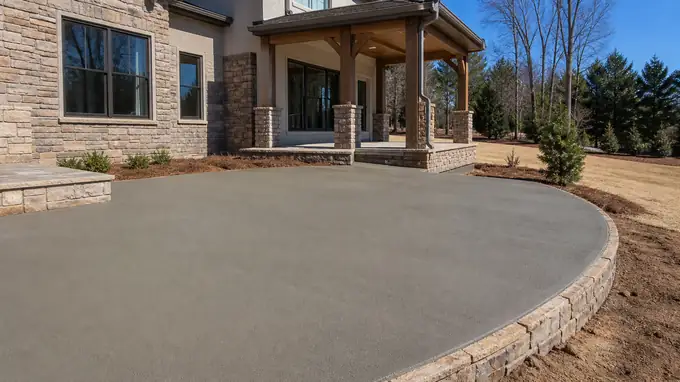
concrete repair and resurfacing completed by a local contractor at a stacked-stone and stucco home in Alpharetta, GA, in early morning light.

Concrete Repair And Resurfacing in Alpharetta, GA

Most concrete in Alpharetta went in alongside the house it serves, and the median home here was built in 1996. That puts a lot of driveways, patios and walkways at the age where wear starts to show. The slab itself usually has years left in it. What you see is the surface giving up: hairline cracks that have opened, scaling where the top layer has flaked off, a section that has dropped at a joint. We repair that damage and resurface worn concrete so the property has a sound, even surface again without tearing it all out.

Water does most of the damage. Alpharetta gets about 50 inches of rain a year, and on ground this hilly it moves fast and finds the edges of a slab. Once it gets underneath, it carries fill away and the concrete loses support. A new surface laid over that problem only hides it for a while. So before any material goes down, we check the base, look at where the water runs, and test the soil on your site. It changes from one block to the next, even where it drains well.

Getting it right mostly means being honest about what a slab can take. A resurface bonds to sound concrete. It will not hold on a slab that is broken through, still settling, or showing rusted reinforcement. When we find structural damage like that, we tell you replacement is the better use of your money, and we explain why. When repair is the right call, we match the finish to what you already have, stamped and decorative surfaces included, as closely as the old concrete allows. Call for a free estimate.

Call +1 470-260-7028

Get a FREE Quote

Our Concrete Repair And Resurfacing Work in Alpharetta

concrete slab installation completed by a local contractor at a stacked-stone and stucco home in Alpharetta, GA, in clear late-morning sun.

Concrete Slab Installation Cost

What sets the number on a slab is mostly what sits under it and around it. Fulton County is hilly, so a sloped lot can mean cutting, filling and compacting before any forms go up. Thickness, the rebar grid or wire mesh, the finish, and how close the truck can get all move it too. We walk the property and test the ground first, and a free estimate breaks each of those pieces out.


concrete driveway installation completed by a local contractor at a charcoal farmhouse-modern home in Alpharetta, GA, in late afternoon light.

Concrete Driveway Installation

A driveway fails from the bottom up. We dig out soft material, lay and compact a crushed stone base, and set rebar on chairs so it sits in the middle of the slab instead of on the dirt. Control joints get cut the same day, spaced to the slab width. With about 50 inches of rain a year, we pitch the surface to shed water away from the garage and finish it with a broom texture that holds traction.

concrete flooring installation completed by a local contractor at a painted-white-brick two-story home in Alpharetta, GA, in early morning light.

Concrete Flooring Installation

Inside a garage, basement or workshop, a slab has to stay dry and stay flat. We lay a vapor barrier under it so ground moisture stays out of whatever goes on top, then trowel the surface smooth enough for epoxy, tile or a sealed polished finish. Where a floor will carry cars or equipment, we thicken the section and add reinforcement. Joints are laid out so the cracks concrete always wants to make land where we planned them.

concrete slab repair completed by a local contractor at a red-brick ranch home in Alpharetta, GA, at blue hour.

Concrete Slab Repair

Cracking, sinking and flaking are three different problems, and each one needs its own fix. A hairline shrinkage crack gets routed and sealed. A slab that has dropped usually sits on a washed-out base, so we find where the water is coming from before we lift or replace anything. Scaling surfaces get ground down and resurfaced with a polymer-modified overlay. In Alpharetta, where the median home was built in 1996, a lot of original flatwork is showing its age.

What Makes Alpharetta Craftsman Concrete's Concrete Work Different

We start with the slab under the surface, not the surface itself. A resurfacing coat is only as good as the concrete it bonds to, so we sound out hollow spots, check whether cracks are still moving, and find out if the base has settled before we talk about any finish. The median Alpharetta home was built in 1996, and many driveways and patios here have carried decades of cars and weather. That deserves a real look.

Fulton County is hilly, with about 241 feet of local relief within a few miles, though it changes from block to block. So we grade and test every site on its own. Rion soil drains well across much of the county, but not everywhere, and we never assume it does on your lot. With around 50 inches of rain a year, water has to leave a slab instead of sitting on it. We set slope and drainage before any new material goes down.

Most failed repairs share one cause: a decorative or stamped overlay laid over a slab that was still moving. It looks sharp for a season. Then the old cracks come straight back through. We would rather tell you a section needs to come out and be replaced with proper reinforcement than sell you a coating that hides the problem for a while. Sometimes the honest answer is a smaller repair than you expected. Call for a free estimate and ask which one your slab needs.

How a Concrete Repair And Resurfacing Job Runs in Alpharetta

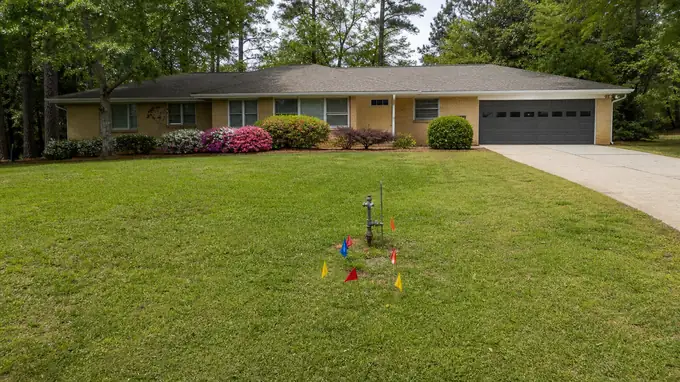
Utility flags mark buried lines before digging starts. at a buff-brick ranch home in Alpharetta, GA, under bright midday cloud.

Step 1: Site Assessment

We start by working out why the concrete failed, because resurfacing over an active problem only hides it for a season. We tap for hollow spots, measure where slabs have dropped or heaved, and trace cracks back to roots, downspouts or a soft base. Fulton County sees about 60" of rain a year, so we watch where water sheds and where it sits. Some slabs take an overlay. Some need to come out.

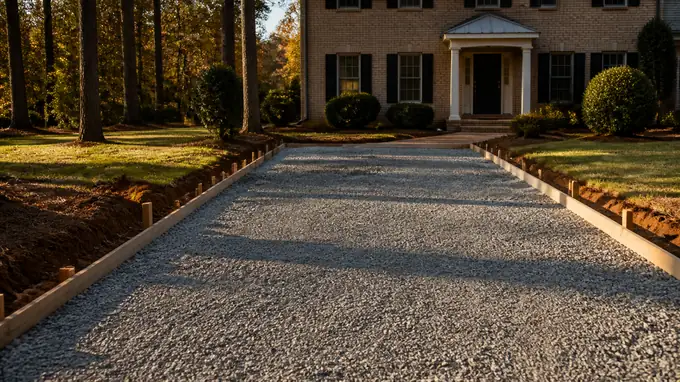
Crushed stone base is raked level inside driveway forms. at a tan-brick colonial in Alpharetta, GA, in late afternoon light.

Step 2: Site Preparation

Resurfacing lives or dies on the bond, so prep takes longer than anything else. We pressure wash, then grind or shot-blast the surface to open it up, stripping old sealer and paint that would keep new material from gripping. Oil stains get degreased, not covered. Cracks are routed and filled. Where a section has to be replaced, we saw-cut it clean, break it out, and compact the base before anything new goes down.

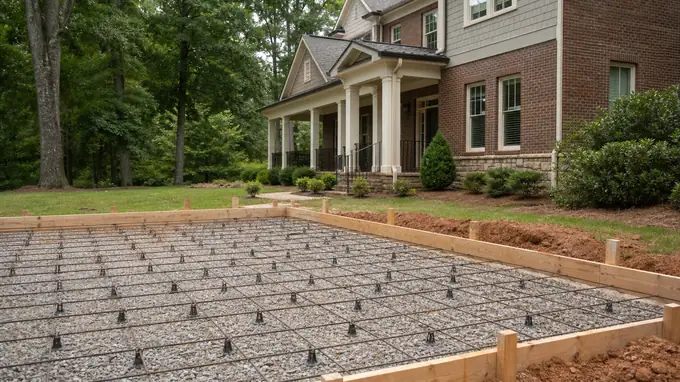
A worker ties rebar into a grid before a residential pour. at a brick-and-siding two-story home in Alpharetta, GA, under bright midday cloud.

Step 3: Forming & Reinforcement

Any section we replace needs forms and steel. We set forms to the grade of the surrounding slab, then drill and epoxy dowels into the old concrete so the new pour ties in instead of settling on its own. Rebar or wire mesh sits up on chairs, in the middle of the slab where it does its job, not lying in the dirt. Much of the county is hilly, so we check slope twice. Water has to leave.

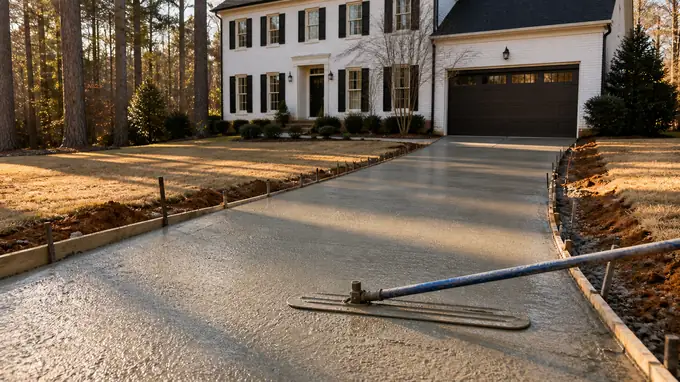
A bull float smooths a residential walkway surface after screeding. at a painted-white-brick two-story home in Alpharetta, GA, in late afternoon light.

Step 4: Pouring

Ready-mix for replacement sections is ordered to the strength and slump the job calls for, then placed, screeded and bull-floated while it is still workable. Overlays are different: a polymer-modified cement goes onto a primed, damp surface and gets troweled or squeegeed thin and even. We watch the weather closely. Rain ruins a fresh overlay, and a hot, windy afternoon pulls moisture out faster than anyone can work it.

A hand trowel smooths a small patio surface to a hard finish. at a stacked-stone and stucco home in Alpharetta, GA, in clear late-morning sun.

Step 5: Finishing

The finish should match what is already on the property. Driveways and walks usually get a broom finish for grip, pulled in one direction and consistent across old and new sections. Overlays can take a knockdown or trowel texture, or go decorative with stamped patterns, stencils, integral color or stain. Control joints are cut or tooled so the slab cracks where we choose. Edges get rounded so they don't chip.

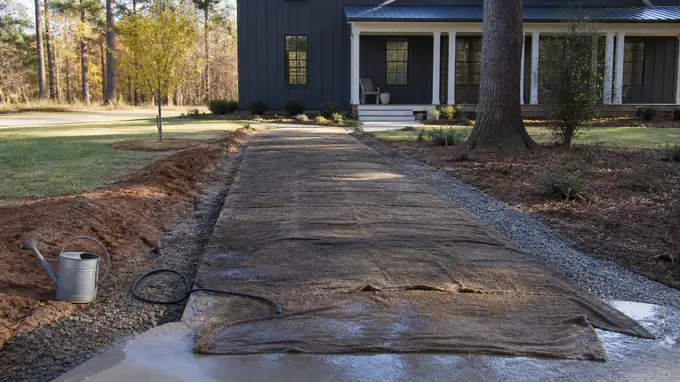
Damp burlap covers a small slab section during curing. at a charcoal farmhouse-modern home in Alpharetta, GA, under low winter sun.

Step 6: Curing

Concrete keeps gaining strength for weeks after it looks done, and how it cures decides how hard the surface ends up. We keep it damp or apply a curing compound so the top doesn't dry out ahead of the rest, which is what causes dusting and scaling later. Foot traffic comes back first. Cars wait longer, and we tell you when it is safe to drive on. That patience pays off for years.

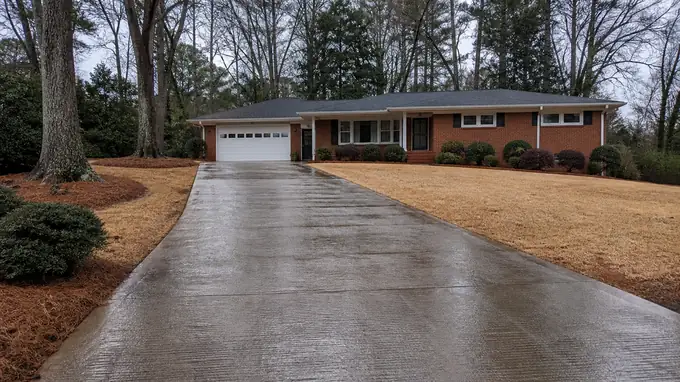
A sprayer applies sealer across a driveway. at a red-brick ranch home in Alpharetta, GA, after a rain shower.

Step 7: Sealing

Sealer goes on once the concrete has cured and dried enough to take it. On most driveways and patios we use a penetrating silane or siloxane sealer, which keeps water and salt out without making the surface slick. Decorative and stamped surfaces usually get an acrylic that deepens the color. Snow is light here, about 2" a year, but one salted icy morning can still pit unsealed concrete. Plan to reseal every few years.

Choosing the Right Concrete System

Repair and resurfacing are not one product. A hairline crack or a chipped corner calls for a patch or a crack fill, matched to the surface around it. A slab that is sound underneath but worn, scaled or stained on top is a good candidate for a resurfacing overlay, a thin bonded layer that gives it a new face. If you want a pattern or texture, a decorative stamped overlay goes down the same way. A slab that has broken apart or dropped gets replaced, because no coating fixes what is failing below it.

The choice comes from the slab, not from a catalogue. Before we recommend anything, we test every site on its own: whether the concrete is still solid and bonded, how it drains, and whether the base has shifted. Fulton County is hilly and sees about 50 inches of rain a year, so how water moves across and under a slab matters as much as how the top looks. The dominant soil is well drained Rion, but it varies from one property to the next. That is why we look rather than assume. The median home in Alpharetta was built in 1996, and many of the driveways and patios we see have had decades of use.

The usual mistake is putting a new surface on a slab that is still moving. An overlay bonds to whatever sits beneath it, so a crack in the base comes straight back through the new finish. Poor preparation does the same damage: skip the grinding and cleaning and the overlay lifts. We would rather tell you a section needs to come out than sell you resurfacing that will not hold. When the slab is sound, resurfacing is a sensible fix. When it is not, reinforcement and a proper pour are the honest answer. Call for a free estimate.

Get a Free Estimate

Get a FREE Quote

Tap to call +1 470-260-7028