+1 470-260-7028
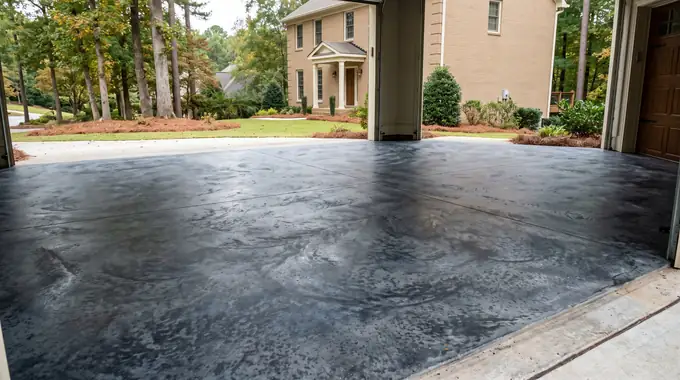
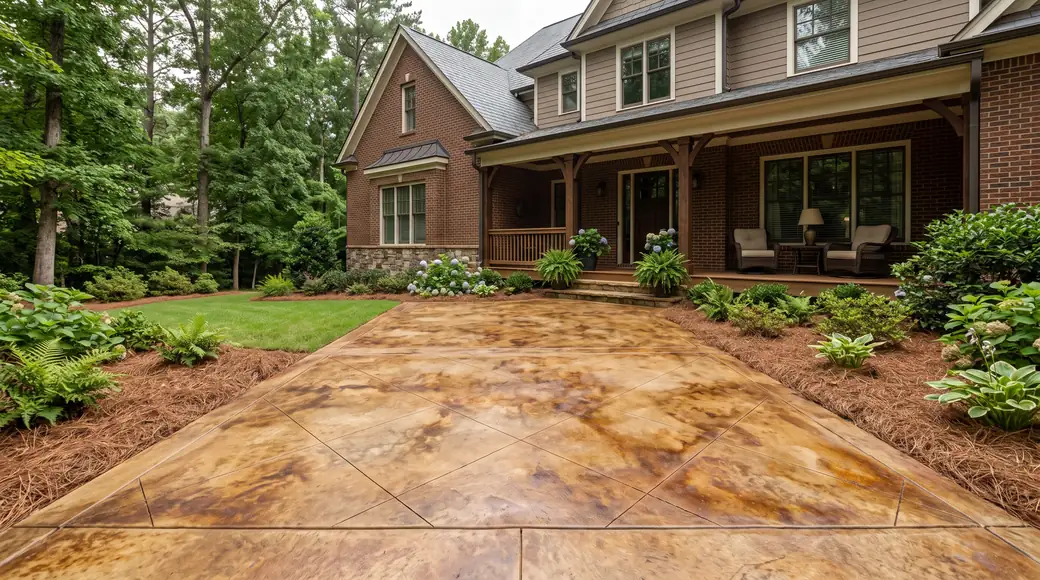
Acid-stained concrete patio in mottled earth tones at a brick-and-siding two-story home in Alpharetta, GA, under an overcast sky.

Stained Decorative Concrete in Alpharetta, GA

We are a concrete contractor based in Alpharetta, Georgia, and we stain, stamp and pour flatwork here and in Milton, Roswell, Johns Creek, Chamblee and the rest of this side of metro Atlanta. Same crew and same work in each of them. Stain is not paint. It is color carried down into the slab, so what you end up looking at is the concrete itself, its trowel marks, its density, the way it took water on the day it was poured. A patio, a front sidewalk, a garage floor: the surface decides more than the color does.

Most of the slabs we stain are already in the ground. The median house in Alpharetta was built in 1996, so much of what we walk up to is flatwork that has been down a while: sealed once, patched twice, worn smooth in the traffic lanes. Old concrete takes color unevenly where oil sat or where a repair went in. We test a corner, we tell you what we see, and we say plainly when a slab is going to read blotchy no matter how carefully it gets worked.

When there is nothing to stain yet, we pour it. A sidewalk, a patio, a driveway, set with rebar or wire mesh and finished for the color that is coming, because a slab troweled hard and closed tight will not take stain the way an open surface does. Stamped concrete and stain land on the same job often enough, a stamped border around a stained field, and we handle both. Plain gray flatwork, exposed aggregate, residential drives and commercial concrete: same shop. Call for a free estimate, and bring questions about the slab you already have.
Call +1 470-260-7028

Get a FREE Quote

Stained Decorative Concrete: What the Work Covers

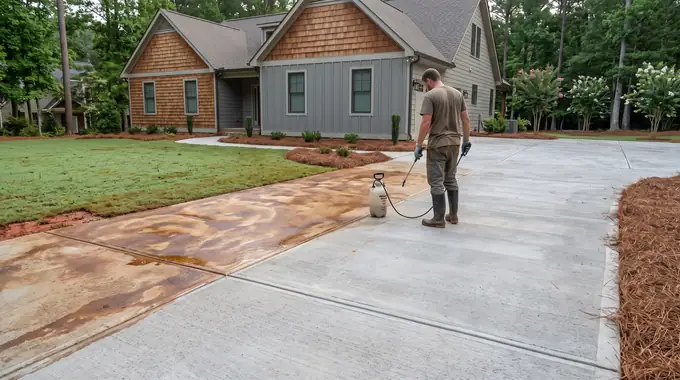
Acid stain being sprayed onto a concrete surface, half-applied at a grey split-level home in Alpharetta, GA, in early morning light.

Concrete staining

Concrete staining colors a slab that already exists, so the work is mostly surface preparation: grinding or etching off old sealer, curing compound, glue and tire marks that would otherwise block the color and surface later as pale blotches. Color reads differently on a hand troweled patio than on a broom finished concrete sidewalk, and any old patch or hairline crack will show through the finish. Sealer goes on last, and it carries the wear.

Acid-stained concrete floor in charcoal and blue-grey marbled tones at a tan-brick colonial in Alpharetta, GA, under an overcast sky.

Acid stained concrete

Acid stained concrete is a chemical reaction rather than a coating: metallic salts bite into the lime in the slab and leave mottled, variegated color that cannot peel or flake off. Control is the tradeoff, because the result shifts with mix design, moisture, rebar shadow and how hard the surface was troweled. We neutralize and rinse before sealing. As a concrete contractor we stain new flatwork, stamped concrete, existing sidewalk and patio slabs, and commercial concrete floors.

What Alpharetta Properties Need From Stained Decorative Concrete

Stained decorative concrete is color worked into a slab that already exists, not a new pour, so the age of the concrete matters more than the color. Around Alpharetta the median home went up in 1996, which means the driveways, walks and patios that came with those houses are about thirty years old. Three decades of sun, tires and pressure washing wear the top of a slab, not the slab. Color reads what is underneath rather than hiding it, which is why the same product looks different on two driveways a street apart.

Older slabs ask more of us up front, so we look at what is on the concrete before we look at color: sealer, paint, mortar smears from a later addition, patches where a post or a rail came out. Hard troweled surfaces take stain differently than a broom finish, and a 1996 patio in Roswell may carry both if it was extended at some point. None of that shows in a photograph. Test areas on the slab settle the question before anyone commits to a finish.

Problems on flatwork this age almost always trace back to prep: stain laid over an old sealer flakes within a season, and paint hides worse trouble than it shows. Cracks that move keep moving, and color does not bridge them, so we treat them as cracks first and as a surface second. Sprinkler overspray leaves a mineral haze that ghosts through the finish, and efflorescence rising through a slab keeps rising after the stain is down. All of it is visible before anyone starts.

Doing this right takes time more than anything else, and stripping or grinding a concrete driveway takes longer than staining it. Rushing that step is the one shortcut that always shows, and neutralizing and sealing each want a day of their own. Some slabs are better served by a resurfacing or an exposed aggregate overlay, and we say so when that is the case. We work across metro Atlanta, and nearly everything we stain is concrete somebody already owns, so call for a free estimate on the slab you have.

How a Stained Decorative Concrete Job Runs in Alpharetta

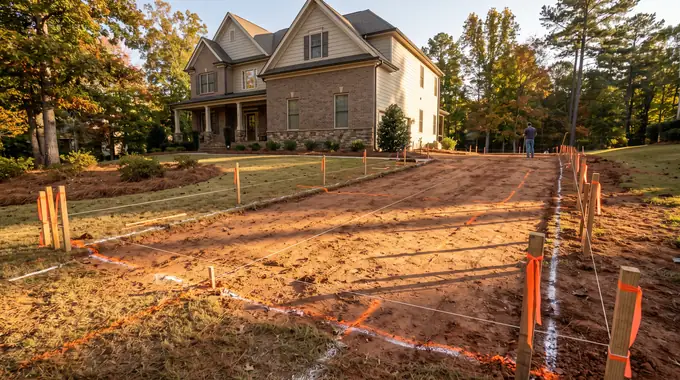
String lines and grade stakes laid out across a yard before a pour at a brick-and-siding two-story home in Alpharetta, GA, in late afternoon light.

Step 1: Site Evaluation

We walk the area with you and look at what is already there. Slope, drainage, where water sits after rain, how the existing slab has cracked or settled. We check thickness at a broken edge, look for tree roots, and note where a truck can reach. Stain reacts to what is underneath, so on an existing pour we test a small patch to see how the concrete takes color before anyone commits.

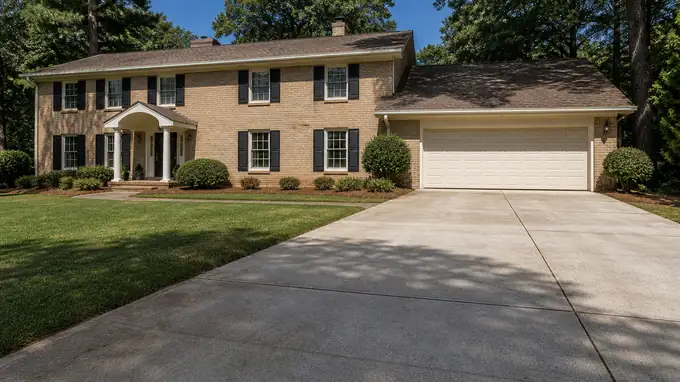
Settled garage approach slab the estimate would price to replace at a tan-brick colonial in Alpharetta, GA, in clear late-morning sun.

Step 2: Written Estimate and Permits

You get the scope in writing: square footage, slab thickness, reinforcement, the stain color and sealer, and what we haul away. Anything we cannot see until demolition starts gets named as an unknown rather than buried in a number. We handle permit paperwork where the job needs it, and we schedule around inspection so the base and steel are open when someone comes to look.

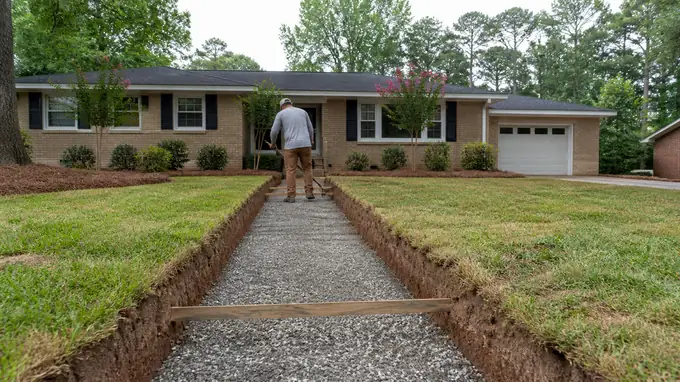
Front walkway removed and the trench squared out for a new pour at a buff-brick ranch home in Alpharetta, GA, under an overcast sky.

Step 3: Demolition and Base Prep

Old concrete comes out in pieces and goes on a truck, not into a pile in the yard. Under it we want compacted graded aggregate base, usually four inches, run with a plate compactor in lifts. Soft spots get dug out and replaced. Most failed driveways we tear up failed here first: poured on loose fill that settled, and the slab cracked following the void underneath.

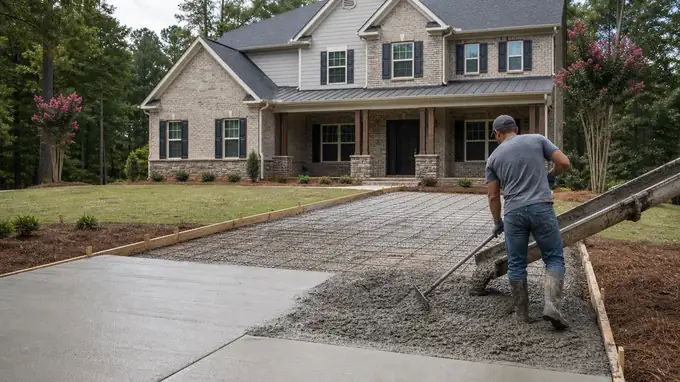
Concrete coming down the chute into formed driveway bays at a brick-and-siding two-story home in Alpharetta, GA, after a rain shower.

Step 4: Forming, Steel and the Pour

Forms get staked and strung to a line, with fall away from the house. We run rebar on chairs for a concrete driveway and heavier flatwork, wire mesh on lighter sidewalks, both held up in the slab instead of lying on the base. Concrete installation happens in one continuous pour where we can. Control joints go in at spacing matched to thickness, cut early, so cracking lands where we put it.

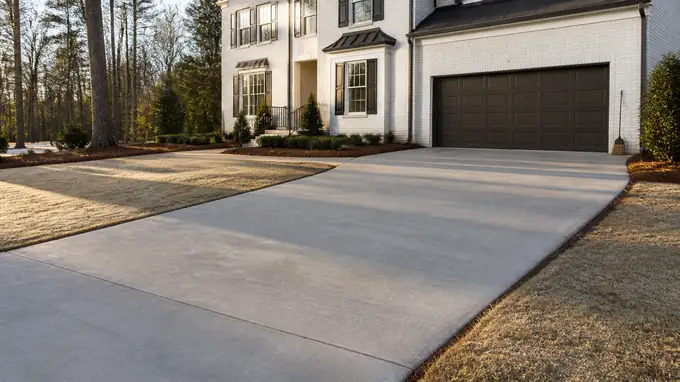
Cured driveway swept clean with the forms stripped away at a painted-white-brick two-story home in Alpharetta, GA, in early morning light.

Step 5: Finishing, Curing and Final Walkthrough

Finish depends on the surface. Broom texture on sidewalks and driveways for traction, exposed aggregate or stamped patterns where you want the pattern to carry. Stain goes on after the slab has cured enough to accept it, then sealer. We keep the concrete wet or covered during cure, since drying too fast is what causes surface crazing. We walk it with you and explain sealer maintenance.

What Decides the Price of Stained Decorative Concrete

Two stained concrete jobs of the same size can land far apart, and the reasons are usually visible before anyone writes a number. Most of it sits in the ground, the access, and the slab you already have.

What changes the priceWhich wayWhy
A sound existing slab, no spalling or working crackscosts lessWe prep and stain what is there instead of tearing out and repouring.
Old sealer, paint or thinset on the surfacecosts moreStain colors the concrete itself, so anything on top gets ground off first.
Removing an existing driveway or patiocosts moreBreaking, loading and hauling old slab is a day of labor and disposal.
How close a truck can reach the pourcosts less when it is closeA backyard slab behind a narrow gate means pumping or wheelbarrowing every yard.
Thickness and reinforcement the slab calls forcosts moreA driveway you park on needs more depth than a patio, and rebar runs above wire mesh.
Water that stands or runs toward the housecosts moreSlope, grading or a drain line gets built in while the forms are set.
One color against layered stain, sawcuts or a stamped bordercosts moreEach added color, cut and border is another pass across the surface by hand.

Compare bids on the items easiest to leave out: slab thickness, whether reinforcement is rebar or mesh, what happens to the old concrete, joint spacing, and which sealer goes on and in how many coats. A low number usually got low by dropping one of them.

Stained Decorative Concrete: Questions We Are Asked Most

What colours work best for a Alpharetta home?

Earth tones hold up best: tobacco brown, tan, terra cotta, and the softer greens. Acid stain reacts with lime in the slab, so it never lands flat, it lands mottled. The median build year here is 1996, so most of what we stain is existing concrete on an established house, and we set sample boards against the exterior in daylight before anyone commits. Bright color is possible. It rarely ages well.

Can you stain Alpharetta concrete that has already been sealed?

No, not while the sealer is still on it. Stain has to reach the concrete to work, and a film sealer stops it cold. We test with a water drop first: if it beads, there is sealer. Removing it means chemical stripper or grinding, then a full rinse and dry. Sealer left behind in patches is the usual cause of blotching nobody wanted.

How long does stained concrete last outdoors in Georgia?

The color does not fade out the way paint does, because acid stain becomes part of the slab. What wears is the sealer over it, and that is a recoat, not a redo. Sun exposure and traffic set the schedule. A shaded patio goes much longer than a driveway. We tell people to plan on recoating, and to judge age by the sealer rather than the color.

Will stain look the same on every part of my Alpharetta slab?

No. Stain reads whatever is under it. Trowel marks, a patch, a spot where a mixer sat, harder or softer areas of cement paste, all of it shows through as variation in tone. That is what most people want from stain, and it is why the finish does not look like paint. Where a slab has repairs or old spills, we test a hidden corner first so you see the range.

Can you stain an existing driveway in Alpharetta?

Yes, if the slab is sound. Stain will not hide spalling, delamination, or a crack that is still moving, and a driveway takes more abuse than any other flatwork on the property. We clean it hard, repair what we can, then stain and seal with a product built to resist hot tire pickup. New pours and work at the street go through the City of Alpharetta.

Does acid stain or dye last better in Georgia?

Acid stain, outdoors, without much argument. It reacts chemically with the slab and cannot be lifted off, so sun does not take it out. Dyes reach colors acid stain cannot, blues, blacks, deep reds, and they are the better choice on interior floors. Outside, most dyes are not UV stable and will shift. Ask to see both on a sample before you decide.

Get a Free Estimate

Get a FREE Quote

Tap to call +1 470-260-7028