
+1 470-260-7028
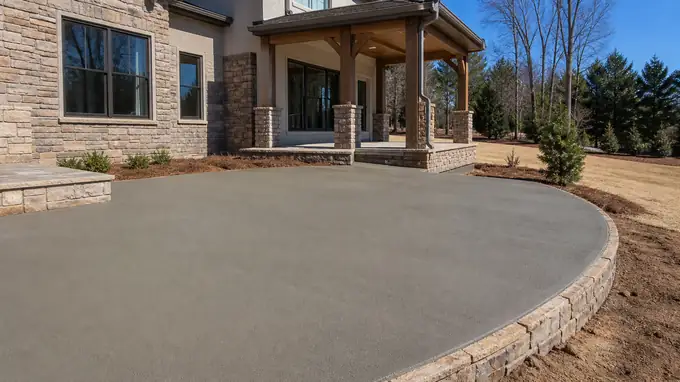
concrete patio repair completed by a local contractor at a brick-and-siding two-story home in Alpharetta, GA, under low winter sun.

Concrete Patio Repair in Alpharetta, GA

A cracked, sunken or flaking patio often doesn't need to come out. Most of what we see in Alpharetta can be repaired: slabs that have settled at one corner, cracks that have opened across the surface, edges that have scaled or spalled, and steps that have pulled away from the house. We look at the whole slab before we touch any of it, because a crack is usually telling you about something underneath. Where the base is sound, we repair the damage and match the finish, stamped and decorative surfaces included. Where it isn't, we tell you, and we fix the cause before the crack.

The median home in Alpharetta was built in 1996, so plenty of the patios out back have been through a lot of weather. The area gets about 50 inches of rain a year, and water that drains toward a slab instead of away from it finds every weak spot. The ground is hilly, too, and it changes from one lot to the next. So we grade and test every site on its own before any work starts. That is what separates a repair that holds from one that shows the same crack a year later. If your patio has started to move, call us for a free estimate.

Call +1 470-260-7028

Get a FREE Quote

Our Concrete Patio Repair Work in Alpharetta

concrete slab installation completed by a local contractor at a stacked-stone and stucco home in Alpharetta, GA, in clear late-morning sun.

Concrete Slab Installation Cost

What sets the cost of a slab is mostly what sits under it and around it. A flat, open yard with a firm base costs less to pour than a sloped lot that needs cut, fill and a formed edge on the low side. Thickness, rebar or wire mesh, how far the truck can back in, and the finish all move the number. We walk the site, test the ground and price that slab, not an average.


concrete driveway installation completed by a local contractor at a charcoal farmhouse-modern home in Alpharetta, GA, in late afternoon light.

Concrete Driveway Installation

Driveways fail from the bottom up. When the base is soft or thin, the slab cracks where tires land and settles at the apron. We dig out to firm ground, compact a crushed stone base, and set rebar on chairs so it sits in the middle of the pour. Control joints go in at the right spacing, and the surface is pitched so water runs away from the garage. Finish can be broom, exposed aggregate or stamped.

concrete flooring installation completed by a local contractor at a painted-white-brick two-story home in Alpharetta, GA, in early morning light.

Concrete Flooring Installation

Inside a house, a concrete floor is judged by how flat it is and how dry it stays. We lay a vapor barrier over the compacted base so ground moisture does not come up through the slab and lift whatever goes on top later. The surface gets a hard steel trowel finish, or we grind and seal it for a polished look. Saw cuts go in early to decide where cracks form, then it cures slowly under cover.

concrete slab repair completed by a local contractor at a red-brick ranch home in Alpharetta, GA, at blue hour.

Concrete Slab Repair

Before we fix a crack, we find out why it is there. A hairline shrinkage crack gets routed and sealed. A slab that has sunk or rocks underfoot usually has a void beneath it, often from water washing out the base, so we fill and lift it or cut out the section and pour new concrete doweled into the old. With the median home here built in 1996, plenty of slabs have simply worn out, and patching them only buys time.

What Makes Alpharetta Craftsman Concrete's Concrete Work Different

Most patio cracks have a cause underneath them, and we find it before we touch the surface. Fulton County is hilly, with 241 feet of local relief within a few miles, and it takes about 50 inches of rain a year. That water has to go somewhere. On a sloped lot, it can run under the low edge of a slab and wash out what supports it. Rion soil drains well and dominates the county, but it changes from one property to the next, so we test and grade every site on its own. Then we repair.

The repair itself is built to match what is already there. With the median home here built in 1996, many patios have years of weather on them, and a bright new patch beside faded concrete looks like damage of its own. We match the finish, whether broom, exposed aggregate or stamped, and we add reinforcement where the structural conditions call for it. Some slabs are past saving. When that is the case, we say so plainly and explain what a replacement involves, rather than selling a patch we know will fail.

How a Concrete Patio Repair Job Runs in Alpharetta

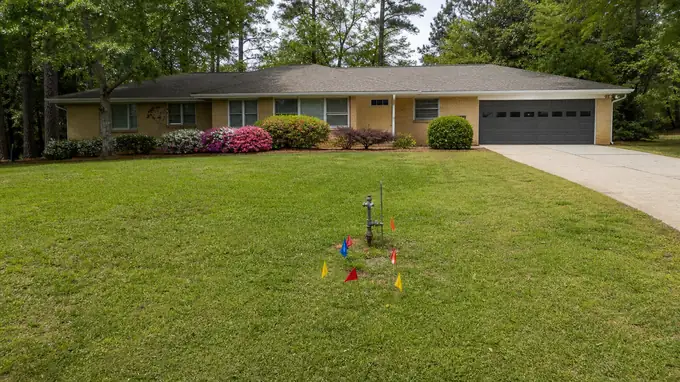
Utility flags mark buried lines before digging starts. at a buff-brick ranch home in Alpharetta, GA, under bright midday cloud.

Step 1: Site Assessment

Before we cut anything, we walk the patio and work out why it failed. We look for sections that have dropped, water staining at the low corners, a downspout emptying against the edge, roots lifting a panel, flaking where the surface has scaled. We probe the base under the low spots too, because soil changes from one yard to the next. Some patios need one panel replaced. Others need the whole slab out, and we tell you which.

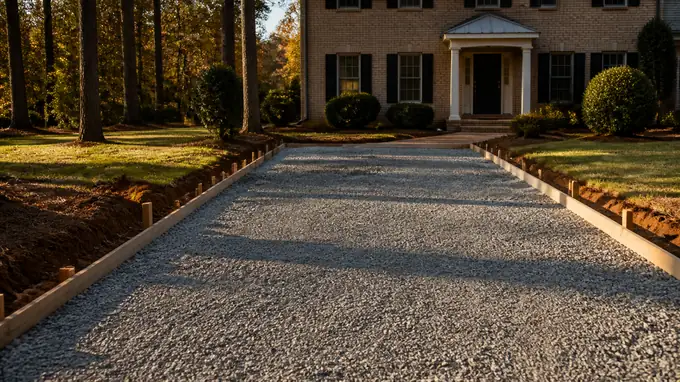
Crushed stone base is raked level inside driveway forms. at a tan-brick colonial in Alpharetta, GA, in late afternoon light.

Step 2: Site Preparation

Damaged sections come out along a straight saw cut, never a jagged break, so the new pour has a clean face to meet. We haul the rubble and look hard at what the old slab sat on. With about 50 inches of rain a year, any soft spot or void under a patio gets worse fast. We dig it out, rebuild with compacted gravel, and pitch the grade so water runs away from the house.

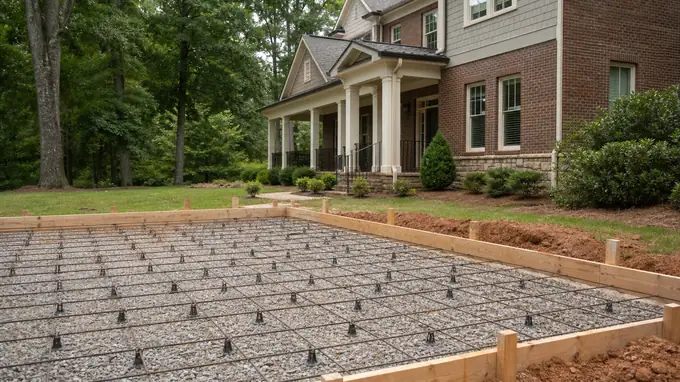
A worker ties rebar into a grid before a residential pour. at a brick-and-siding two-story home in Alpharetta, GA, under bright midday cloud.

Step 3: Forming & Reinforcement

Forms go in at the height and slope of the concrete that stays, so the repair reads as one surface. Where new meets old, we drill the existing slab and epoxy in steel dowels. Without them, the patch settles on its own and leaves a trip edge. Rebar or welded wire goes up on chairs so it ends up in the middle of the slab, not flattened on the gravel where it does nothing.

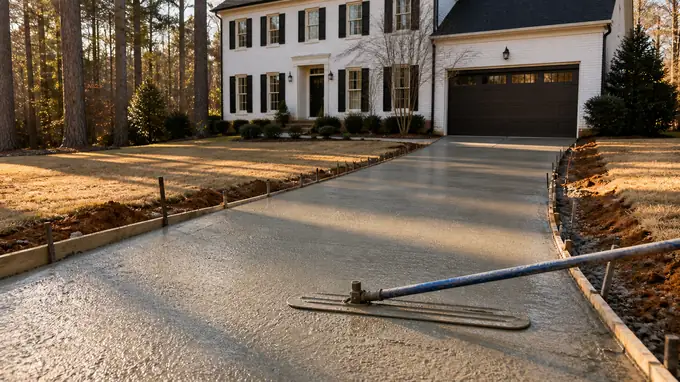
A bull float smooths a residential walkway surface after screeding. at a painted-white-brick two-story home in Alpharetta, GA, in late afternoon light.

Step 4: Pouring

Concrete gets placed from the far side toward the exit, raked into the corners and screeded flat off the forms. We order a mix suited to outdoor slabs and use it as it comes off the truck. Adding water at the chute makes it easier to spread and weaker for good, with a soft top that dusts and flakes. Small repairs may be mixed on site from bagged material, held to the same standard.

A hand trowel smooths a small patio surface to a hard finish. at a stacked-stone and stucco home in Alpharetta, GA, in clear late-morning sun.

Step 5: Finishing

Matching the old surface is the hardest part of a patio repair. A broom finish blends in easily. Stamped, colored or exposed-aggregate concrete is harder, because the original color has faded and the texture has worn, so we test color on a sample board first. Control joints get tooled or saw-cut in line with the existing ones. That keeps future cracking in the joints, not wandering across a panel.

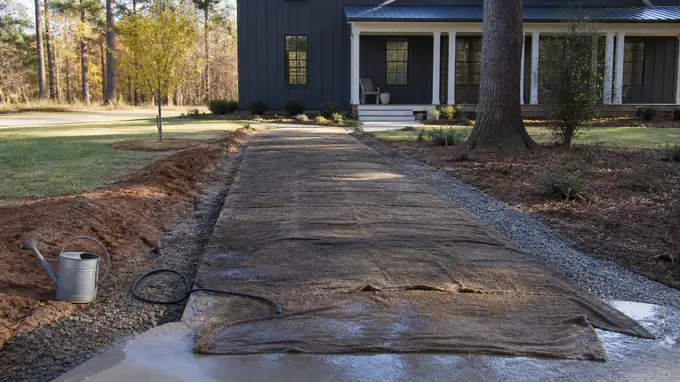
Damp burlap covers a small slab section during curing. at a charcoal farmhouse-modern home in Alpharetta, GA, under low winter sun.

Step 6: Curing

Fresh concrete gains strength slowly, and it needs moisture to do it. Once the surface is finished we spray on a curing compound or cover the slab, so the top does not dry out ahead of the rest. On a hot afternoon that matters more than anything else we do. Rushed curing is where crazing and a chalky surface come from. Light foot traffic comes back first; grills, planters and furniture wait until the slab has hardened.

A sprayer applies sealer across a driveway. at a red-brick ranch home in Alpharetta, GA, after a rain shower.

Step 7: Sealing

Sealer goes on last, once the concrete has cured enough to let moisture out. On a plain broom finish we usually use a penetrating silane or siloxane sealer. It soaks in, sheds water, and does not change how the surface looks or grips. Stamped and colored patios usually get an acrylic sealer that brings the color back up. That one can get slick when wet, so we mix in a fine grit for traction.

Concrete Patio Repair Pricing in Alpharetta, GA

Most of the price of a patio repair sits under and around the slab, not in the part you walk on. Two patios the same size on the same street can need very different work. The things below are ones you can check in your own backyard, and they explain most of the difference between a small repair and a full replacement.

What changes the priceWhich wayWhy
Sunken or tilted sectionscosts moreA low spot means the base underneath has washed out or compacted. We rebuild the base, or the slab drops again.
Hairline cracks that are not movingcosts lessA stable crack can be cleaned, routed and sealed without breaking anything out.
Old concrete that has to come outcosts moreBreaking it up and hauling it away is labor and truck time before any new material goes in.
How a truck reaches the patiocosts less with open accessIf a mixer can back up close, we pour from the chute. A fenced backyard means pumping or wheelbarrows.
Slope of the yardcosts more on a gradeFulton County is hilly, and it changes block to block. A sloped patio can need stepped forms or added fill.
Water pooling on the slab or running toward the housecosts moreWith about 50 inches of rain a year, standing water is often why the patio failed. We correct the pitch so the repair holds.
Heavy loads like a hot tub or stone planterscosts moreThose spots call for thicker concrete and steel reinforcement.
An existing stamped or decorative finishcosts moreMatching a pattern and color takes more care than a broom finish.

When you compare bids, check the same lines on each: whether old concrete comes out or gets overlaid, what goes under the new slab, the thickness and reinforcement, how drainage gets fixed, and who hauls the debris. A low number usually means one of those is missing.

Frequently Asked Questions About Concrete Patio Repair in Alpharetta

What concrete patio & deck repair methods do you use for spalling, flaking, and surface scaling in Alpharetta?

It depends on how deep the damage goes. Where only the top layer has let go, we grind off the loose paste, clean the slab, and bond a polymer-modified resurfacer to sound concrete. Deeper spalls get cut back to solid material and patched with a repair mortar, and then the resurfacing goes over the whole surface so it wears evenly. If the slab underneath is failing, we tell you that a new pour is the honest fix.

How much does a 20x20 colored concrete patio typically cost in Alpharetta?

That one gets priced on site, because the number moves with things a photo cannot show. Integral color mixed in the truck costs differently than a stain applied after the pour. A flat yard needs less grading and forming than a sloped one, and much of Fulton County is hilly. Truck access, reinforcement, and any stamped or decorative finish all count too. Call for a free estimate.

How durable is a concrete patio in Alpharetta weather?

Very, if it is built for the water. The area gets about 60" of rain a year, so we slope every patio away from the house and make sure nothing sits on the surface. Snow is light, around 2" a year. Fulton County's dominant soil is Rion, which drains well, though it varies, so we test every site before work starts. A good sealer helps the finish hold its color.

How much does concrete patio repair typically cost in Alpharetta?

Repair is priced by the job, not by a chart. Sealing a few cracks is a small visit. Resurfacing a scaled patio takes grinding, patching and a full new wear layer, so it is a bigger project. Lifting or replacing a sunken section is its own category. The deciding question is whether the slab underneath is sound. If it isn't, the money is better spent on new concrete, and we will say so.

What are the most common causes of cracks in a concrete patio or deck in Alpharetta?

Most cracks start underneath. Fill that was never compacted settles, and the slab bridges the gap until it breaks. Water running off a roof or down a slope can wash out the base along one edge, which shows up often on sloped lots. Missing or badly spaced control joints let concrete crack wherever it wants. Thin slabs without reinforcement, and tree roots pushing up from below, account for most of the rest.

How long will a concrete patio last in Alpharetta?

A well-built patio lasts decades. The median home in Alpharetta was built in 1996, so a lot of the patios we look at are original to the house. Whether one of those is worth repairing depends on its base and its drainage, not its age. Keeping the surface sealed, keeping gutters clear, and fixing small cracks before they spread all add years.

Get a Free Estimate

Get a FREE Quote

Tap to call +1 470-260-7028