+1 470-260-7028
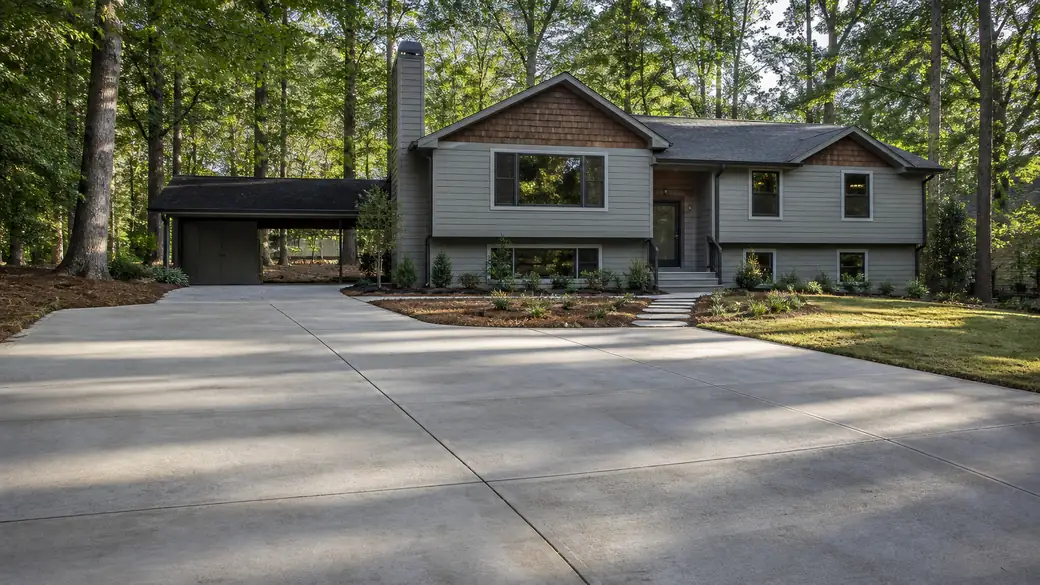
general concrete construction completed by a local contractor at a grey split-level home in Alpharetta, GA, under low winter sun.

General Concrete Construction in Alpharetta, GA

We build concrete for homes and commercial properties in Alpharetta: driveways, patios, walkways, garage slabs, steps, and decorative and stamped surfaces. The median home here was built in 1996, so a lot of what we see is original concrete that has done its job for a long time and is starting to show it. Some of it needs repair. Some of it needs to come out. Sorting out which is which is part of the work, and the answer comes from the slab itself, not from a sales sheet.

No two lots here sit the same way. Fulton County is hilly, with around 241 feet of relief within a few miles, and that changes from one block to the next. So each site is graded and tested on its own before anything gets formed. The dominant soil is Rion, which drains well, but it isn't uniform across the county, so we check what is actually under your yard. Then come the base, the reinforcement, the forms, the pour and the finish, in that order, and we handle the permit where one is needed.

Water is what undoes most concrete around here. The area gets about 50 inches of rain a year, and a slab that sheds it the wrong way, or sits on a base that washes out, will crack and settle no matter how good the surface looked the day it was poured. Getting it right is mostly unglamorous work: slope, compaction, joints in the right places, and steel where the loads are. None of it shows once the concrete cures. All of it shows years later. Call us for a free estimate.

Call +1 470-260-7028

Get a FREE Quote

Our General Concrete Construction Work in Alpharetta

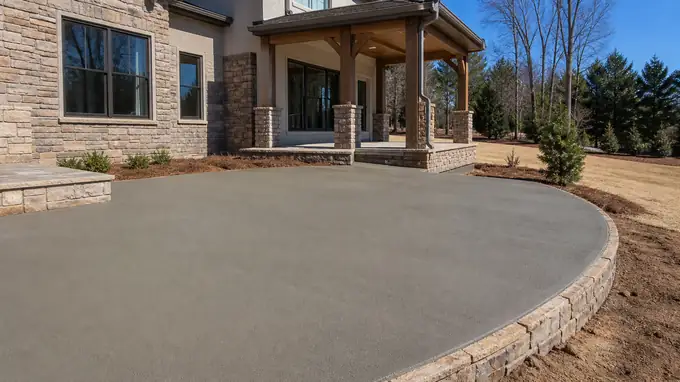
concrete slab installation completed by a local contractor at a stacked-stone and stucco home in Alpharetta, GA, in clear late-morning sun.

Concrete Slab Installation Cost

What moves the number on a slab is mostly what sits under it and around it. A flat, well-drained pad needs little more than compacted stone base, forms and reinforcement. A lot in Fulton County's hills can need cut, fill and a formed edge before any concrete arrives. Thickness, rebar or wire mesh, truck access and the finish all go into the estimate, and we walk you through each line before you decide.

concrete driveway installation completed by a local contractor at a charcoal farmhouse-modern home in Alpharetta, GA, in late afternoon light.

Concrete Driveway Installation

Driveways fail from the bottom up, so we start with the base: old material out, graded stone compacted in lifts, and a pitch that sends water off the surface instead of under it. With about 50 inches of rain a year here, that pitch matters. Rebar goes up on chairs so it sits mid-slab, not in the dirt. We cut control joints before the concrete cracks on its own, then finish with a broom texture or a stamped pattern.

concrete flooring installation completed by a local contractor at a painted-white-brick two-story home in Alpharetta, GA, in early morning light.

Concrete Flooring Installation

Basements, garages, workshops and commercial floors each ask something different of the surface. We lay a vapor barrier where moisture could come up through the slab, place reinforcement, and power-trowel to a hard, dense finish. From there the floor can stay smooth, or be sealed, stained, or ground and polished. The step people rush is curing. A floor that dries too fast curls at the joints and dusts for years, so we keep it wet and covered.

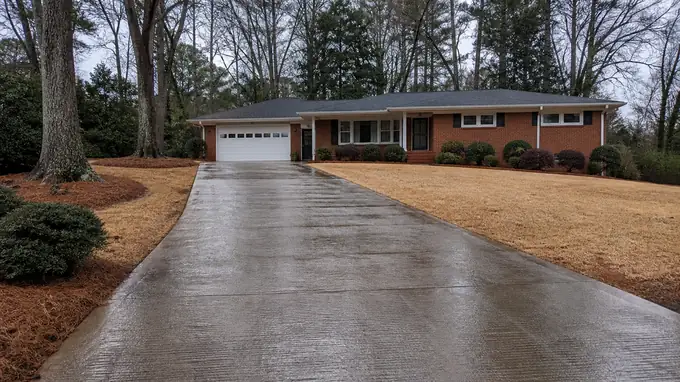
concrete slab repair completed by a local contractor at a red-brick ranch home in Alpharetta, GA, at blue hour.

Concrete Slab Repair

Plenty of homes here went up around 1996, and their slabs are old enough to show it: cracks, a sunken panel, a flaking surface, joints that have pulled apart. We find the cause before we touch anything. Usually it is water running under an edge, a soft spot in the base, or reinforcement that was never there. Some slabs need a routed and sealed crack or a resurfacing. Others need a section cut out and repoured. We tell you which, plainly.

What Makes Alpharetta Craftsman Concrete's Concrete Work Different

We treat the ground as the first part of the job, not something to pour over. Fulton County soil is mostly Rion, which drains well, but it changes from one yard to the next, so we test every site on its own before we set a form. The land is hilly too, with about 241 feet of local relief within a few miles. A driveway on a slope and a patio on flat ground need different grading, base work and reinforcement, and we plan each one that way.

Water is the other thing we build around. This area gets about 50 inches of rain a year, and a slab that sheds it the wrong way sends it toward a foundation, a garage door or the neighbor's lawn. We set the pitch on every surface before we order materials, and we decide where the runoff goes while the forms are still open. Stamped and decorative work gets the same attention as plain concrete. A pattern only looks good as long as the slab under it stays put.

Much of the housing here dates from around 1996, so a lot of our residential work starts with concrete that has already seen decades of use. What fails is usually underneath: a base that settled, reinforcement that was never there, a joint cut in the wrong place. We find the cause before we recommend a fix. We also tell you plainly when a repair will hold and when it will not. Call for a free estimate.

How a General Concrete Construction Job Runs in Alpharetta

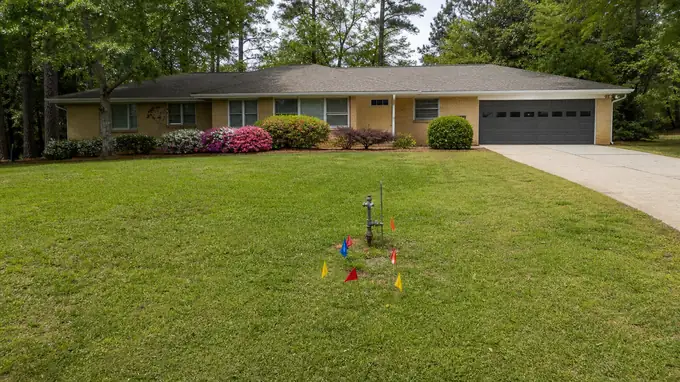
Utility flags mark buried lines before digging starts. at a buff-brick ranch home in Alpharetta, GA, under bright midday cloud.

Step 1: Site Assessment

We walk the property before we plan anything. There are 241 feet of local relief within a few miles of here, so the slope at your house can differ sharply from the one next door. We look at grade, where roof and yard water runs, and what the existing slab is doing: cracks, heaving, sunken sections by the garage. Rion soil is the dominant type here and drains well, but we test each site on its own.

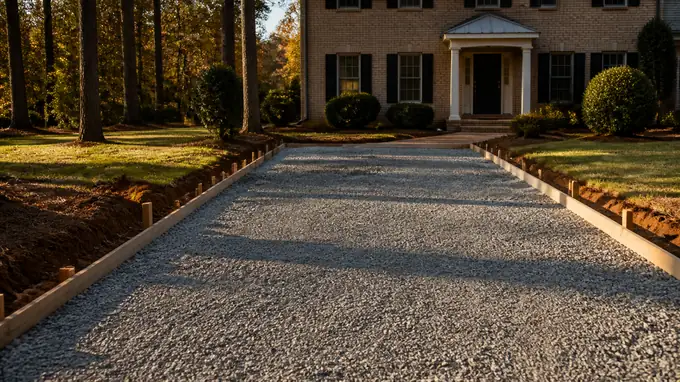
Crushed stone base is raked level inside driveway forms. at a tan-brick colonial in Alpharetta, GA, in late afternoon light.

Step 2: Site Preparation

Most slabs we tear out failed from underneath. We break out the old concrete, dig out soft or organic soil, and cut the subgrade so water sheds away from the house. Crushed stone base goes down next in lifts, and each lift gets run with a plate compactor until it stops moving. With about 50 inches of rain a year, the base and the drainage matter more than anything we do on the surface.

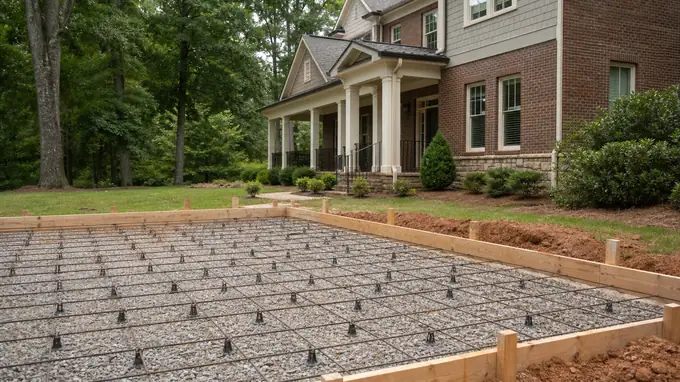
A worker ties rebar into a grid before a residential pour. at a brick-and-siding two-story home in Alpharetta, GA, under bright midday cloud.

Step 3: Forming & Reinforcement

Forms are straight lumber or steel, staked tight and set to string lines so the finished surface drains the way we planned it. Edges get thickened where a driveway meets the street or carries heavy loads. Rebar or welded wire sits on chairs so it ends up in the middle of the slab, not lying in the gravel where it does nothing. Expansion joint material goes against the house, garage floor and existing walks.

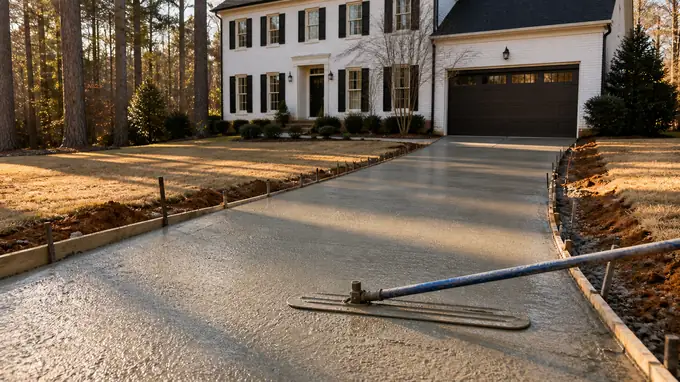
A bull float smooths a residential walkway surface after screeding. at a painted-white-brick two-story home in Alpharetta, GA, in late afternoon light.

Step 4: Pouring

Ready-mix comes from the plant with a mix chosen for the job, because a driveway, a patio and a structural footing do not get the same concrete. We check it at the truck and do not add water to make it pour easier; extra water leaves a weak, dusty top that wears early. Concrete is placed close to where it will sit, screeded off the forms, and bull floated before the bleed water rises.

A hand trowel smooths a small patio surface to a hard finish. at a stacked-stone and stucco home in Alpharetta, GA, in clear late-morning sun.

Step 5: Finishing

Timing decides the finish more than technique does. We wait for bleed water to leave before troweling, since working it back in weakens the surface. Driveways and walks get a broom finish for traction when it is wet. Stamped and decorative patios get color, release agent and the stamp mats while the slab is still soft enough to take the pattern cleanly. Control joints are tooled or saw cut on time, so cracks land where we put them.

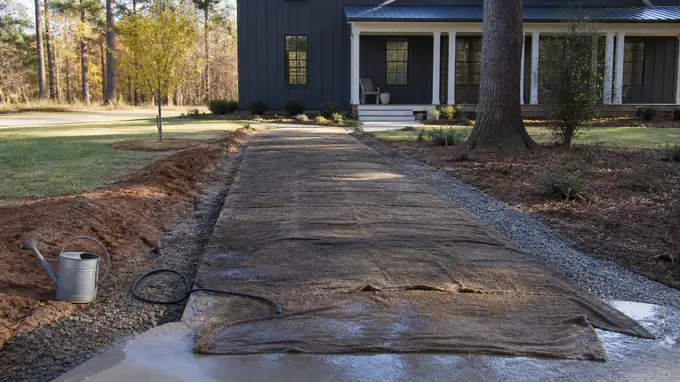
Damp burlap covers a small slab section during curing. at a charcoal farmhouse-modern home in Alpharetta, GA, under low winter sun.

Step 6: Curing

Strength keeps building for weeks after the slab looks done, and only while it holds its moisture. We cover fresh concrete with curing compound or blankets depending on the weather and the finish. Hot, dry, windy afternoons are what cause the surface cracking and scaling that show up later. We tell you when it is ready for foot traffic and when it can take a car, and the car always comes later than people expect.

A sprayer applies sealer across a driveway. at a red-brick ranch home in Alpharetta, GA, after a rain shower.

Step 7: Sealing

Sealer goes on once the slab has cured and dried out, not the week it is poured. On plain broom-finished driveways we use a penetrating sealer that soaks in and leaves the look unchanged. Stamped and colored work gets a film-forming acrylic that brings the color back up, with grit mixed in so it is not slick underfoot. When water stops beading on the surface, the sealer has worn through and it is time to recoat.

General Concrete Construction Pricing in Alpharetta, GA

Two driveways of the same size can land far apart in price, and most of the reasons are things you can see from your own yard. We price each property after walking it, because the ground, the access and what is already there decide most of the cost. Here is what moves the number.

What changes the priceWhich wayWhy
Old concrete, asphalt or pavers to removecosts moreBreaking it out, loading it and hauling it away is a job of its own before any forming starts.
A clear path for the mixer truckcosts lessWhen the truck can back up to the forms, we pour straight from the chute. Fences, tight side yards or a backyard patio mean a pump or wheelbarrows.
Slope across the pourcosts moreFulton County is hilly, and a lot that falls away needs cutting, fill and taller forms to hold a level surface.
Slab thickness and reinforcementcosts moreA driveway that carries trucks gets a thicker slab and rebar. A walkway or patio needs less.
Where the water goescosts more if it poolsWith about 50 inches of rain a year, a slab that sheds water toward the house needs regrading, a drain or a deeper gravel base.
Roots, stumps and buried linescosts moreIrrigation lines, shallow roots and old stumps have to be found and cleared, not poured over.
Stamped or decorative finishcosts morePattern, color and sealer add materials and hours on the day of the pour.

When bids come in, lay them side by side on the same points: slab thickness, type and spacing of reinforcement, depth of the gravel base, who removes and hauls the old surface, how drainage is handled, where control joints go, and whether the permit is included. A lower number often means one of those lines is thinner or missing. Ask each contractor to write them down.

Get a Free Estimate

Get a FREE Quote

Tap to call +1 470-260-7028