+1 470-260-7028
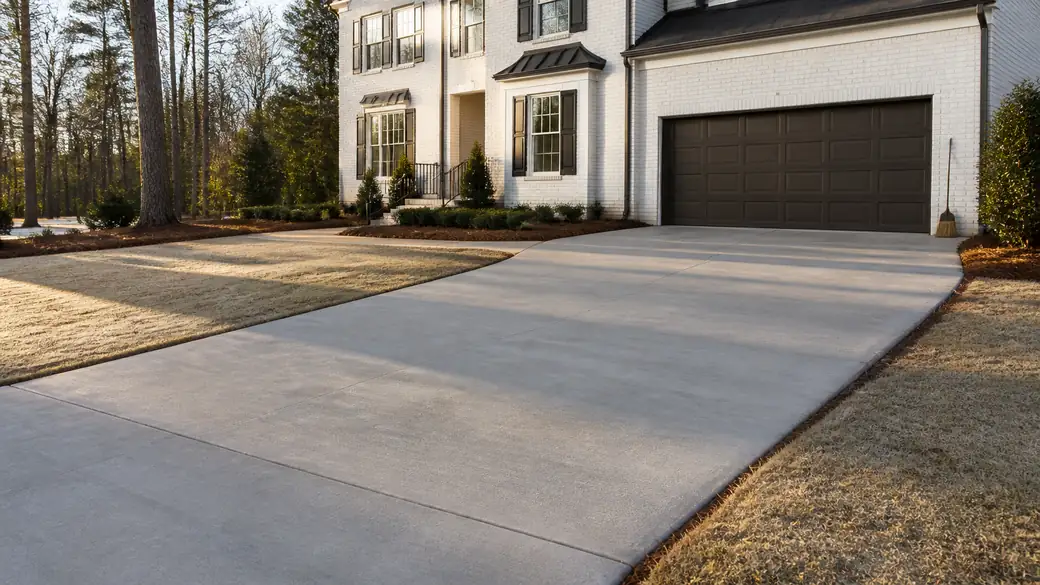
A finished concrete driveway sweeping from the street to the garage, clean-edged and evenly toned in the sun. at a grey split-level home in Alpharetta, GA.

Polished Concrete Floors in Roswell, Georgia

A polished concrete floor is the slab itself, ground down and refined until it takes a shine. There is no coating sitting on top to peel, yellow or wear through in the walkways. We cut the surface with metal-bonded diamonds, then work up through finer resin grits until the concrete reflects light on its own. In Roswell homes we do this most in basements, garages and open living areas. On commercial property it goes into showrooms, offices and clinics, where floors take steady foot traffic all day. You decide how much of the stone aggregate shows through and how much gloss the finished surface carries.

Every job starts with the slab we are given, not the one we hoped for. We check it for cracks, old adhesive, patched areas and moisture before any grinding begins, because a polish shows everything underneath it. With around 50 inches of rain a year here, moisture coming up through a slab is something we test for rather than assume. Cracks get filled and low spots get dealt with. Then the grinding runs in passes, each one removing the scratches left by the last. A densifier goes on partway through to harden the surface, and a penetrating guard finishes it.

Rushing is what ruins most polished floors. Skip a grit and the scratches from the coarser pass stay in the concrete, plain to see when light hits them at an angle. Densify too early or too little and the surface dusts and dulls under traffic. Polish a slab that is still pushing moisture and you can end up with haze or blotching that no amount of buffing removes. Getting it right takes time more than anything: the full sequence of passes, proper crack repair, and honest testing at the start. We would rather tell you a slab is a poor candidate than polish it and hope. Call for a free estimate on your floor.

Call +1 470-260-7028

Get a FREE Quote

Our Concrete Work Around Roswell

concrete slab installation completed by a local contractor at a stacked-stone and stucco home in Alpharetta, GA, in clear late-morning sun.

Concrete Slab Installation Cost

What moves the number on a slab is mostly underneath it. Rion soil drains well across much of Fulton County, but it varies, so we test every site before we quote. From there it comes down to excavation depth, how much compacted gravel base the ground needs, rebar or welded wire reinforcement, forming, and whether the truck can reach the pour or we pump it. A polished finish adds grinding passes, and each pass is labor.

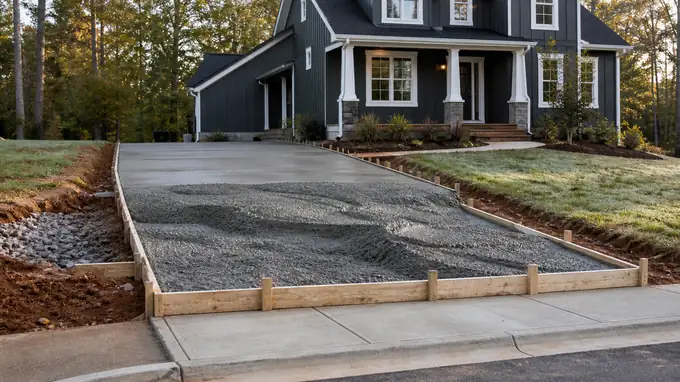
concrete driveway installation completed by a local contractor at a charcoal farmhouse-modern home in Alpharetta, GA, in late afternoon light.

Concrete Driveway Installation

A driveway carries more load than any other flat work around a house. It gets a thicker section, a compacted stone base, and rebar set on chairs so the steel sits in the middle of the slab instead of on the ground. With around 50 inches of rain a year, slope matters as much as strength. We pitch the surface away from the garage and cut control joints early, before the concrete decides where to crack on its own.

concrete flooring installation completed by a local contractor at a painted-white-brick two-story home in Alpharetta, GA, in early morning light.

Concrete Flooring Installation

Polished floors start with the slab, not the grinder. On new pours we place a vapor barrier, keep the mix consistent and finish it flat, because every low spot shows once it shines. On existing slabs we check for moisture, fill cracks and strip old coatings first. Then we grind through progressively finer diamonds, apply a densifier and polish to the sheen you choose, from satin to high gloss. Residential and commercial floors run the same way.

concrete slab repair completed by a local contractor at a red-brick ranch home in Alpharetta, GA, at blue hour.

Concrete Slab Repair

Most cracks are shrinkage and only cosmetic. The ones worth worrying about are wide, uneven across the edge, or growing, which usually points to settlement or a washed-out base. Hairline cracks we route and seal. Structural cracks in a floor slab get epoxy injection. Where a section has sunk or spalled badly, we saw-cut it out, fix what failed underneath and pour new concrete doweled into the old. Patching over a bad base only buys time.

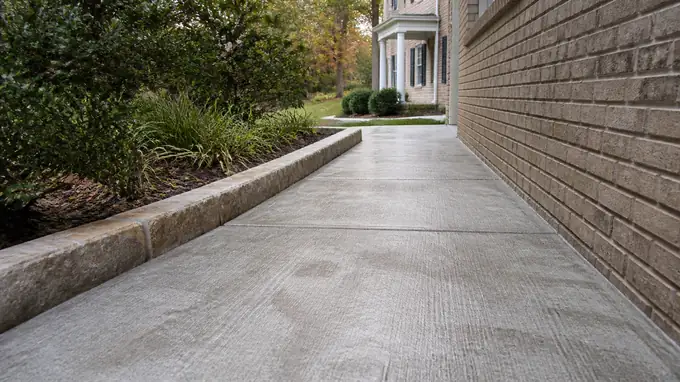
concrete sidewalk installation completed by a local contractor at a tan-brick colonial in Alpharetta, GA, under bright midday cloud.

Concrete Sidewalk Installation

Sidewalks look simple and fail for simple reasons: a thin base, missing joints, or tree roots nobody planned for. We form straight or curved runs, compact the base properly and tool joints at regular spacing so cracks land where we put them. A broom finish gives grip when it's wet. Where a walk meets a driveway or step, we add an isolation joint so the two slabs move independently. Decorative borders or stamped sections can go in the same pour.

How a Concrete Job Runs in Roswell

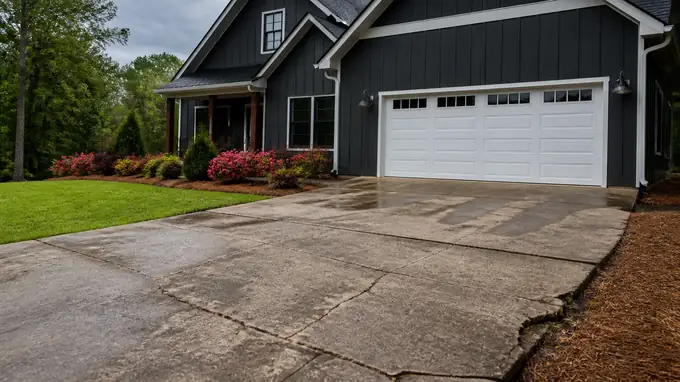
A worker examines an old driveway before replacement. at a charcoal farmhouse-modern home in Alpharetta, GA, after a rain shower.

Step 1: Site Assessment

We walk the property, watch where water runs when it rains, and look at what the slab will sit on. Rion soil, which drains well, is the dominant type around here, but it varies from lot to lot, so every site is tested before work starts. We also check truck access and any existing slab. Some polished floors are poured new; others are ground from concrete that is already sound.

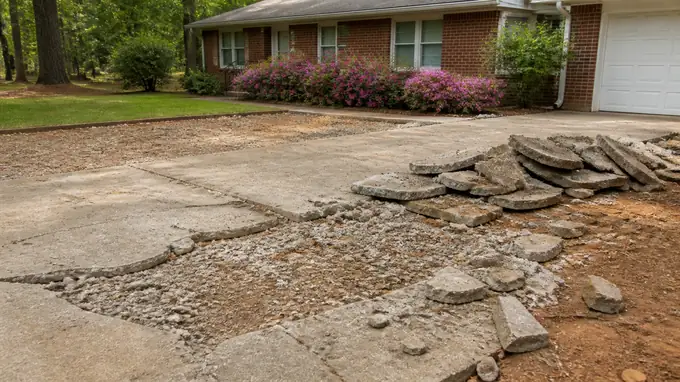
An old patio slab is broken up and hauled away. at a red-brick ranch home in Alpharetta, GA, under bright midday cloud.

Step 2: Site Preparation

Most slab failures start under the concrete, not in it. We strip the topsoil and anything organic, then dig down to firm ground. A gravel base goes in next, compacted in lifts with a plate compactor so it does not settle later. Interior floors that will be polished get a vapor barrier over the base. Skip it and moisture wicks up through the slab, clouds the finish and lifts coatings.

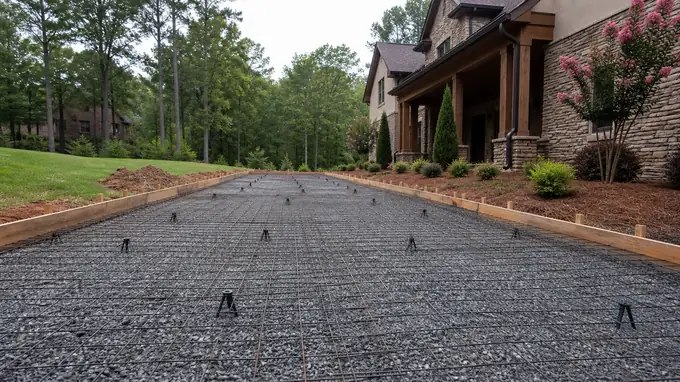
Wire mesh is unrolled across a driveway base before pouring. at a stacked-stone and stucco home in Alpharetta, GA, under an overcast sky.

Step 3: Forming & Reinforcement

Forms are straight lumber, staked tight and checked with a string line, because a polished floor shows every dip. Inside them we lay rebar in a grid, tied at the crossings and set on chairs. Rebar lying on the gravel does nothing. Welded wire mesh suits lighter residential slabs. We plan the control joints now, too. Concrete cracks as it shrinks, and joints decide where.

A ready-mix truck discharges concrete into a driveway form. at a charcoal farmhouse-modern home in Alpharetta, GA, in early morning light.

Step 4: Pouring

Pour day follows the forecast, not the calendar. With about 50 inches of rain a year, we would rather move the date than pour ahead of a storm. The mix is ordered for the job, with the water held low enough to reach full strength. Adding water at the truck so it flows easier is a common shortcut, and it leaves a weak surface. We place, screed and bull float in one steady run.

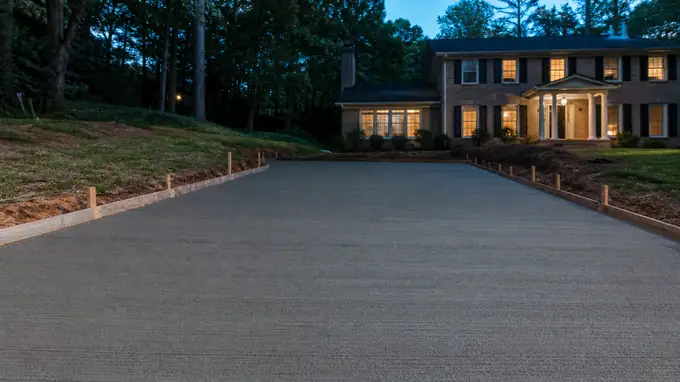
A broom drags across a driveway creating a slip-resistant texture. at a tan-brick colonial in Alpharetta, GA, at blue hour.

Step 5: Finishing

Timing is the whole job. We wait for bleed water to leave the surface, then work it with a power trowel, pass after pass, until it is hard and tight. Trowel too early and the top layer turns weak and dusts. Polishing comes once the slab has cured: diamond tooling from coarse to fine, a densifier worked in partway through, then polishing to the sheen you chose, from satin up to high gloss.

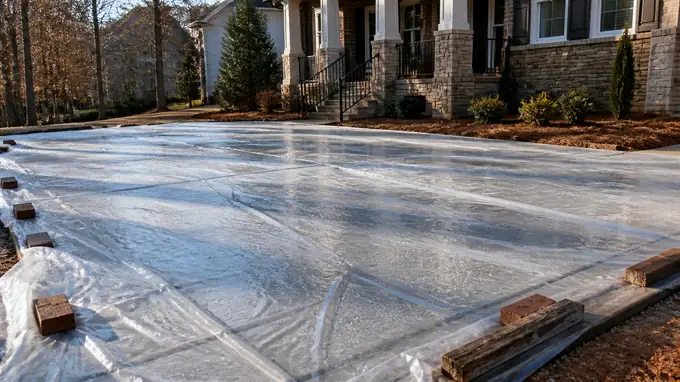
Plastic sheeting covers a curing driveway slab. at a brick-and-siding two-story home in Alpharetta, GA, under low winter sun.

Step 6: Curing

Concrete gains strength by holding onto its water, not by drying out. Right after finishing we keep the slab damp under curing blankets or a curing compound. On a floor headed for polishing, that compound has to be one that will not stain or block the densifier. A slab that dries too fast on a hot afternoon cracks at the surface. Foot traffic stays light early, and vehicles stay off new driveways until the concrete has gained real strength.

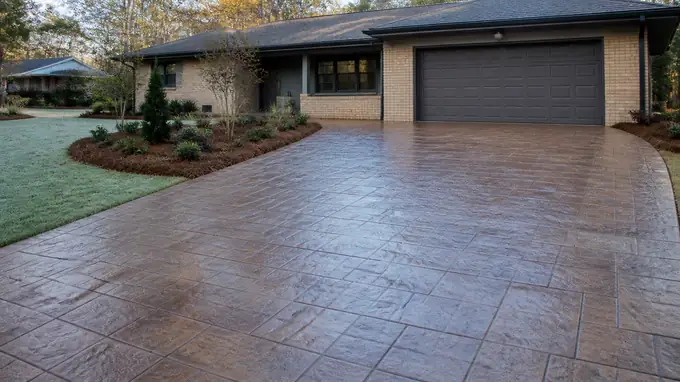
A finished stamped surface shows a glossy sealed sheen. at a buff-brick ranch home in Alpharetta, GA, in early morning light.

Step 7: Sealing

What goes on last depends on the surface. A polished interior floor usually gets a penetrating guard after the final pass, so spills bead up and the shine is easier to keep. Driveways, patios and other exterior surfaces take a penetrating or film-forming sealer once they have cured, which slows water and staining. We tell you which product we used, why we chose it, and how often your traffic and exposure call for reapplying it.

The Concrete Options Available in Roswell

Polished concrete is the slab itself, ground down with a run of progressively finer diamond tooling, hardened with a densifier and buffed until it takes the light. Nothing is laid on top of it. We offer three looks, set by how deep we cut: cream, where only the top paste shows; salt and pepper, where fine sand and small stone come through; and full aggregate, where the larger stone is exposed across the whole surface. Sheen runs from a soft matte to a high gloss. Outside, the options change to broom-finished driveways, stamped patios and decorative borders.

The right choice starts with where the concrete sits and what it has to carry. A kitchen or basement floor on an existing slab is usually a polishing project. A garage takes the same process but needs a harder finish for tires, jacks and dropped tools. For a new driveway or patio, we set forms, place reinforcement, pour, and finish the surface to suit its use. Rion soil is the dominant type in Fulton County, but it varies across the county, so every site is tested individually before work starts. A slab is only as steady as what it rests on.

Most problems we see come from picking a finish the slab can't support. Polishing shows everything that's already there, so old cracks, patched areas and tile adhesive come through unless they are dealt with first. Stamped concrete can turn slick when wet, and with about 50 inches of rain a year, a pool deck or shaded patio needs a textured sealer or a different finish altogether. Driveways without enough slope hold water. Control joints cut in the wrong places let the slab crack where it chooses rather than where we planned.

Getting it right mostly comes down to time spent where you can't see it. That means extra grinding passes on an uneven floor, stripping old coatings properly, setting reinforcement at the correct depth, and letting new concrete cure before anyone drives on it or we start polishing. Sometimes a plain finish will outlast the showier one on your property, and we say so. If you are weighing a polished floor, a driveway or a patio in Roswell, call for a free estimate.

How Much Does Concrete Cost in Roswell?

The honest answer is that two driveways of the same size can land far apart on price, and the reason usually sits in things you can walk outside and look at today. Before we put a number on paper, we measure, check how a truck gets in, and test the ground. Rion soil is common across Fulton County, but it varies from lot to lot, so every site is tested on its own. Here is what moves an estimate.

What changes the priceWhich wayWhy
Old concrete or asphalt where the new slab goescosts moreIt has to be broken up, loaded and hauled off before any forms go in.
Narrow gate, fence or steep yard between the street and the workcosts moreIf the mixer can't reach the forms, concrete goes in by pump or wheelbarrow, which adds equipment and hours.
Vehicles, trucks or a trailer parking on the slabcosts moreHeavier loads call for a thicker slab, and thickness is material.
Rebar grid instead of wire meshcosts moreStructural reinforcement takes more steel and more time to tie before the pour.
Standing water or a low spot after raincosts moreGrading, extra base or a drain has to go in first, or the new surface inherits the problem.
Roots, stumps or soft fill under the areacosts moreThey have to come out, and loose ground has to be dug and compacted before it can carry a slab.
An existing floor that is sound and levelcosts lessGrinding and polishing what's already there skips demolition and a new pour.

When you compare bids, check that each one quotes the same thickness, the same reinforcement and the same base preparation. Ask who removes the old material and whether grading is included. A lower number that leaves out removal or base work is a different job, not a better price.

Get a Free Estimate

Get a FREE Quote

Tap to call +1 470-260-7028