+1 470-260-7028
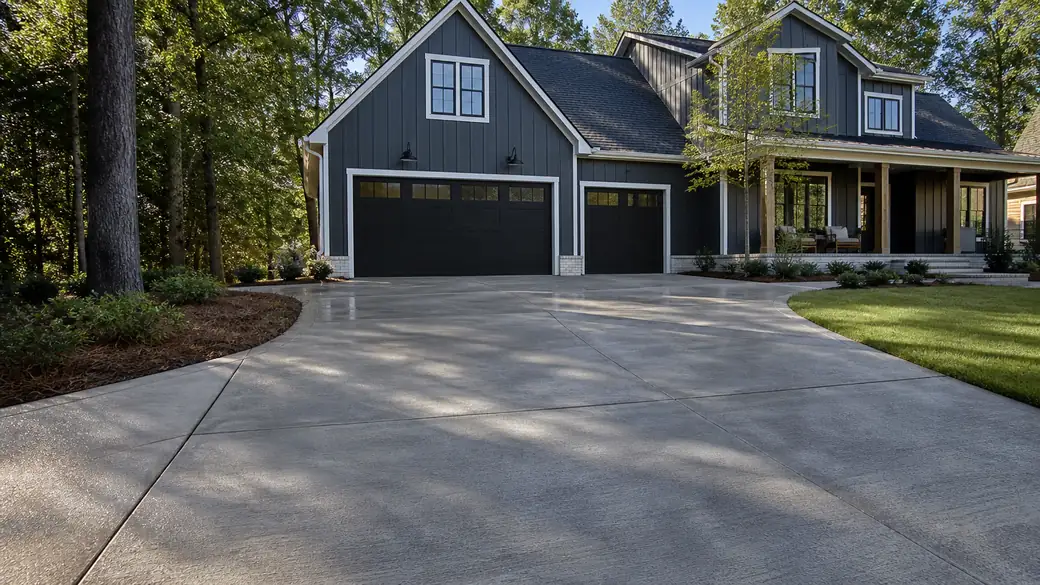
concrete expansion joint installation completed by a local contractor at a charcoal farmhouse-modern home in Alpharetta, GA, under low winter sun.

Concrete Expansion Joint Installation in Alpharetta, GA

An expansion joint is a planned break in a slab, filled with something flexible, that gives concrete room to move. Concrete swells a little as it warms and draws in as it cools. If nothing takes up that movement, the slab cracks to relieve it, usually somewhere you would rather it didn't. We place these joints where a driveway meets the garage floor, where patios butt against the house, and where a walk runs into steps. Done properly, the movement happens at a clean, straight line instead of across the middle of the surface.

The work starts with a look at the slab and everything it touches. On existing concrete we cut out the old filler down to sound edges, set a backer rod at the right depth, and run a sealant that bonds to both sides of the gap and not the bottom. It gets tooled flush and left to cure before anyone drives on it. On a new installation, full-depth joint material goes in before the pour. Grade matters too. Fulton County is hilly, and water running down a sloped driveway finds the lowest joint first.

Water is behind most joint failures. The area gets about 50 inches of rain a year, and an open joint sends that water straight under the slab, where it can soften the base and leave an edge with nothing beneath it. Fiber board rots out. Sealant peels away from a dusty edge. A joint that was never there shows up as a jagged crack instead. If your home went up around 1996, like the median one in Alpharetta, the driveway may still have the joints it was poured with, and they have carried a lot of weather since.

Getting it right is mostly a matter of patience. Sealant only holds on clean, dry concrete, so we grind and blow out every joint and wait out a wet day rather than rush it. An isolation joint against a foundation is built differently from a sawcut between two driveway panels, and we treat them that way. Soil changes across the county, so each property is tested on its own before new work begins. What you end up with is a line you stop noticing. Call us for a free estimate.

Call +1 470-260-7028

Get a FREE Quote

Our Concrete Expansion Joint Installation Work in Alpharetta

concrete slab installation completed by a local contractor at a stacked-stone and stucco home in Alpharetta, GA, in clear late-morning sun.

Concrete Slab Installation Cost

What a slab costs depends on the site more than the square footage. Fulton County is hilly, with 241 feet of local relief within a few miles, so some lots need cut, fill and a compacted gravel base before any forms go up. Thickness, rebar or wire mesh, and the finish all move the number. We grade and test every site first, then price the slab that site actually needs. Call for a free estimate.

concrete driveway installation completed by a local contractor at a charcoal farmhouse-modern home in Alpharetta, GA, in late afternoon light.

Concrete Driveway Installation

Driveways fail at the edges and joints long before they fail in the middle. We thicken the edges where tires roll off, set rebar on chairs so it sits inside the slab rather than on the dirt, and place expansion joint material where the new pour meets the garage slab. Control joints get cut the same day. With about 50 inches of rain a year, we pitch every driveway to shed water away from the house.

concrete flooring installation completed by a local contractor at a painted-white-brick two-story home in Alpharetta, GA, in early morning light.

Concrete Flooring Installation

Basement floors, garage floors and shop floors all start below the slab. We lay a vapor barrier over a compacted base so ground moisture stays out of whatever finish goes on top. Isolation joints go wherever the floor meets a wall, column or footing, so the slab can move without cracking against the structure. The surface can be troweled smooth, ground and polished, or left ready for tile, epoxy or sealer.

concrete slab repair completed by a local contractor at a red-brick ranch home in Alpharetta, GA, at blue hour.

Concrete Slab Repair

With the median home here built in 1996, many of the slabs we see have had decades to settle and crack. Most of that damage traces back to a joint that was never cut, or expansion material that has rotted or pushed out. We saw out failed joints, clean them, and fill them with backer rod and a flexible sealant. Settled sections get lifted or replaced. Broken panels come out to the nearest joint so the repair reads clean.

What Makes Alpharetta Craftsman Concrete's Concrete Work Different

A joint only helps if it sits where the slab wants to move. Most cracking we see on older driveways comes from joints spaced too far apart, cut too shallow, or left out entirely where the slab meets the garage apron and the house. We lay out every joint before the concrete arrives, working from the shape of the pour rather than a fixed grid. Long narrow runs get broken into near-square panels. Inside corners and steps get their own relief cuts. Isolation joints go wherever new concrete meets a foundation, a column, or an older slab, so each surface can shift without dragging the other along.

Every site is graded and tested on its own before forms go in. Fulton County has about 241 feet of local relief within a few miles, and a sloped driveway behaves differently than a flat patio on the same street. Rion soil, which drains well, is the most common type in the county, but it changes from lot to lot, so we check what is actually under the slab. Control joints are sawcut as soon as the concrete can hold a clean edge, before it has a chance to crack on its own. Each cut goes about a quarter of the slab's depth, with reinforcement placed to keep both sides level.

Open joints are where most trouble starts. At roughly 50 inches of rain a year, water that reaches an unsealed joint can carry fine material out from under the slab edge, and the panels begin to settle or tip. The median home here was built in 1996, which puts a lot of original driveways and patios at the age where joint filler has rotted and sealant has pulled loose. We rout out the old material, clean each joint back to sound concrete, set backer rod, and fill it with a flexible sealant made for outdoor surfaces. Done right, nobody notices it. That is the point.

Choosing the Right Concrete System

An expansion joint is a planned gap that lets one slab move without shoving against whatever it meets next. Most of the systems we install come down to three choices: the filler that sits in the gap, the sealant that caps it, and whether the slabs on either side need dowels to stay level with each other. Filler runs from asphalt-impregnated fiber board to closed-cell foam. Sealant is usually polyurethane or a self-leveling silicone. Driveways, patios and pool decks each want a different mix, and so does a slab that butts up against a house foundation.

We start with the site, not the product. Fulton County is hilly, with about 241 feet of relief within a few miles, and the grade changes from one block to the next, so we look at how every slab sits and where the water runs off it. Rion soil is the most common type here and drains well, but it varies across the county, and we test each property before choosing anything. Then the work is plain: cut out the old joint, clean both faces, set backer rod at the right depth, and tool the sealant so it bonds to the sides.

Joints usually fail because the wrong material went into the right place. Fiber board soaks up water and breaks down over a few seasons, leaving an open trench that fills with grit. Sealant poured too deep can't stretch, so it tears down the middle. Sealant laid without backer rod sticks to three sides instead of two and pulls loose. The area gets about 50 inches of rain a year, and every open joint is a path for that water to reach the base under the slab. Once the base washes out, the slab settles, and the joint was never the real problem.

Getting it right is mostly a matter of time and care, not exotic materials. Closed-cell foam and a good polyurethane take longer to install than a strip of board pushed into a gap. The median home here was built in 1996, and older slabs often need the original joint dug out completely, down to clean concrete, before anything new goes in. We would rather do that work once. A joint that is sized, filled and sealed correctly just does its job, and the surfaces on either side stay level. Call for a free estimate.

Concrete Expansion Joint Installation Pricing in Alpharetta, GA

Most of the price on a joint job is set by what we find in the concrete already on your property, not by the sealant. A new slab that we pour and saw ourselves is the simplest case. Retrofitting joints into a driveway or patio that has cracked, settled or been patched is where the hours go. Each row below is something you can walk out and check yourself.

What changes the priceWhich wayWhy
Old filler still in the joints (fiberboard, tar strip or cracked sealant)costs moreIt has to be cut or ground out and the joint walls cleaned back to bare concrete before new material will bond.
Chipped or crumbling joint edgescosts moreSpalled edges get rebuilt first. Sealant laid against loose concrete pulls away with it.
Slab thicknessthicker costs moreA control joint is sawn to a set share of the slab's depth, so a thicker slab means a deeper, slower cut.
A steep driveway pitchcosts moreSelf-leveling sealant runs downhill, so sloped joints take a non-sag product and more hand tooling.
Joints where the slab meets the house, steps or garagecosts moreIsolation joints along a foundation are cut and cleaned by hand, tight to the wall.
Joints that still hold water a day after raincosts moreWet joints have to dry before sealing, and standing water usually means a drainage fix comes first.
Open access for the saw and an outside spigotcosts lessWet cutting needs water, and a saw we can roll straight to the slab makes for a shorter day.
Joints planned into a new pourcosts lessNothing comes out. The joints are laid out and cut during construction.

When you line up two bids, look past the total. Check whether each one says the old filler comes out completely, whether a backer rod goes in before the sealant, and which sealant product is named. A bid that leaves out edge repair or never names the material is usually cheaper because it covers less work.

Get a Free Estimate

Get a FREE Quote

Tap to call +1 470-260-7028


