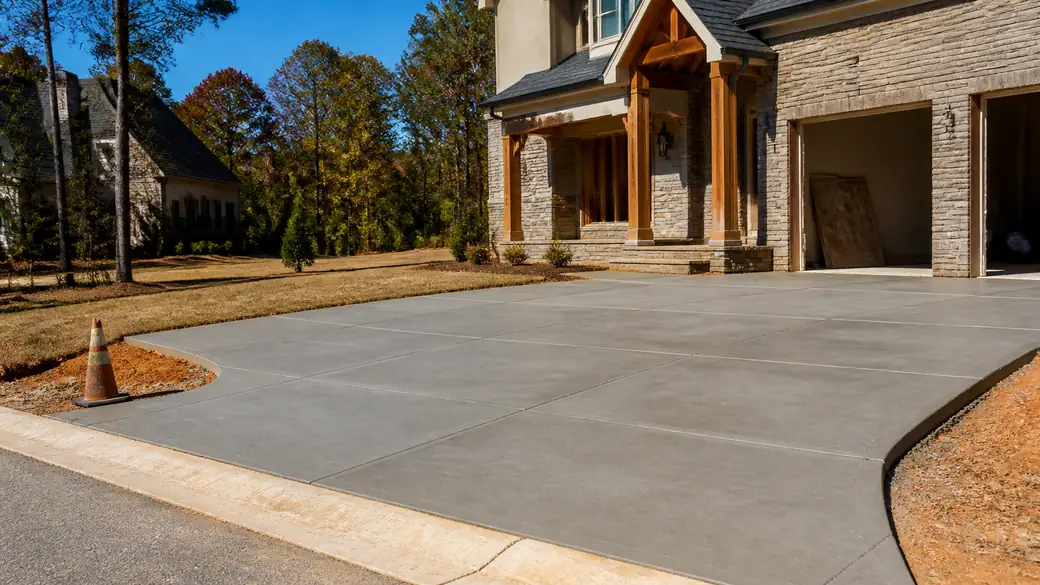
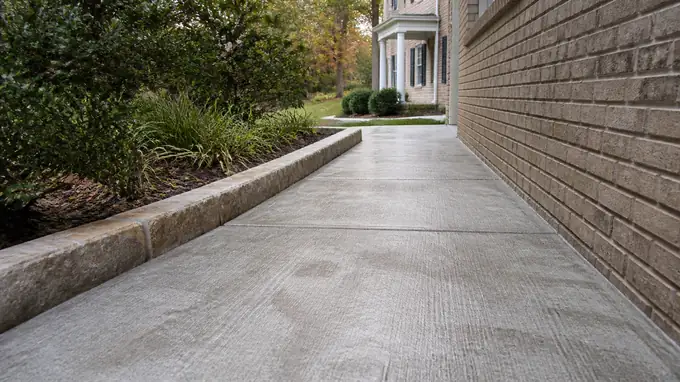
A concrete slab is the flat, load-bearing surface that everything else sits on: a garage floor, a shed pad, a patio, the base of an addition. We pour residential and commercial slabs in Canton, and the job runs the same way whichever it is. Get the ground right, set the reinforcement right, place the concrete at the right thickness, and finish the surface so water leaves it. None of that is complicated. All of it has to be done.
Every project starts on the site itself. We look at where water comes from and where it wants to go, test the ground the slab will sit on, and set the forms. Then comes excavation and a compacted gravel base. Rebar or wire mesh goes in next, held up on chairs so it ends up inside the slab rather than underneath it. We pour, screed, float and finish, cut control joints, and keep the surface damp while it cures.
Most slab failures start below the concrete, not in it. Loose fill that was never compacted settles, and the slab cracks over the low spot. Reinforcement lying flat on the dirt does nothing at all. Skip the control joints and the concrete picks its own places to crack, usually the worst ones. Water matters too. With about 50 inches of rain a year, a slab that isn't pitched to drain holds puddles, and water that gets under the edge slowly washes out the base.
Doing it right costs time more than anything else. Base preparation, which nobody sees once the pour is done, often takes longer than the pour itself, and we don't cut it short to fit a schedule. Getting it right also means matching thickness and mix to the load, whether that's a parked truck, a hot tub or a workshop full of equipment. The materials are the same ones everyone uses. The difference is in the hours spent before the truck arrives. Call for a free estimate.