+1 470-260-7028
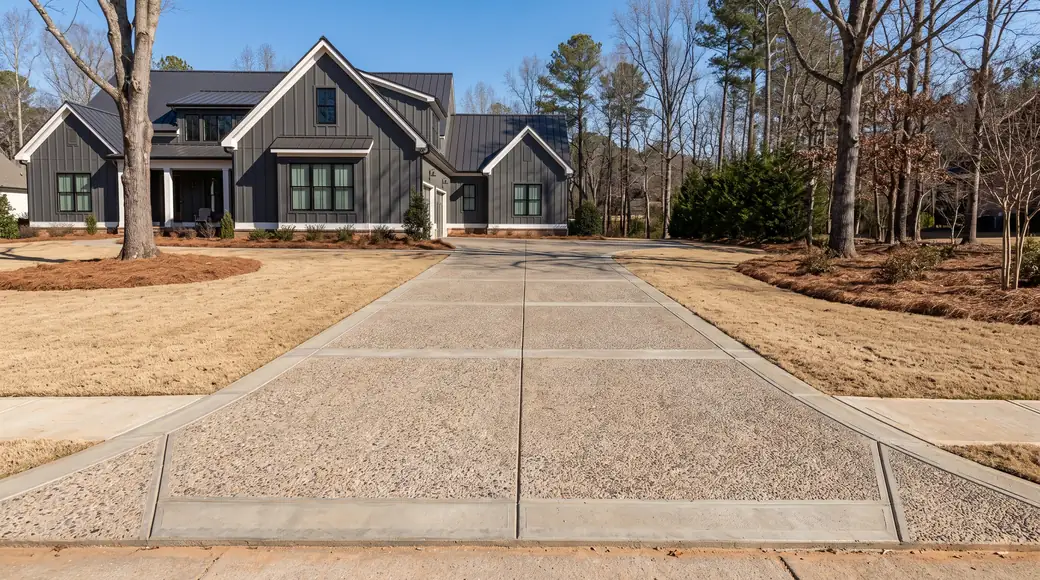
Exposed aggregate concrete driveway showing washed river-rock stone at a charcoal farmhouse-modern home in Alpharetta, GA, in clear late-morning sun.

Exposed Aggregate Finishes in Alpharetta, GA

Exposed aggregate is concrete with the top layer of cement paste washed off while the slab is still green, so the stone underneath sits proud of the surface. What you see is the rock we mixed in: pea gravel, river stone, granite chips, whatever reads right against the house. It is a finish, not a product, and the result is decided by the mix, the timing and the hand doing the washing. We are a concrete contractor in Alpharetta, and this is work we do often enough to know what a given stone looks like once it dries. Color reads differently wet than dry, and that catches people out.

Most of what we pour is driveways, patios, pool decks and the front sidewalk that ties them together. Alpharetta houses run to a median build year of 1996, which means a lot of original flatwork is now cracked, settled or stained past cleaning, and a replacement is due. People who have looked at stamped concrete often land here instead. Stamped imitates stone. Exposed aggregate is stone, in the slab, and it wears in rather than out, since there is no printed pattern on top to lose. It also holds traction when wet, which matters on a sloped driveway.

We cover Alpharetta and the towns it runs into, Roswell among them, on the same terms everywhere. Aggregate is unforgiving in one specific way: the window for washing the surface is short, and a crew that guesses at it leaves you with bald patches or stone that never comes clean. That is the whole reason to hire someone who pours it regularly rather than once a season. Tell us the square footage and what the house is faced with, and we can show you the stone options that suit it. Call for an estimate.

Call +1 470-260-7028

Get a FREE Quote

Exposed Aggregate Finishes: What the Work Covers

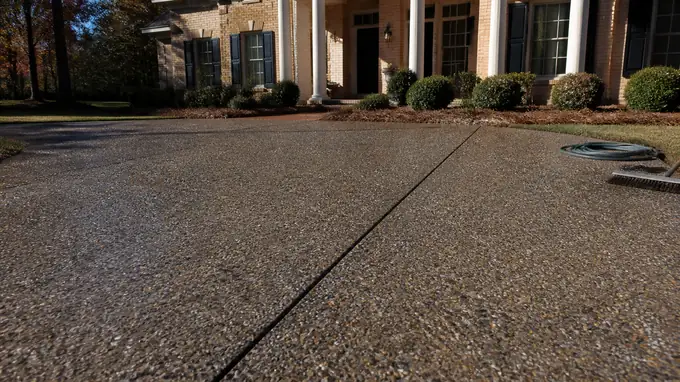
Newly washed exposed aggregate driveway with the stone just revealed at a tan-brick colonial in Alpharetta, GA, in clear late-morning sun.

Exposed aggregate driveway

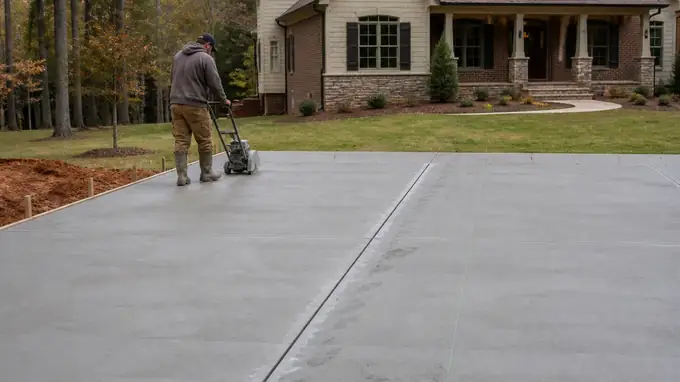
An exposed aggregate driveway starts the same as any other slab: graded base, compacted stone, four inches of concrete over rebar or wire mesh. The difference is the finish. We spray a surface retarder, let the slab set, then wash off the top paste so the stone underneath shows. Timing decides everything. Wash too early and you dig out rock, too late and it stays buried. Cars, freeze cycles and deicing salt all hit a driveway harder than a sidewalk, so we keep joints cut on schedule and seal the surface.

What Alpharetta Properties Need From Exposed Aggregate Finishes

Exposed aggregate turns up all over metro Atlanta, and most of the houses we pour for here went in during the mid nineties. The median home in Alpharetta was built in 1996, which puts a lot of original flatwork at right around thirty years old, poured to the standards of that decade, and much of it is finished. People call us because the driveway is spalling or the front walk has gone chalky and rough underfoot. Exposed aggregate answers that well: stone at the surface, washed clean, holding its color the way a broom finish never does.

Replacement is most of what we do around here, not new construction. There is already a slab in place, and what sits under it decides how the job goes. Some driveways break out clean over solid base, while others are sitting on ground that moved years ago, and that gets corrected before any new concrete goes back down over it. We do the same on sidewalks, patios and commercial concrete for smaller properties. Roswell falls inside the same range we cover, and the work there runs on the same terms as anything else.

The failures we see repeat themselves: aggregate washed too early loses stone and leaves bare spots that never blend in. Washed too late, the surface stays closed and the whole thing reads as gray concrete with a little texture in it. Thin sealer over exposed stone clouds up and peels off in sheets. A patch poured against a slab from the nineties rarely matches either, since the original stone is long out of supply and the old surface has weathered. Once a run fails in more than one spot, replacing it beats chasing repairs.

Getting it right is mostly a question of time. Prep is the slow part: grade, forms, rebar or wire mesh, and a base compacted properly before a truck ever shows up on the street. The wash window is short and it waits for nobody, so we bring enough hands to hit it clean, and after that the slab cures on its own schedule with no hurrying it along. A driveway poured this way sits in front of the house for decades in plain view, which is reason enough to take care with the parts nobody sees.
How a Exposed Aggregate Finishes Job Runs in Alpharetta

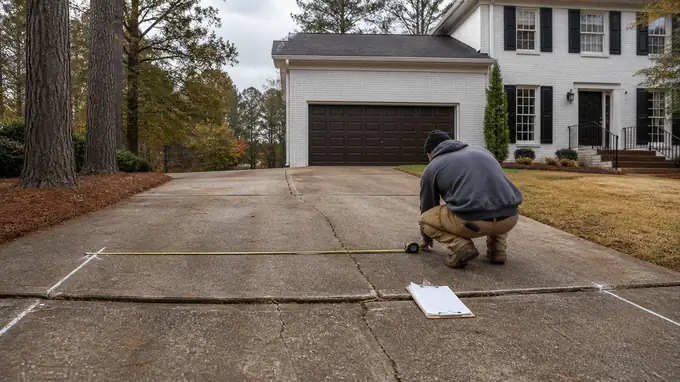
Existing driveway measured and marked before it is replaced at a painted-white-brick two-story home in Alpharetta, GA, after a rain shower.

Step 1: Site Evaluation

We walk the area with you and look at what the concrete has to sit on. Grade, drainage, how water leaves the site, where tree roots run, how thick the old slab is at the edges. On driveways we check the apron and the transition to the street, because that joint takes the most abuse. We talk through aggregate size and color while standing on the spot.

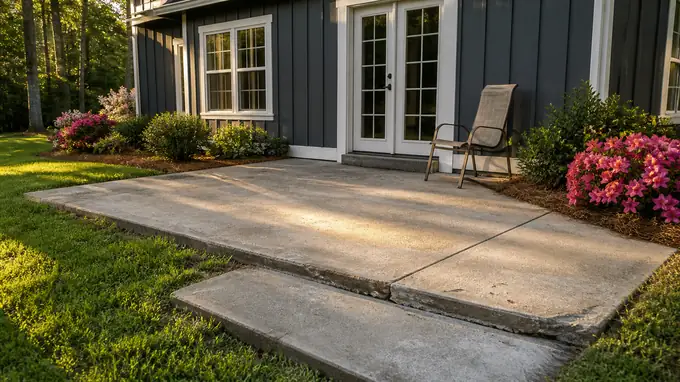
Worn back patio and steps of the kind a written estimate prices at a charcoal farmhouse-modern home in Alpharetta, GA, in late afternoon light.

Step 2: Written Estimate and Permits

Everything goes in writing: square footage, slab thickness, reinforcement, aggregate type, the exposure depth, and the finish. Exposed aggregate reads differently depending on how much paste comes off, so we agree on that in advance rather than after the pour. If the job needs approval before concrete installation begins, we handle that paperwork and schedule around it.

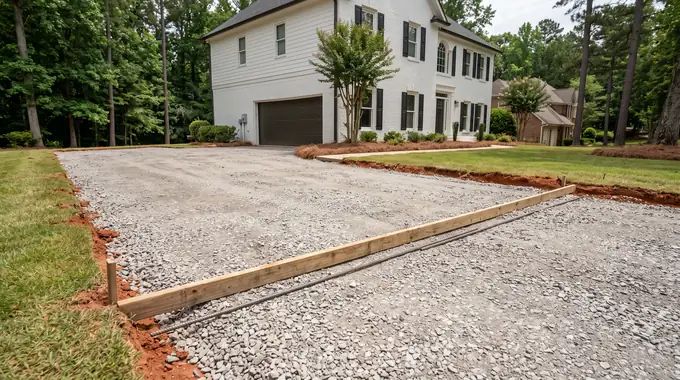
Broken-out concrete removed and the base rebuilt before a new pour at a painted-white-brick two-story home in Alpharetta, GA, under bright midday cloud.

Step 3: Demolition and Base Prep

Old concrete comes out and gets hauled off, not buried on site. Under the new work we want compacted graded aggregate base, usually four inches, run over with a plate compactor in lifts. Soft spots get dug out and replaced. Most failed slabs we tear out failed here first: poor base, standing water underneath, or fill that was never compacted at all.

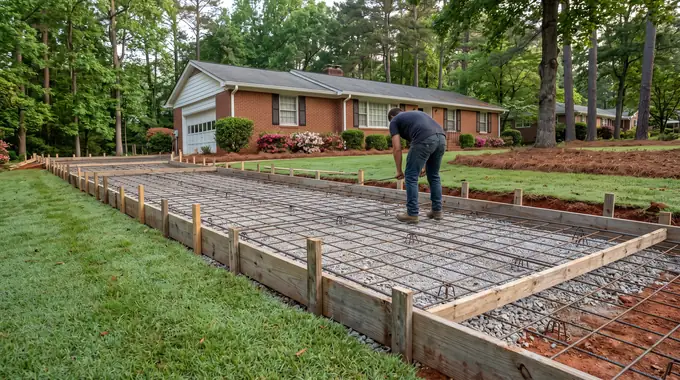
Wooden forms and rebar grid set and tied, ready for concrete at a red-brick ranch home in Alpharetta, GA, in early morning light.

Step 4: Forming, Steel and the Pour

Forms get set to the grades we planned, with fall away from the house. Sidewalks run four inches thick, driveways five or six depending on what parks on them, with rebar on chairs or wire mesh held up off the base. Steel lying on the ground does nothing. We pour, screed, and bull float in sections so nothing sets ahead of the crew.

Control joints cut into a new slab the day after the pour at a brick-and-siding two-story home in Alpharetta, GA, under bright midday cloud.

Step 5: Finishing, Curing and Final Walkthrough

Exposure is the part with a clock on it. We apply surface retarder, let the slab set, then wash and brush the paste off to bring the stone up evenly. Control joints get cut before shrinkage cracks pick their own line. The slab cures under cover or spray, and we walk it with you once it has hardened. Sidewalks and driveways stay off limits until then.

What Decides the Price of Exposed Aggregate Finishes

Most of what sets the number on an exposed aggregate job is decided before a truck is ordered, and you can see nearly all of it by walking your own property. What sits there now, how close concrete gets to the forms, what the slab has to carry, and where the water runs.

What changes the priceWhich wayWhy
An old slab, pavers or asphalt still in placecosts moreIt gets broken out, loaded and hauled off before we form anything.
Ground already stripped and close to gradecosts lessWe form and pour. Nothing to demolish, nothing to haul away.
A mixer that can back within a chute length of the formscosts lessConcrete goes straight into the forms instead of down a pump line or into wheelbarrows.
Narrow gates, a steep drive, or a backyard reached only on footcosts moreEvery yard of the pour moves by hand or by pump, and both add crew hours.
A slab that carries vehicles rather than foot trafficcosts moreThicker pour, rebar on chairs instead of wire mesh, more concrete over the same area.
Tree roots, buried utility lines or soft fill under the padcosts moreWe dig them out and compact the base back, or the finish cracks over them.
Ground that already falls away from the housecosts lessSlope carries the water off. No drains, no catch basin, no regrading.
Work touching the right of way, like a driveway apron or public sidewalkcosts morePermitting runs through the City of Alpharetta, and inspection sets the schedule.

Between bids, compare the parts that are easiest to leave out. Slab thickness. Rebar or wire mesh, and at what spacing. Whether the base is compacted stone or the dirt that was already there. Whether demolition, haul off and sealer sit inside the number or get added later. Get those in writing and the bids become comparable.

Exposed Aggregate Finishes: Questions We Are Asked Most

What stone options do you use for exposed aggregate around Alpharetta?

Pea gravel is the usual starting point, rounded and small, in tan and brown ranges. River rock reads larger and busier. Darker granite chip gives a slab more contrast, and blended mixes split the difference. We bring samples so you pick from real stone instead of a photo. Selection runs the same across Alpharetta, Milton, Roswell, Johns Creek and Chamblee, everywhere we work in metro Atlanta.

Can you expose aggregate on an existing slab in Alpharetta?

No. Exposure happens while the concrete is still green, either with a surface retarder or by washing the top paste off at the right hour. Once a slab has cured, that window is gone. What we can do on existing concrete is a bonded overlay, or tear it out and pour new. Which one fits depends on the condition of what is already down. We look before we answer.

How does exposed aggregate compare on price in Alpharetta?

Exposed aggregate lands above a plain broom finish and generally under the more involved stamped and colored work. The stone you choose moves it, since some blends cost more to buy than others. Past that, the finish is labor at the right moment rather than extra material. We measure the actual slab and put a number on that job. Call for a free estimate.

How does exposed aggregate wear on a Alpharetta driveway?

The stone carries the traffic and hides tire marks better than a smooth surface, so it ages well under daily use. What decides the rest sits underneath: proper thickness, rebar or wire mesh, and joints cut before the slab picks its own place to crack. Alpharetta's median home dates to 1996, so much of what we replace is original driveway concrete that has run out its life.

Does exposed aggregate need sealing in Georgia?

Yes. Sealer keeps the paste around the stone from dusting off, and it keeps oil and rust from soaking in. It also darkens the stone slightly and brings the color up, which most people like. Plan on redoing it periodically. A driveway comes due sooner than a patio that only sees foot traffic, and we tell you what product went down so you can match it later.

Is exposed aggregate too rough underfoot around a Alpharetta pool?

No, not if the stone is sized for bare feet. Pea gravel washed to a shallow exposure stays comfortable and grips well when the deck is wet, which is why it shows up around so many pools. Deeper exposure and larger river rock read rougher. We keep the coarse stone for driveways and sidewalks and hold the finer finish for pool decks.

Get a Free Estimate

Get a FREE Quote

Tap to call +1 470-260-7028