
+1 470-260-7028
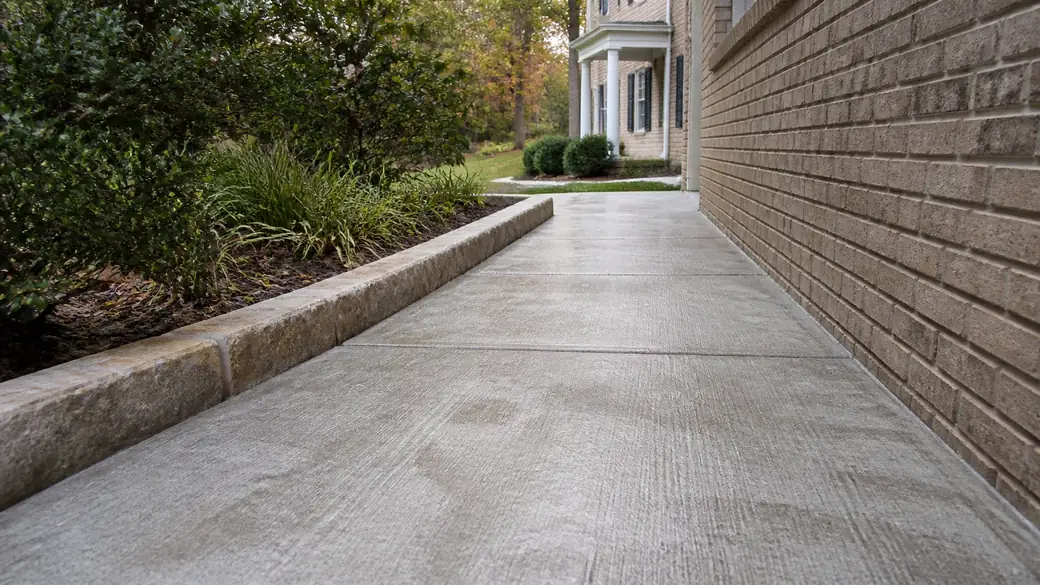
concrete sidewalk installation completed by a local contractor at a tan-brick colonial in Alpharetta, GA, under bright midday cloud.

Concrete Sidewalk Installation in Alpharetta, GA

A concrete sidewalk is the first thing a visitor walks on and the last thing most owners think about, right up until a slab heaves or a joint opens wide enough to catch a toe. We install new residential walks, replace failed ones, and tie them into existing driveways, patios and steps so the whole approach to the house reads as one surface. The median home in Alpharetta was built in 1996, which means plenty of the walks we're asked to look at have been in the ground as long as the house has. Some need one section replaced. Others need to come out entirely.

Water decides how long a walk lasts. This part of Fulton County sees about 50 inches of rain a year, and the ground is hilly, with 241 feet of local relief within a few miles, though it changes from one block to the next. A walk that pitches toward the house, or sits flat where runoff collects, slowly undermines its own base. So we grade and test every site before we set a form. The dominant soil here is Rion, which is well drained, but it varies across the county and we don't assume it. Compacted base, correct pitch, reinforcement and properly cut control joints are where a sidewalk earns its keep. Call for a free estimate.

Call +1 470-260-7028

Get a FREE Quote

Our Concrete Sidewalk Installation Work in Alpharetta

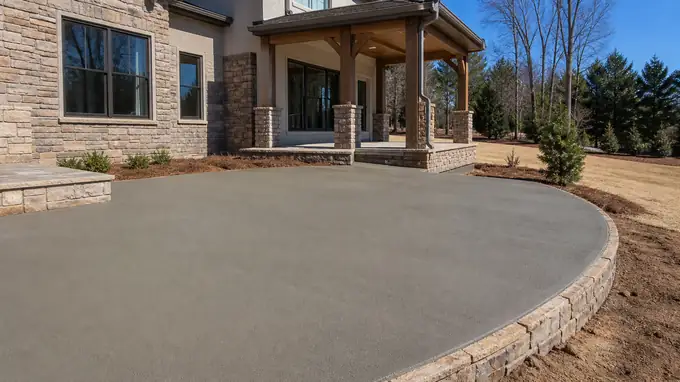
concrete slab installation completed by a local contractor at a stacked-stone and stucco home in Alpharetta, GA, in clear late-morning sun.

Concrete Slab Installation Cost

What a slab costs depends on the site more than the square footage. Thickness, rebar versus wire mesh, how much grading the ground needs, and whether old concrete has to be broken out and hauled away all move the figure. On a sloped Fulton County lot, cut and fill can outweigh the pour itself. We walk the property, measure it, and put every line item in writing. Call for a free estimate.


concrete driveway installation completed by a local contractor at a charcoal farmhouse-modern home in Alpharetta, GA, in late afternoon light.

Concrete Driveway Installation

Driveways fail at the edges and the apron first, so we thicken both. Rebar sits on chairs at mid-slab, not on the dirt, over a gravel base compacted in lifts. Control joints go in the same day so cracks land where we choose. A broom finish gives grip on a slope, while stamped or exposed aggregate suits a front entry. With about 50 inches of rain a year, every drive is pitched to shed water away from the garage.

concrete flooring installation completed by a local contractor at a painted-white-brick two-story home in Alpharetta, GA, in early morning light.

Concrete Flooring Installation

Inside a garage, basement or workshop, the part that matters most is the one nobody sees. We lay a heavy vapor barrier over compacted stone so ground moisture does not push up and lift tile, wood or epoxy later. Finish follows use: a hard steel trowel for a slick garage floor, ground and polished for living space, or a lighter texture ready for a floor covering. Saw cuts go in the same day, before the slab starts shrinking on its own.

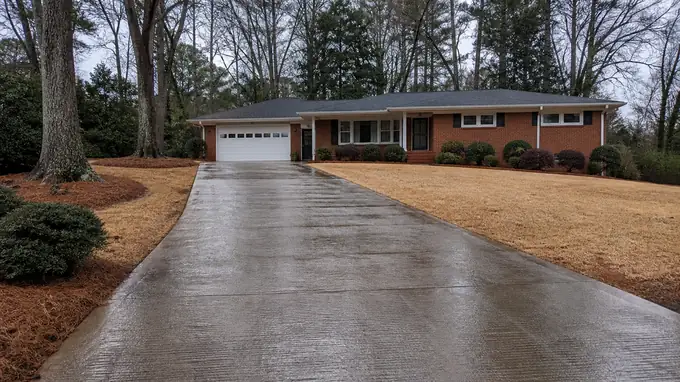
concrete slab repair completed by a local contractor at a red-brick ranch home in Alpharetta, GA, at blue hour.

Concrete Slab Repair

Before patching anything, we find out why it cracked. With the median home here built in 1996, many original slabs have had decades to settle, and the cause is usually a washed-out base, a downspout emptying against the edge, or tree roots. Hairline cracks get routed and sealed. A section that is broken through, heaved or hollow underneath gets cut out at the joints and replaced, with dowels tying new concrete to old. Patching over a bad base only buys a season.

How a Concrete Sidewalk Installation Job Runs in Alpharetta

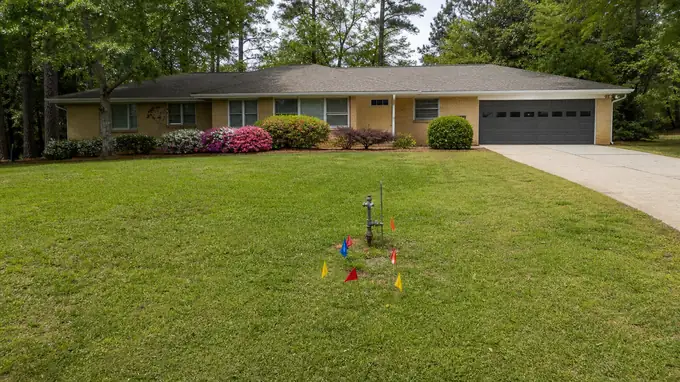
Utility flags mark buried lines before digging starts. at a buff-brick ranch home in Alpharetta, GA, under bright midday cloud.

Step 1: Site Assessment

We walk the route with a level and a tape before anything else. Fulton County is hilly, with 241 feet of local relief within a few miles, so the slope along the walk and the cross-slope for drainage get measured on your lot, not assumed. We look at tree roots, downspouts and where the old walk has heaved or cracked. Plenty of homes here date to around 1996, and their original walks often show exactly where water sat.

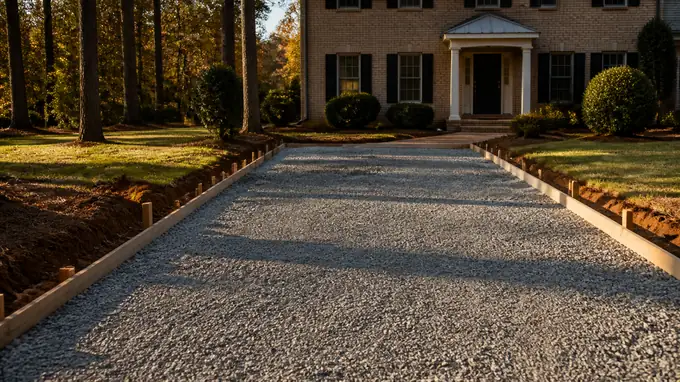
Crushed stone base is raked level inside driveway forms. at a tan-brick colonial in Alpharetta, GA, in late afternoon light.

Step 2: Site Preparation

Old concrete comes out and gets hauled off. We cut the grade to depth, pull topsoil and roots, and test the ground underneath. Rion soil, Fulton County's dominant type, drains well, but it varies across the county, so every site gets tested on its own. Then we lay a crushed stone base and plate-compact it in lifts. Skip that step and the slab settles unevenly. It is the most common failure we tear out.

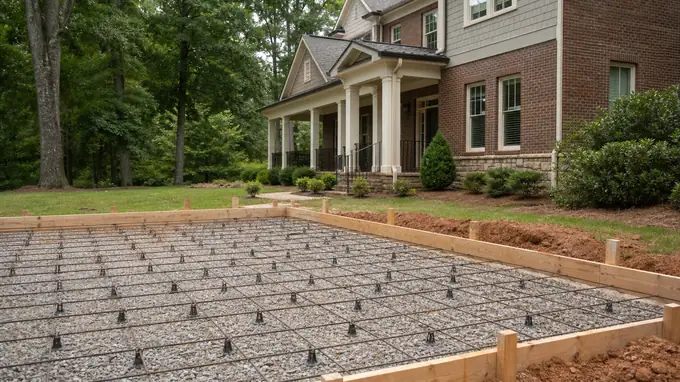
A worker ties rebar into a grid before a residential pour. at a brick-and-siding two-story home in Alpharetta, GA, under bright midday cloud.

Step 3: Forming & Reinforcement

Forms go in next: straight lumber for runs, bender board for curves, staked tight and set to string lines so the walk sheds water off one edge. With about 50 inches of rain a year, that cross-slope matters. We set rebar or welded wire mesh on chairs so it sits in the middle of the slab, not the dirt under it. Where the walk meets a driveway or steps, we dowel the joint so the two move together.

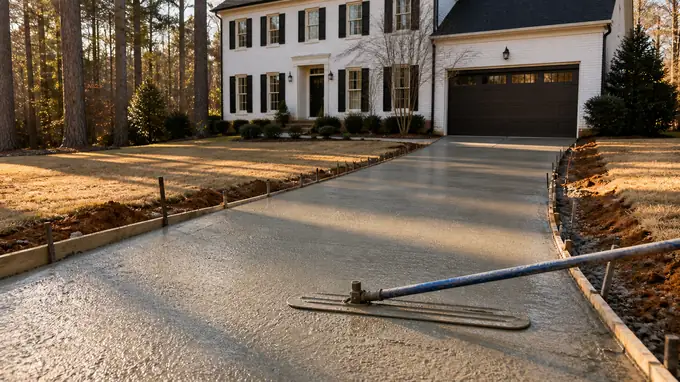
A bull float smooths a residential walkway surface after screeding. at a painted-white-brick two-story home in Alpharetta, GA, in late afternoon light.

Step 4: Pouring

Concrete arrives from the plant mixed for foot traffic and outdoor exposure, and we check slump at the truck before any of it goes in. We place it in sections, working it into the corners and around the reinforcement so there are no voids. A screed board strikes it flush with the forms. Adding water at the truck makes concrete easier to pour and weaker for good. We don't do it.

A hand trowel smooths a small patio surface to a hard finish. at a stacked-stone and stucco home in Alpharetta, GA, in clear late-morning sun.

Step 5: Finishing

Once the bleed water is gone, we float the surface and tool the edges round so they don't chip. Control joints get tooled or cut at regular spacing, roughly as far apart as the walk is wide, so any cracking happens in a straight line where we chose. A broom finish gives grip when it's wet. Stamped or decorative finishes go on at this stage too, if that's the plan.

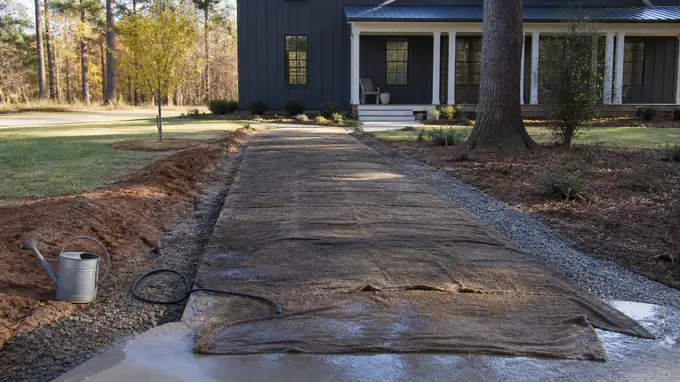
Damp burlap covers a small slab section during curing. at a charcoal farmhouse-modern home in Alpharetta, GA, under low winter sun.

Step 6: Curing

Fresh concrete gains strength slowly and needs to hold its moisture while it does. We spray a curing compound or cover the slab, depending on the day. Average highs here run around 71°F, but a hot, windy afternoon dries the surface faster than the inside, and that leads to fine surface cracking. Foot traffic stays off for the first days, anything heavier for longer. We mark the date for each before we leave.

A sprayer applies sealer across a driveway. at a red-brick ranch home in Alpharetta, GA, after a rain shower.

Step 7: Sealing

Sealer waits until the slab has fully cured, because sealing over damp concrete traps moisture and turns cloudy. We use a penetrating sealer on broom-finished walks and a film-forming one on stamped or colored work, where it also holds the color. Either one slows water absorption and resists staining from leaves, fertilizer and oil. A plain broom walk can go unsealed. We tell you which kind yours is and how often it should be redone.

Choosing the Right Concrete System

A sidewalk is only as good as what sits under it and what runs across it. Most of the walks we pour are plain concrete with a broom finish, which gives a surface that holds footing in the rain and asks very little of you afterward. Where a walk carries more than foot traffic, like a stretch a mower or a loaded wheelbarrow crosses every week, we add steel reinforcement and set the control joints closer together. Stamped and decorative finishes suit a front entry that meets the street. They look good, but a textured surface needs resealing over the years, and we say so before the choice is made.

The ground decides the rest. Fulton County is hilly, with 241 feet of local relief within a few miles, and a walk that climbs a front yard needs a different plan than one crossing flat lawn. Steeper runs get a coarser finish and sometimes a step or two. The area also takes about 50 inches of rain a year, so we pitch every slab to shed water off to the side and away from the house. Rion soil, which drains well, covers much of the county, but it changes from lot to lot. We test each site before recommending anything, and the system follows what we find.

Frequently Asked Questions About Concrete Sidewalk Installation in Alpharetta

How long does it take to complete a concrete sidewalk installation in Alpharetta?

Less time than most people expect, and very little of it is the pour. We lay out the line, cut the sod, grade and compact the base, set forms and reinforcement, then place and finish the concrete. Fulton County is hilly, though it changes from block to block, and it averages about 50 inches of rain a year, so a sloped yard or a wet week can stretch the prep. Your schedule comes from walking your site, not from a guess over the phone.

Do I need a permit for sidewalk installation in Alpharetta?

Yes, in a lot of cases, and it is worth settling before anything is dug. Whether your walk needs one depends on where it sits on the lot, whether it ties into a public sidewalk or curb, and how much grading the job involves. We check that as part of the estimate. If a permit applies, we handle the permit, and the forms go up only once the paperwork is in order.

How long does a concrete sidewalk installation take in Alpharetta, GA?

The pour itself goes quickly. What sets the timeline is the ground under the slab and the weather around it. Rion soil, which drains well, is the dominant type in Fulton County, but it varies across the county, so we test every site before we settle on a base depth. After finishing, the concrete needs time to cure before it takes foot traffic, and longer still before anything heavy rolls across it.

What permits are required for sidewalk installation in Alpharetta?

That changes with the job. A garden path behind the house is a different matter from a walk that crosses toward the street to meet a public sidewalk. We work out which approvals apply to your property before we price the work, because the answer affects how we plan it. Whatever is required, we pull it and coordinate the inspections, so you are not chasing forms or waiting on anyone while the project sits.

What areas beyond Alpharetta do you serve?

Our service area runs across north metro Atlanta, and every town in it is served on the same terms. A homeowner in Roswell gets the same crew, the same materials and the same process for testing the ground and setting reinforcement as anyone else we work for. The full list of towns appears elsewhere on this page. If you are not sure your street falls inside it, call for a free estimate and ask.

What types of commercial projects does Alpharetta Craftsman Concrete handle?

Mostly the concrete people walk on every day: entry walks at office buildings, paths between parking and doors, landings, and replacement of surfaces that have heaved or cracked. Professional, scientific and management services make up 25.9% of local employment, and education and health care another 16.8%, so offices, clinics and schools are the kind of property this work usually serves. Where a property wants more than a plain finish, we pour decorative and stamped walks too.

Get a Free Estimate

Get a FREE Quote

Tap to call +1 470-260-7028