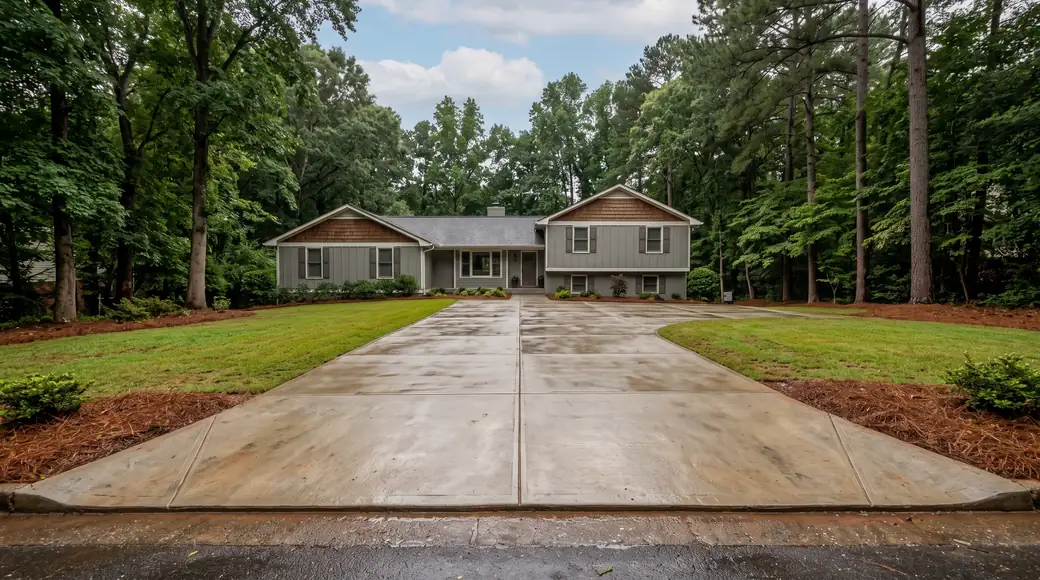
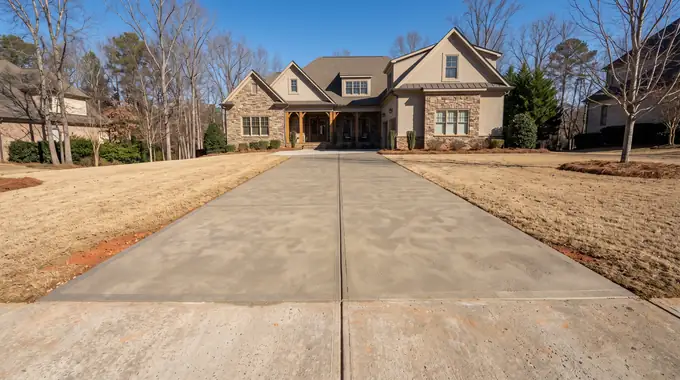
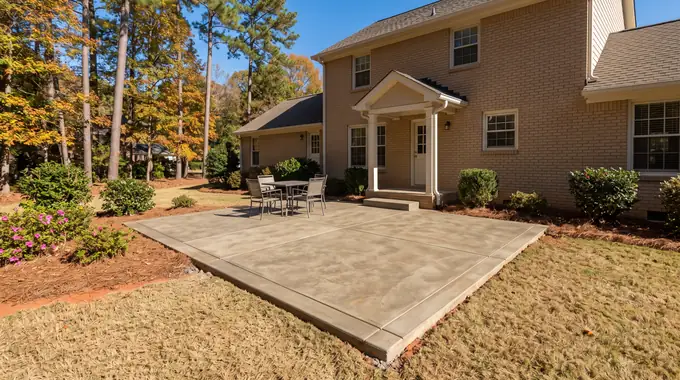
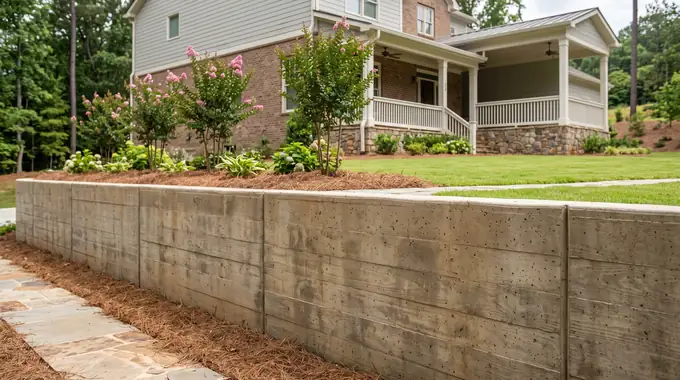
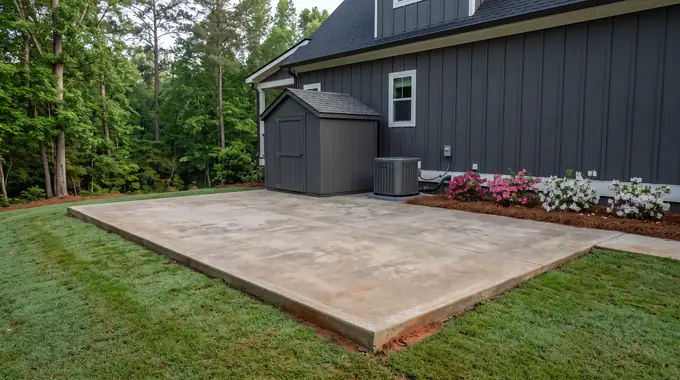
A job starts with us standing on your concrete with a tape and a level while you tell us what bothers you about it. We measure, check the fall, and read the edges and the joints, since that is where trouble shows itself first. Some problems are visible from the street, and others take a probe along the perimeter to learn whether the slab is still bearing on anything at all. We take photographs, write down dimensions, and ask what you want the finished work to do.
What you get back is a written scope: what comes out, what stays, how thick the new work goes, where the joints fall, and what the finish will be. The scope reads in plain language, one page, with no line items you have to decode. Around here the median house dates to 1996, so much of what we look at is original flatwork near the end of a long service life. When a section can be lifted or resurfaced instead of torn out we say so, and when it will not hold, we say that too.
Approval puts the job on the calendar, and before the crew arrives we tell you what we need: cars off the pad, a gate code if there is a gate, dogs indoors. Demolition is the loud day. We break the old slab, load it out by hand or by machine depending on access, and lay plywood where equipment has to cross turf or beds. Sidewalks and walkways that people still need stay open whenever the layout lets us route around them.
Underneath every good pour is dirt nobody ever sees: we grade it, dig out the soft spots, and compact the base in lifts until the tamper stops sinking. Anything organic that turns up comes out, because it rots and leaves a void behind it. Fall gets built in at this stage rather than corrected later, since water has to run off the surface and away from the house, and that pitch lives in the subgrade before a single form goes up. Concrete that fails early usually failed down here first, out of sight.
Forms go up next, set to line and to the grade we just built, staked tight so nothing bows when wet concrete leans on them. Steel rides on chairs, held up off the dirt where it can actually do something: rebar through a concrete driveway or any slab carrying vehicles, wire mesh on lighter flatwork. Control joints get laid out on paper before the pour, spaced to the thickness of the slab and shaped to the pour itself, because that is where we want the slab to crack. It cracks somewhere.
Pour day runs on the concrete's clock instead of ours. Trucks arrive, we place and screed to the forms, then bull float while the surface is still open, and after that it is all timing: work it too early and you trap bleed water in the slab, too late and the finish fights back. Broom texture, a stamped pattern, colored work, exposed aggregate: each one has its own window, so we bring the crew that finish requires.
Concrete installation goes sideways in a short list of predictable ways. Rain moves a pour, and we would rather reschedule than finish a slab that is taking on water. A late truck means the crew stands and waits, because you cannot hurry the middle of a pour or stop it halfway. Old patchwork turns up under demolition on driveways more often than anywhere else, and anything that changes the scope you hear about then, not at the end.
Curing is the last stage and the least visible one. Fresh concrete keeps gaining strength for weeks, so early on we keep it damp or covered, and we tell you when it takes foot traffic and when it takes a car. Colored and stamped surfaces get sealed once they have dried enough to hold sealer, though sealer is not a repair and does nothing for a slab that was poured wrong. We pull the forms, haul the debris out, sweep the site, and walk the finished work with you before the trucks head back to Alpharetta.