
+1 470-260-7028
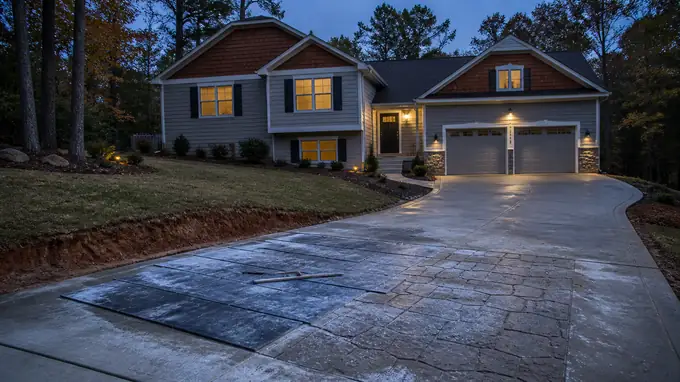
commercial concrete construction completed by a local contractor at a grey split-level home in Alpharetta, GA, in clear late-morning sun.

Commercial Concrete Construction in Alpharetta, GA

We pour commercial concrete in Alpharetta: building slabs, parking areas, sidewalks, curbs, loading pads and the dumpster pads nobody thinks about until one cracks. Professional services and health care are the area's two largest industries by employment, and the offices and clinics they fill need concrete that holds up under daily use. Those surfaces take delivery trucks, steady parking lot traffic and a constant stream of people on foot, and they are expected to stay flat for years. Looking good on day one is easy. We build for the load from the subgrade up, with the reinforcement and thickness the structure calls for, not whatever is quickest to place.

Getting it right starts with the ground. Fulton County is hilly, with 241 feet of local relief within a few miles, and conditions can change from one block to the next. The dominant soil is Rion, which drains well, but it is not the same everywhere, so every site is graded and tested on its own before any forms go up. With about 50 inches of rain a year, slope and runoff matter as much as the mix. We set grades so water leaves the slab instead of sitting on it or working its way underneath. Call us for a free estimate on your project.

Call +1 470-260-7028

Get a FREE Quote

Our Commercial Concrete Construction Work in Alpharetta

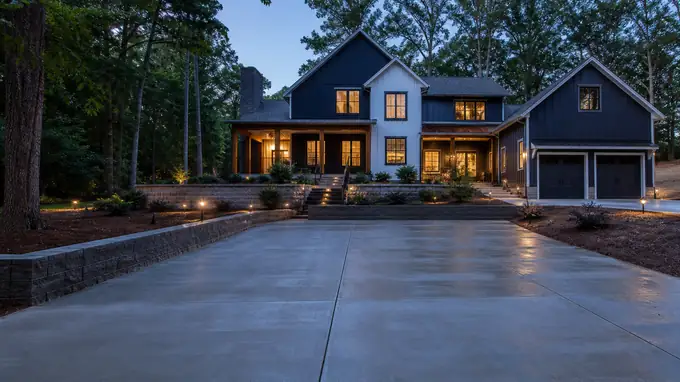
concrete slab installation completed by a local contractor at a stacked-stone and stucco home in Alpharetta, GA, in clear late-morning sun.

Concrete Slab Installation Cost

Thickness, reinforcement, site grading and finish decide what a commercial slab costs. A slab carrying forklifts needs more depth and heavier rebar than one under office partitions. Fulton County is hilly, with 241 feet of local relief within a few miles, so some lots need real cut and fill before we set a form. We test and grade every site first, then write an estimate that shows where each part of the cost comes from.


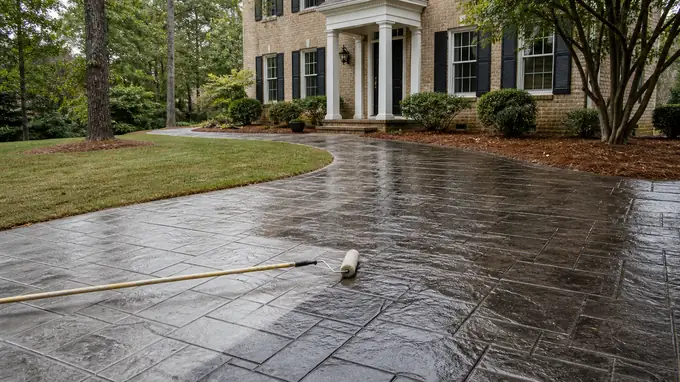
concrete driveway installation completed by a local contractor at a charcoal farmhouse-modern home in Alpharetta, GA, in late afternoon light.

Concrete Driveway Installation

Driveways fail at the edges, where tires leave the pavement and turn. We pour a thickened edge, set rebar on chairs so it sits mid-slab rather than on the dirt, and saw control joints as soon as the surface will take it. Finish is a broom texture for grip, or stamped and colored for a decorative look. Around 50 inches of rain falls here a year, so every driveway gets sloped to shed water away from the building.

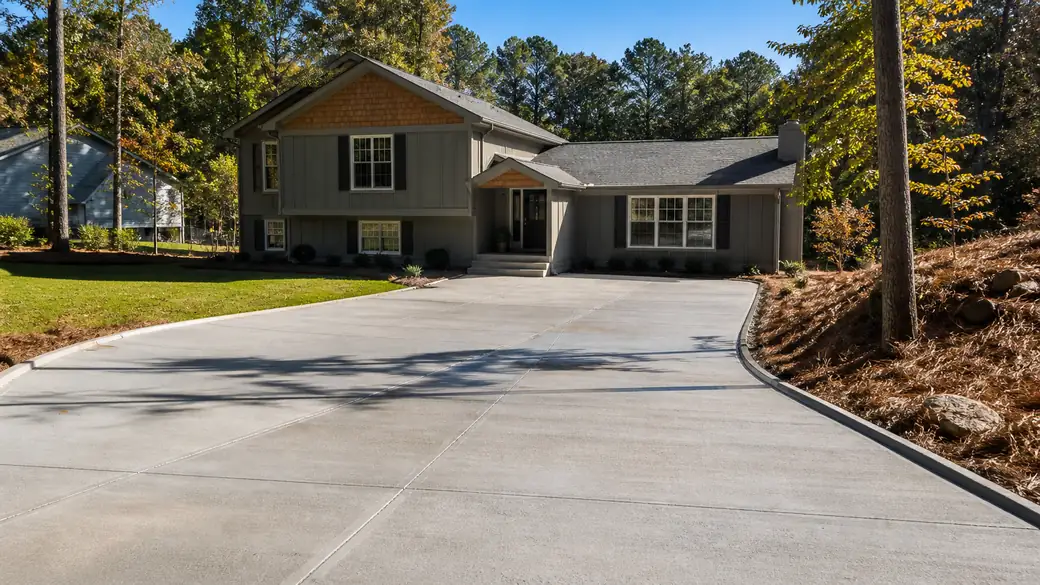
concrete flooring installation completed by a local contractor at a painted-white-brick two-story home in Alpharetta, GA, in early morning light.

Concrete Flooring Installation

Interior floors for warehouses, shops, clinics and offices start with a vapor barrier under the slab, so ground moisture never lifts the tile or flooring glue later. Reinforcement matches the loads the room will actually carry. Finish follows use: a hard steel trowel for racking and carts, ground and sealed for a showroom, a light texture where floors get wet. Joints go in on a planned pattern, so shrinkage cracks run along them instead of across the floor.

concrete slab repair completed by a local contractor at a red-brick ranch home in Alpharetta, GA, at blue hour.

Concrete Slab Repair

Before we patch anything, we find out why the slab failed. Settling usually traces to fill that was never compacted or water getting underneath, while wide cracks and heaving can point to undersized reinforcement. Hairline shrinkage cracks get routed and sealed. Sunken sections can often be lifted and the voids filled. Where the base is bad or the steel has rusted through, we cut out the section, fix what's under it and pour new concrete doweled into the old.

How a Commercial Concrete Construction Job Runs in Alpharetta

A contractor checks slope and drainage before work begins. at a tan-brick colonial in Alpharetta, GA, after a rain shower.

Step 1: Site Assessment

We walk the property with the drawings before we commit to a design. Fulton County is hilly, with about 241 feet of local relief within a few miles, so we shoot grades across the footprint and mark where water wants to go. Rion soil (well drained) is the county's dominant type, but it varies, so every site gets tested on its own. We also check truck access and the loads the slab will carry. We handle the permit.

A plate compactor tamps down soil in a small excavated area. at a tan-brick colonial in Alpharetta, GA, at blue hour.

Step 2: Site Preparation

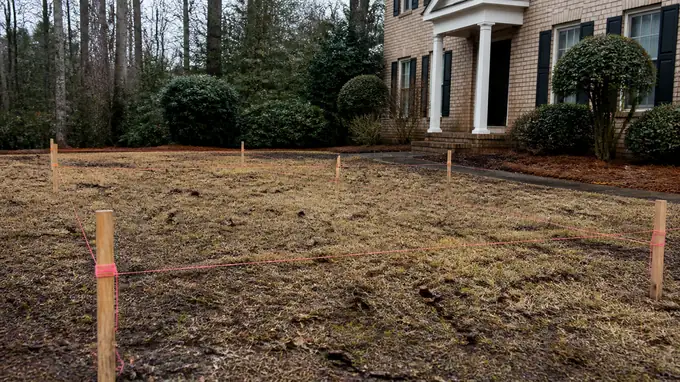
Topsoil and anything organic come out first, because they settle under load. On a sloped lot that usually means cutting one side and filling the other. Fill goes back in thin lifts, each compacted with a plate or roller and checked before the next one goes on. Over the finished subgrade we spread and compact a crushed stone base, then lay a vapor barrier wherever the slab will sit inside a building. Soft spots get dug out, not bridged.

Wooden forms outline a patio slab before the pour. at a painted-white-brick two-story home in Alpharetta, GA, under an overcast sky.

Step 3: Forming & Reinforcement

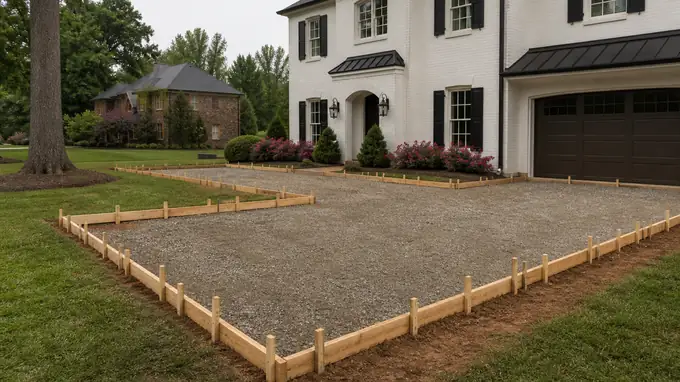
Forms are set to the grades from the assessment and braced so they hold line when the concrete pushes against them. Slab thickness follows the loads: a walkway, a loading area and a forklift aisle are not the same design. Reinforcement is rebar or welded wire, tied and set on chairs so it sits inside the slab instead of on the ground, which is the most common way steel ends up doing nothing. Dowels, anchor bolts and sleeves go in now.

A screed board levels fresh concrete on a small patio. at a tan-brick colonial in Alpharetta, GA, in early morning light.

Step 4: Pouring

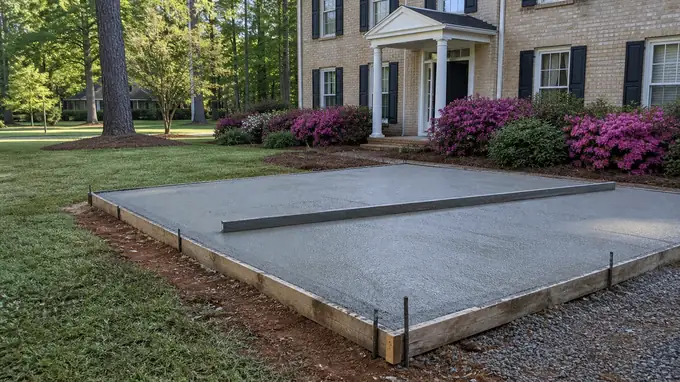
Pour day follows the forecast. With about 50 inches of rain a year, we reschedule rather than pour into a storm. The mix is ordered to the specification for strength and slump, and we check each truck's ticket before it discharges. Concrete goes in as close to its final position as we can place it, gets consolidated around the steel and form edges, and is screeded to grade. We don't add water at the chute to make it easier to move.

Stamping mats are pressed into a patio surface to imprint a pattern. at a grey split-level home in Alpharetta, GA, at blue hour.

Step 5: Finishing

Finishing starts when the bleed water is gone, not before. Working that water back into the surface is what leads to dusting and scaling later. Interior floors typically get a power-troweled finish; exterior slabs, ramps and walks get a broom finish for traction. Decorative work, such as stamped or exposed-aggregate surfaces, runs on its own timing. Control joints are tooled or saw-cut early, placed so the slab cracks where we choose rather than where it wants.

A hand sprayer applies curing compound to a finished patio. at a charcoal farmhouse-modern home in Alpharetta, GA, at blue hour.

Step 6: Curing

Most of a slab's surface strength is decided here, and curing is the step most often rushed. We keep the concrete moist while it gains strength, using curing compound, wet coverings or plastic sheeting depending on the finish. Average daily highs and lows around 71°F and 53°F are only averages, so we check the forecast for every night of the cure. Vehicles and equipment stay off until the concrete is ready to carry them.

A roller applies sealer to a stamped patio surface. at a tan-brick colonial in Alpharetta, GA, after a rain shower.

Step 7: Sealing

Sealing waits until the slab has cured and dried enough to take it. Exterior surfaces usually get a penetrating sealer that keeps water and oil out without making the surface slick. Decorative and stamped concrete gets a film-forming sealer that brings out the color. Interior floors may get a densifier instead, depending on how the space is used. We walk the finished project with you, point out the joints and drains, and explain when resealing makes sense.

Choosing the Right Concrete System

The right system starts with what the slab has to carry. A loading dock that takes delivery trucks every morning needs a thicker section, a stronger mix and a rebar grid, while a sidewalk in front of an office or clinic can run lighter and still hold up for decades. We look at the loads, the traffic pattern and how the surface will be finished before we choose anything. Stamped and decorative concrete belong on commercial property too, at entries and patios where people gather. We keep those finishes away from areas where forklifts turn. Reinforcement follows the same logic: fiber, welded wire or rebar, picked for the job and not out of habit.

Site conditions settle the rest. Fulton County sees about 50 inches of rain a year, so drainage and slope get worked out before a form goes down, not after water starts sitting on the surface. The ground here is hilly and changes from one block to the next. That is why we grade and test every site on its own. Rion soil drains well across much of the county, but we never assume a lot matches the map. A slab that cracks early usually traces back to a system chosen for the wrong conditions. Getting the base, the reinforcement and the drainage right the first time is far less work than tearing out a failed pour.

Commercial Concrete Construction Pricing in Alpharetta, GA

The price of a commercial slab is set mostly by what the site asks of us before the first truck arrives. Most of those things you can see for yourself on a walk around the property.

What changes the priceWhich wayWhy
Old concrete or asphalt still in placecosts moreIt has to be broken out, hauled off and disposed of before we can set a single form.
A ready-mix truck can back right up to the formscosts lessA direct chute pour goes faster than bringing in a pump to reach a pad behind a building.
Delivery trucks or forklifts on the finished surfacecosts moreHeavy loads call for a thicker slab and rebar in place of wire mesh.
Slope across the pour areacosts moreFulton County is hilly, and a sloped site needs cut, fill and compaction before it sits level enough to pour.
Water pooling or running across the lotcosts moreWith about 60" of rain a year, trench drains, regraded swales or a pitched surface often become part of the project.
Buried lines, irrigation or tree roots under the slabcosts moreAnything below the pour has to be located, protected or moved first.
A plain broom finishcosts lessStamped and decorative finishes add labor, color and sealer across the whole surface.

Put competing bids side by side and check that they describe the same slab. Look for the thickness, the reinforcement and its spacing, the depth of compacted base, and whether demolition, haul-off and the permit are included or left out. A low number that skips one of those is usually pricing a different job.

Frequently Asked Questions About Commercial Concrete Construction in Alpharetta

Can commercial driveways in Alpharetta be repaired while staying open to traffic?

Yes, in most cases. We split the driveway into sections and work one lane or bay at a time, so cars and deliveries keep moving on the other side. Cones, barricades and clear signs mark off the work zone. Fresh concrete has to cure before it can carry a vehicle, so a repaired section stays closed until the slab is ready. We plan the phasing around your busiest hours before the first saw cut.

How much does it cost to install a 4-foot concrete retaining wall in Alpharetta?

It depends on the site, and we only put a number on it after we have seen the ground. A wall that height holds back real load. The cost turns on footing depth, reinforcement, drainage behind the wall, equipment access and how much soil has to move. Fulton County is hilly, with 241 feet of local relief within a few miles, and grade changes from one block to the next. Call for a free estimate.

What type of foundation is best for Alpharetta homes?

No single type suits every lot. Rion soil, which drains well, is the dominant type in Fulton County, but it varies across the county, so we test each site before choosing anything. Flat, stable ground usually takes a slab on grade. Sloped lots often need stepped footings, a crawlspace or a basement wall. The same rule holds on residential and commercial work: the ground decides the foundation, not habit.

What types of commercial projects does Alpharetta Craftsman Concrete handle?

Parking lots, loading docks, dumpster pads, sidewalks, curb and gutter, building slabs, and the driveway aprons that connect a property to the street. We also pour decorative and stamped surfaces for entries, plazas and patios. Office buildings, medical practices, schools and retail centers all need the same basics done right: proper base, correct reinforcement, and joints placed where the concrete will actually crack. Small repairs get the same care as full installations.

What is the standard width for commercial sidewalks in Alpharetta?

There is no single number worth quoting from memory. Width comes from the approved site plan, the applicable code and accessibility requirements, and those can differ between a public walk along the street and a private path to a building entrance. We build to the dimension shown on the stamped plans. If there are no plans yet, we work out the layout with your engineer before any forms go down.

Will Alpharetta Craftsman Concrete take care of our city permits and inspections?

Yes. We handle the permit and schedule the inspections the job requires, including the pre-pour check on forms and reinforcement. From you we need the property details and any site plans or engineering drawings you already have, since those go in with the application. The paperwork goes to whichever office covers your property, and we track it from application through final sign-off so nothing stalls the pour.

Get a Free Estimate

Get a FREE Quote

Tap to call +1 470-260-7028