+1 470-260-7028
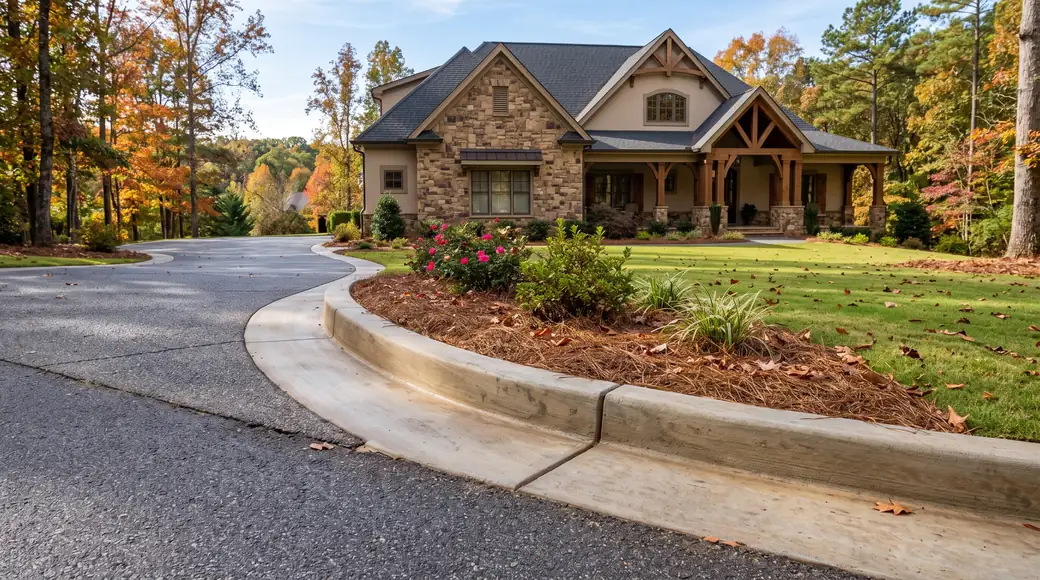
Poured concrete curbing with a rolled profile along a driveway edge at a stacked-stone and stucco home in Alpharetta, GA, in clear late-morning sun.

Curbing & Edging in Alpharetta, GA

We pour curbing and edging in Alpharetta, and most of it goes in around beds, driveways and walkways that were finished decades ago. A curb is a small piece of concrete doing a stubborn job: holding mulch in place, keeping turf out of the beds, giving a mower a clean line to run against. The median home here was built in 1996, so much of what we edge is mature landscaping that has spread well past its original borders. As a concrete contractor, we treat curbing as flatwork held to tighter tolerances.

Curbing rarely stands alone: it runs against a driveway, a concrete sidewalk, a patio slab, or all three, and it has to read as part of that work rather than something added later. Color and finish matter, so we can match a plain broom finish, carry a stamped concrete pattern from a patio out to the bed line, or run a simple gray curb that disappears into the lawn. What we do not do is guess at it, and height and radius get decided at the house rather than on paper.

Most curbing that fails does so from underneath: the base was thin, or it was never compacted, and the concrete cracked at the first point where the ground moved under it. Depth and base are the parts nobody sees, and the parts that decide how long a curb holds its line. That is where we spend the time. We work across Alpharetta and out toward Roswell, on driveways, sidewalk edges, patios and bed lines. Call for a free estimate on curbing or edging at your place.

Call +1 470-260-7028

Get a FREE Quote

Curbing & Edging: What the Work Covers

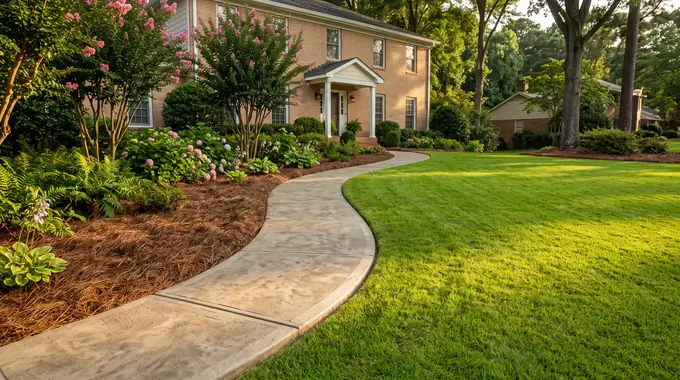
Low concrete edging strip along a mulched garden bed at a tan-brick colonial in Alpharetta, GA, in late afternoon light.

Concrete edging

Concrete edging is a continuous curb poured along a bed line, walkway or driveway, and it holds mulch, gravel and turf where you put them instead of in the grass. We run a stiff, low slump mix, cut control joints at regular spacing, tie rebar in where the edging meets a concrete sidewalk, and match a stamped concrete patio with the same color and pattern. Edging poured on loose fill settles, tips and pulls off the slab.
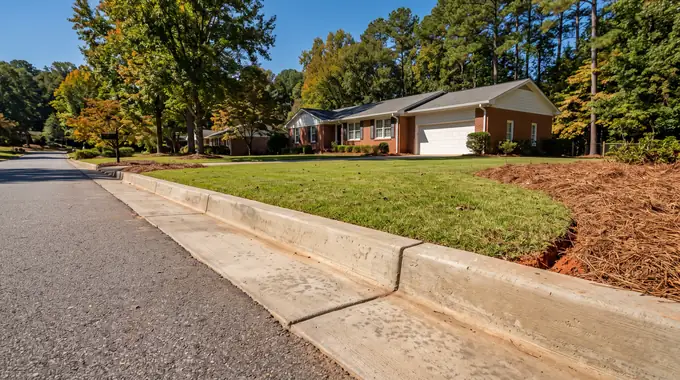
Concrete curb and gutter along a residential street at a red-brick ranch home in Alpharetta, GA, in clear late-morning sun.

Curb and gutter

Curb and gutter comes as one pour: the vertical curb face and the flat gutter pan that carries water to a catch basin. We compact the subgrade, set forms to grade, and slope the pan so water moves instead of standing. Dowels tie the joints, and rebar runs through the radius sections. On driveway aprons and commercial concrete lots, fall is what a concrete contractor has to get right, because no patch fixes a flat pan later.

What Alpharetta Properties Need From Curbing & Edging

Curbing and edging is flatwork at a small scale, and we run it the same way in every town we cover: Alpharetta, Milton, Roswell, Johns Creek and Chamblee, plus the rest of metro Atlanta. One crew, one mix, one standard of finish. A bed border in Chamblee gets the same base prep as a driveway edge in Milton. We do not chase work outside that circle, which keeps us close to the jobs we take. Distance from Alpharetta does not change how a job gets built.

Where the side yard is narrow and the landscape is already finished, we hand cart the mix instead of running the truck across turf. Boards go down first. Forms come out clean, so the back edge is a formed face and not a rough seam waiting to be buried in mulch. Access gets settled before the pour, not during it. On a good day the yard looks untouched except for the new concrete. That is not extra care, it is the only way to keep a finished lot finished.

The median house here was built in 1996, so the original bed edging on a lot of these properties is long past its service life. Plastic strip lifts. Steel rusts through at the stake. Mulch gets topped up season after season until the grade sits above the border and the line disappears entirely. Roots from plantings that came with the house push what is left sideways. We cut the old material out and pour a curb that holds its own line. Concrete does not lift or rust.

Getting it right costs time more than anything else. We compact the trench before any mix goes in, tie rebar or run wire mesh where a curb ties into a slab or driveway, and cut control joints at spacings that decide where the cracks land. Color goes in the mix rather than on the surface, so a chip does not read as a scar. Stamped and exposed aggregate finishes hold up the same way. Call for a free estimate on curbing and edging.

How a Curbing & Edging Job Runs in Alpharetta

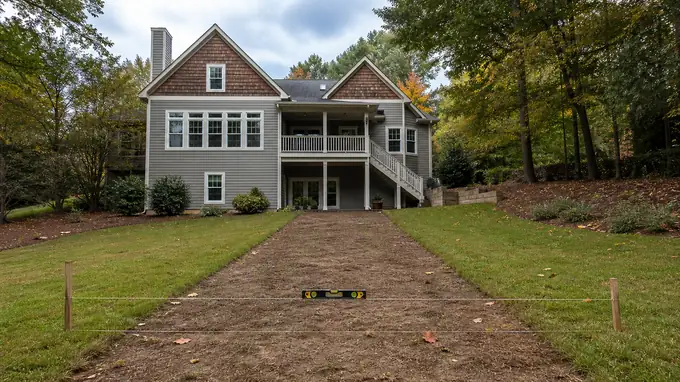
Backyard grade checked with a level and string before a patio pour at a grey split-level home in Alpharetta, GA, after a rain shower.

Step 1: Site Evaluation

We walk the whole run with a tape and a level before we put numbers on anything. Where the curbing meets a concrete driveway or a walk, we check the existing edge for movement and watch how the grade falls away from the house. Sprinkler lines, low-voltage wire and shallow roots all change the dig. We paint the path on the ground so you can look at the shape in daylight and move it before anyone breaks ground.

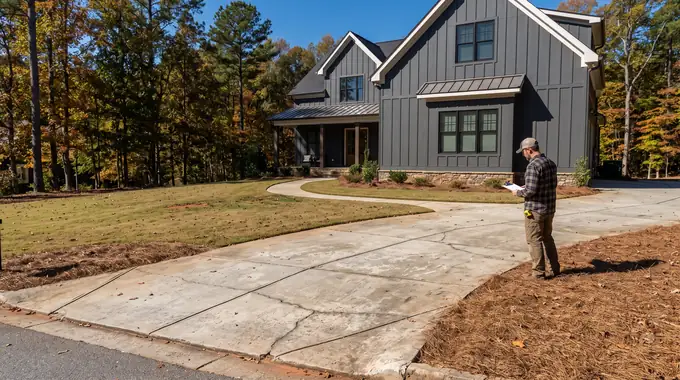
Concrete driveway and walk at a home, the kind of job an estimate covers at a charcoal farmhouse-modern home in Alpharetta, GA, in clear late-morning sun.

Step 2: Written Estimate and Permits

The estimate comes in writing, with linear footage, the profile you picked, the mix, joint spacing, and whether the run takes color or stays gray. Anything that could change once we open the ground gets named up front instead of surfacing halfway through. If the work touches a right of way or ties into public sidewalks, the permit gets pulled and the inspection happens before the pour goes on the calendar.

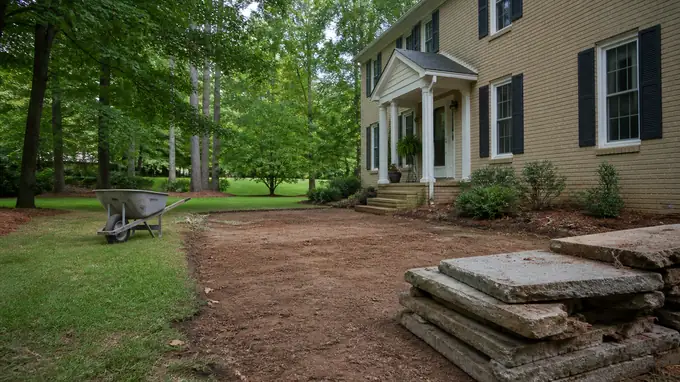
Old patio broken into slabs and stacked ready to be carried out at a tan-brick colonial in Alpharetta, GA, after a rain shower.

Step 3: Demolition and Base Prep

Old edging comes out whole where we can lift it and gets saw cut where we cannot. Sod, roots and topsoil come off next, because organic material left under concrete is what makes a run settle, tip and crack. We dig to grade, bring in crushed stone, and compact it in lifts. The median home in Alpharetta was built in 1996, so plenty of these beds hold buried irrigation nobody remembers installing.

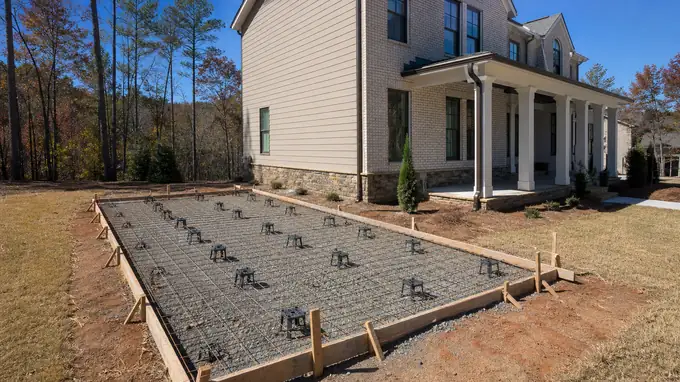
Patio forms squared up with reinforcing mesh on chairs at a brick-and-siding two-story home in Alpharetta, GA, in clear late-morning sun.

Step 4: Forming, Steel and the Pour

Forms go in after that: flexible board on the curves, straight lumber on long runs, staked tight so nothing bellies out under the weight of wet concrete. Steel depends on the job. Curb runs carry rebar through the length, and flatwork like driveways and patios gets wire mesh or bar up on chairs. We pour, consolidate and screed in one continuous pass, so no cold joint ends up sitting in the middle of a concrete installation.

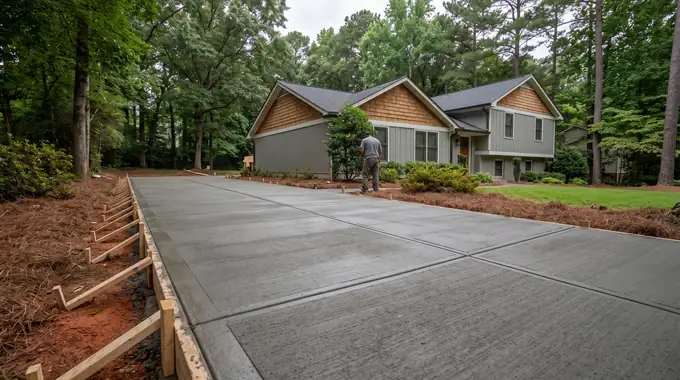
Freshly finished concrete slab curing under a clean broom texture at a grey split-level home in Alpharetta, GA, under an overcast sky.

Step 5: Finishing, Curing and Final Walkthrough

Finishing decides how the edge looks and how it sheds water, so it gets the most attention. Control joints are tooled or saw cut at spacing that suits the width, then the surface is broomed, troweled or stamped depending on what you chose. Curing follows with compound or plastic, holding moisture in while the concrete gains strength. We walk the finished run with you, check the lines and joints, and say when traffic can come back.

What Decides the Price of Curbing & Edging

Price on a curb job moves with the site, not with a rate card. Two yards on the same street, running the same length, can land well apart. Most of what drives the number is visible from your own back door. Median build year here is 1996, and plenty of those beds still hold their first edging.

What changes the priceWhich wayWhy
Old brick, timber or cracked concrete edging already in placecosts moreIt comes out and gets hauled off before we set a single form.
Truck can back within chute reach of the runcosts lessConcrete goes straight down the chute instead of into wheelbarrows or a pump line.
Tree roots, irrigation lines or low-voltage wire along the pathcosts moreWe hand dig and reroute heads rather than run a machine straight through.
Curb edges a driveway instead of a mulch bedcosts moreTire load calls for depth and rebar pins, not a thin bead of concrete.
Tight radiuses, step-downs and short broken segmentscosts moreForms bend and stake one at a time, and every end is finished by hand.
Yard sheds water across the line of the runcosts moreWe build in breaks so the curb does not dam water against the house.
Stamped, colored concrete or exposed aggregate finishcosts moreRelease, wash and sealer add steps, and the pour has to be worked faster.

Between bids, compare the parts that are easiest to leave out: demolition and haul-off, thickness, reinforcement, and what happens where the run meets existing flatwork. A lower number with none of that written down is a smaller job, not a better deal.

Curbing & Edging: Questions We Are Asked Most

Will curbing crack when the ground moves in Georgia?

Yes, eventually, in spots. Any long run of concrete cracks somewhere once the ground under it moves, so the real work is deciding where that happens: we cut control joints at regular spacing and give the concrete a straight line to break along instead of a crooked one across the face. A compacted base, honest depth and rebar run through a poured curb matter more than anything you can add to the mix.

Does curbing stop mulch washing out in Alpharetta storms?

Yes, mostly. A raised face gives the mulch something to sit behind, so water crossing the lawn runs around the bed instead of straight through the middle of it and out onto the driveway. Bark floats, and a hard enough rain still carries some over a low profile, so where water has an obvious path we run a taller face on that side and keep the rest low.

What shapes and colors of curbing can I have in Alpharetta?

Extruded curbing comes off the machine in set profiles: mower's edge, slant, rounded top, square, and taller walls for raised beds. Color goes into the mix rather than onto the surface, so it runs through the whole curb and a chip shows the same shade as the face. Stamped texture presses in while the concrete is still green, usually a brick or slate pattern, and we bring samples to lay against the house first.

What is the difference between curbing and edging on a Alpharetta property?

Edging is the line itself, the separation between bed and lawn, cut with a spade, held with steel, or formed in concrete. Curbing is one way to make that line: a continuous concrete barrier, poured or extruded in place, that holds mulch and soil back and keeps the mower off the planting. A spaded edge needs recutting every season, and curbing holds the same shape without that yearly work.

How long does curbing take to install on a typical Alpharetta lot?

Most residential runs are a single day: lay out the line, prep and compact the ground, extrude or pour, then cut the joints and seal. Long runs, tight radiuses and a lot of separate bed shapes push into a second day, and the concrete needs time to itself before anything drives, parks or sits on it. Curbing inside a yard rarely pulls a permit, though anything meeting public right of way goes through the City of Alpharetta.

Can you edge existing Alpharetta beds without lifting the planting?

Yes, in most beds. The machine needs a clear path a little wider than the curb itself, so we hand dig along the line and work around whatever is rooted tight to it, tying back branches that hang over the route. A plant sitting directly on the line sometimes comes out and goes back the same afternoon, and we walk the beds with you first to mark anything at risk.

Get a Free Estimate

Get a FREE Quote

Tap to call +1 470-260-7028