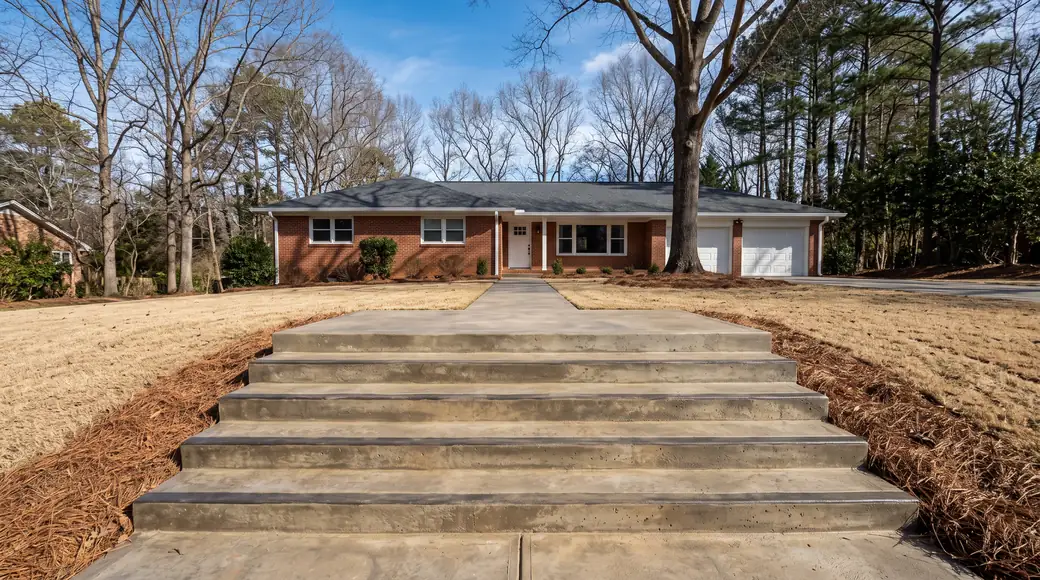
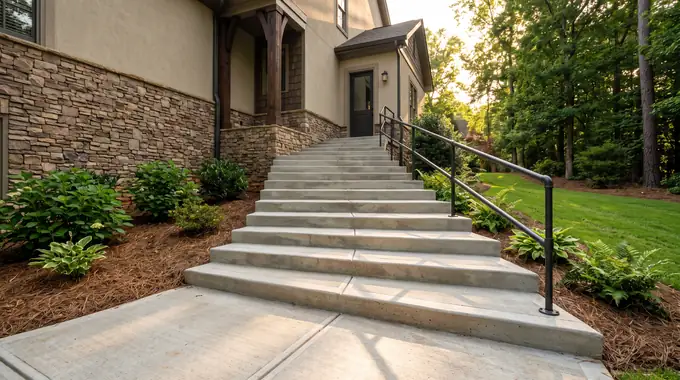
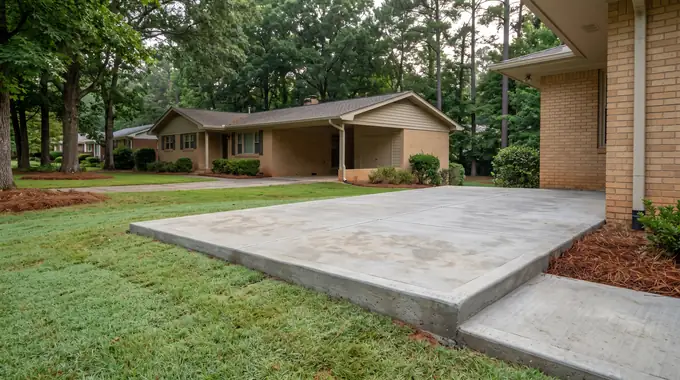
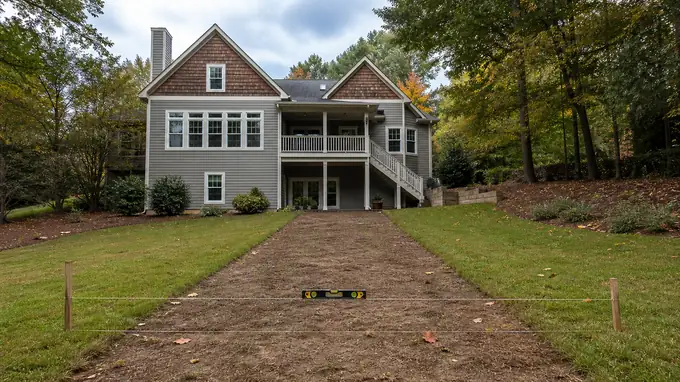
Steps, stoops and landings are the part of a house people touch every day, and around metro Atlanta most of them are about as old as the house. The median home here went up in 1996. That is long enough for a front stoop to settle, for treads to wear round at the nose, and for a landing to stop sitting flush against the door threshold. We build these in poured concrete, formed on site, and we rebuild the ones that have run out of life.
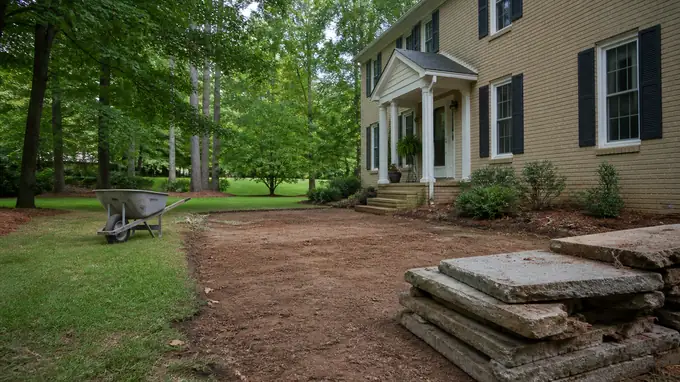
Our work runs across Alpharetta and out through the rest of metro Atlanta, and a set of steps in Roswell gets the same crew, the same forms and the same mix as one three streets over. Most of these jobs sit on occupied houses. People need to reach the front door, so we stage the demolition and the pour so there is a way in and out, and we keep the concrete off the lawn. That matters more on steps than on any other flatwork we do.
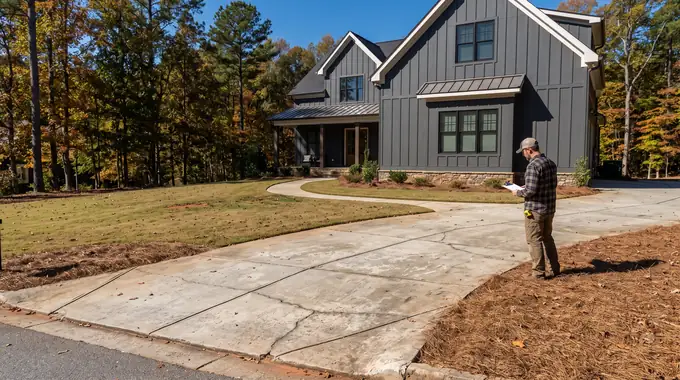
What we find on a stoop that old is usually one of a few things. Wire mesh that sank to the bottom of the pour instead of holding mid-depth in the slab. No rebar tying the landing back to the house, so the two have drifted apart. Risers that vary in height from the bottom of the run to the top, which a foot notices well before an eye does. Old patches that split along the same line every time. None of it is unusual, and none of it is worth patching a second time.
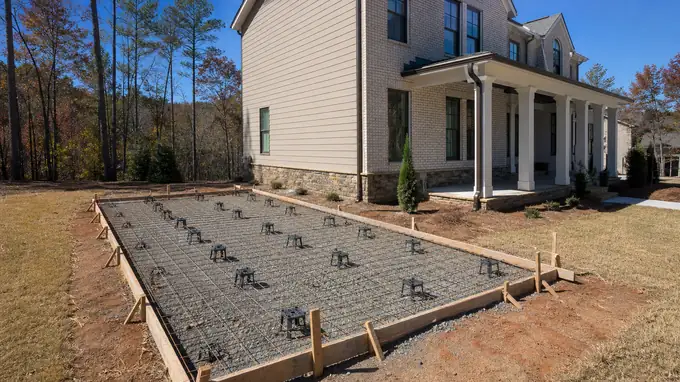
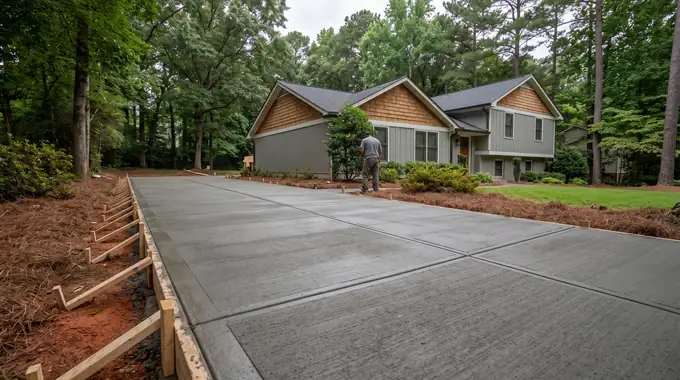
Getting one right means digging to solid ground, tying rebar into the footing, and forming risers that all measure the same. Finish is the last decision, and it is worth thinking about: broom for grip, exposed aggregate for texture, stamped and colored concrete when the steps need to read as one piece with a patio or a driveway. We are a concrete contractor, and steps are among the smaller pours we do, and among the ones we take the most care with. Call for a free estimate.