+1 470-260-7028
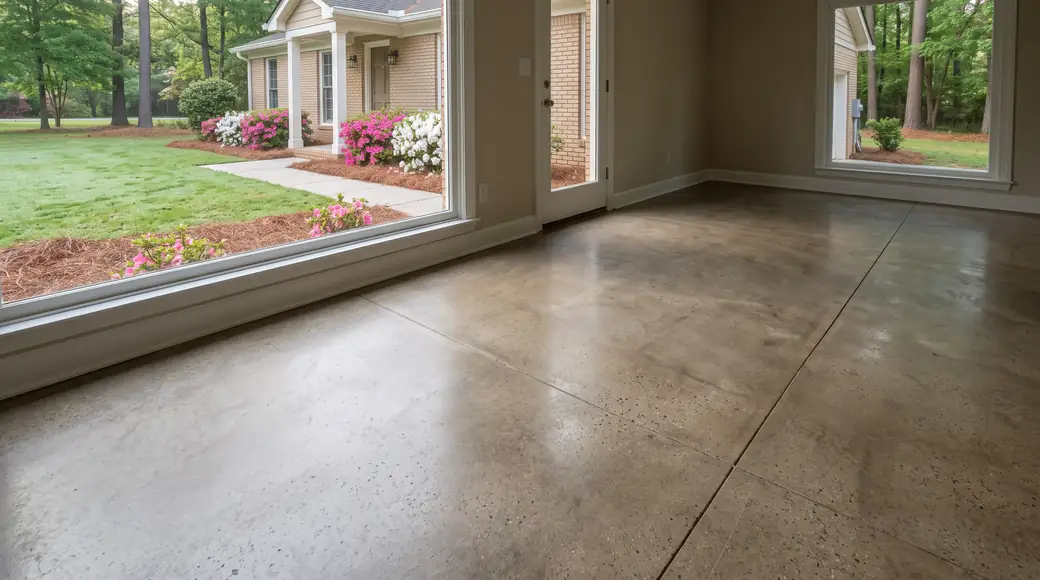
Polished concrete floor with a satin sheen in a finished interior room at a tan-brick colonial in Alpharetta, GA, in early morning light.

Polished Concrete Floors in Alpharetta, GA

We polish concrete floors in Alpharetta, and most calls start with a slab somebody already owns and no longer wants to cover up. A garage. A basement. A kitchen where the tile came out and nobody wants to put more tile back down. Shops and small commercial spaces call too, usually for a floor that has to take traffic. As a concrete contractor, we read the slab before we touch it, because age, finish, and whatever was glued to the top all decide what that floor can become. Some slabs polish out clean. Others need work first, and it is better to know that early.

Alpharetta houses tend to date to the mid nineties, with a median build year of 1996, so the slabs under them have already carried carpet, tack strip, adhesive and at least one coat of paint. That history shows up in a polished surface. It is not a flaw, it is a record of the house. Old carpet glue does not vanish, it darkens. In a city of 66,855 people, where the median home value sits at $605,700, most of these floors are inside houses somebody is living in, and that changes how we work. Dust control stops being a courtesy and becomes part of the job.

Polished floors are one part of what we do. We pour concrete driveways, patios and sidewalks, set rebar and wire mesh in flatwork that has to carry weight, and finish stamped concrete and exposed aggregate for people who want texture outside. A sidewalk and a polished basement floor are the same material handled two different ways. The tools change, the reading of the concrete does not. Our service area runs across Alpharetta and the towns pressed up against it, Milton among them, on the same terms in each. Call for a free estimate, and bring photos of the slab if you have them.
Call +1 470-260-7028

Get a FREE Quote

Polished Concrete Floors: What the Work Covers

Polished concrete

Polished concrete starts with the slab you already have. We grind through the surface with progressively finer diamond tooling, close the pores with a densifier, then bring it up to the sheen you want, from a soft matte to a full gloss. Good candidates are flat, sound and reasonably clean. What goes wrong is usually underneath: soft or dusty concrete that will not take a polish, old adhesive, or cracks that need chasing and filling before we start.

What Alpharetta Properties Need From Polished Concrete Floors

We grind and polish existing slabs into finished floors in Alpharetta, Milton, Roswell, Johns Creek and Chamblee, and the rest of metro Atlanta on the same terms. The median home here was built in 1996, so most of what we open up is a slab that has spent close to thirty years under carpet, tile or glued vinyl. That concrete is usually worth keeping. Polishing works with what is already poured instead of stacking another layer on top of it, which means the floor you end up standing on is the house's own.

Most of these jobs happen in houses people are still living in. We work room by room where that makes sense, seal off the rest, and run the grinders on dust collection so the mess stays where the work is. Basements, garages and main floors all behave differently once the covering comes off. A slab poured for a basement and one poured under tile were often finished to different standards, and we plan the sequence around whichever one turns out rougher.

The trouble is almost never the polishing. It is what the last two or three coverings did to the slab. Tack strip holes along every wall, adhesive that soaked in, a plumbing trench patched with whatever was on the truck that day. Grinding exposes all of it at once, and a floor nobody thought about under carpet becomes the thing you look at. Wire mesh sitting too high shows up as a shadow line. We tell you what your slab is before we commit to a finish.

Getting it right costs time more than anything else. The grinding sequence cannot be shortened without it showing in raking light, and joint fill, crack repair and adhesive removal all come before the first polishing pass does any good. Houses in this market carry a median value of $605,700, and a floor that runs the length of a main level is not something to hurry through for the sake of finishing a week early. We would rather walk the slab and tell you plainly what it will take than guess from photos. Call for a free estimate.

How a Polished Concrete Floors Job Runs in Alpharetta

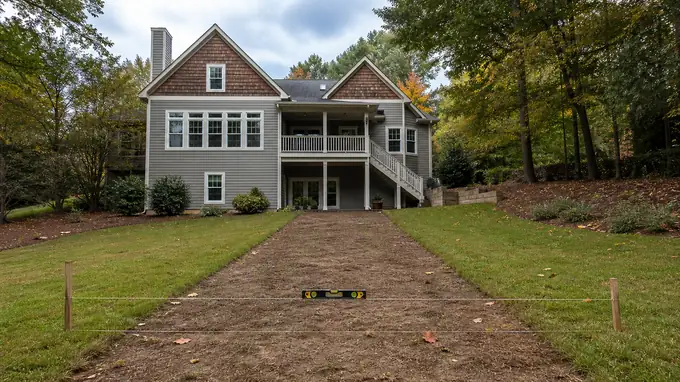
Backyard grade checked with a level and string before a patio pour at a grey split-level home in Alpharetta, GA, after a rain shower.

Step 1: Site Evaluation

We walk the area with you and measure it. On a floor job, that means checking the existing slab for cracks, cold joints, moisture and old glue or coatings that grinding has to cut through. We take a hardness read on the surface. Slabs poured in different decades polish differently, and we would rather find soft spots or exposed aggregate now than after the first pass.

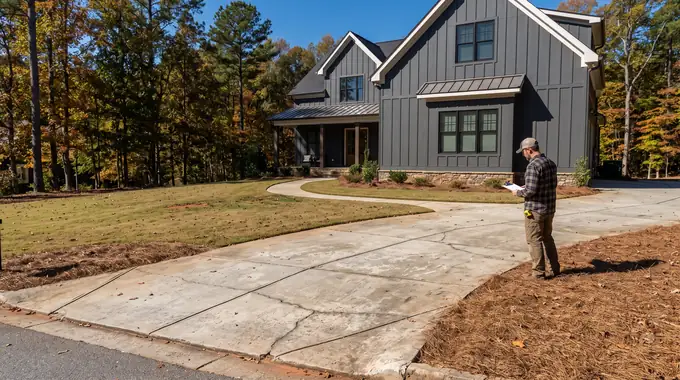
Concrete driveway and walk at a home, the kind of job an estimate covers at a charcoal farmhouse-modern home in Alpharetta, GA, in clear late-morning sun.

Step 2: Written Estimate and Permits

You get the estimate in writing, with the grit sequence, the densifier, the sheen level and the square footage spelled out. If the job pulls in outside flatwork, sidewalks or a concrete driveway, those line items stay separate so you can see them. We handle the paperwork side before anyone shows up with a grinder.

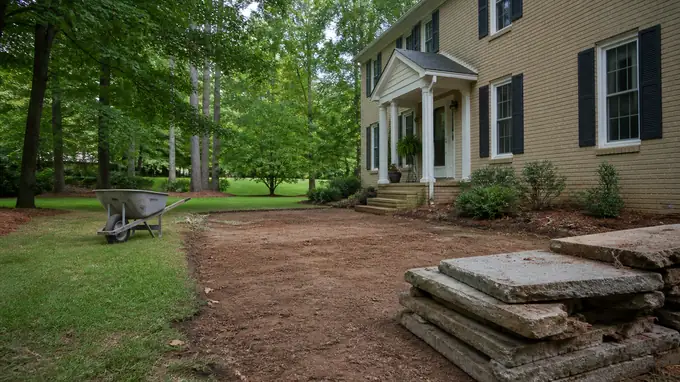
Old patio broken into slabs and stacked ready to be carried out at a tan-brick colonial in Alpharetta, GA, after a rain shower.

Step 3: Demolition and Base Prep

Old flooring comes up first: tile, thinset, carpet tack strip, sheet vinyl and the adhesive under it. We shot-blast or grind the residue off rather than chasing it with solvent. If a section of slab is spalled past saving, we saw-cut the bad area out, rebuild the base and pour back with rebar or wire mesh tied into what stays.

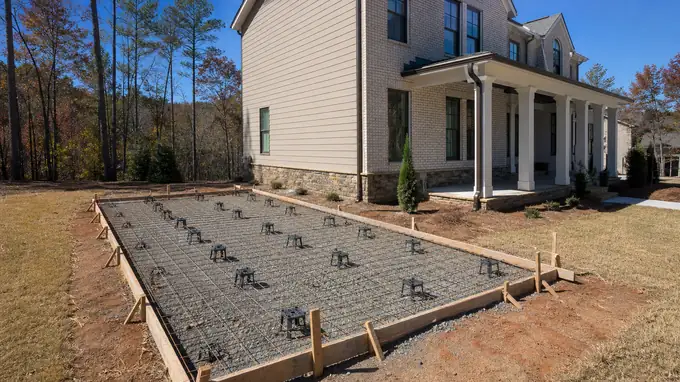
Patio forms squared up with reinforcing mesh on chairs at a brick-and-siding two-story home in Alpharetta, GA, in clear late-morning sun.

Step 4: Forming, Steel and the Pour

Where new concrete installation is part of the job, we form to grade, set steel on chairs so it sits in the middle of the slab and not on the dirt, and pour four inches for interior flatwork. Control joints get cut early, usually the same day. Joints cut late are how a floor ends up with a random crack running through it.

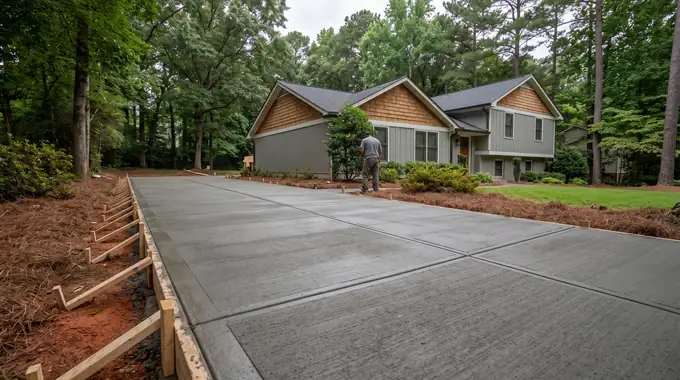
Freshly finished concrete slab curing under a clean broom texture at a grey split-level home in Alpharetta, GA, under an overcast sky.

Step 5: Finishing, Curing and Final Walkthrough

Polishing starts with metal-bond diamonds and steps up through resin grits until the sheen matches what you picked. Densifier goes on mid-sequence to harden the surface, then a guard coat. New concrete cures before any of that happens, and we do not rush it. Green slabs polish soft and gray out later.

We walk the finished floor with you under the lights you actually use, since raking light shows swirl and skipped passes that overhead fluorescents hide. Driveways and interior floors both get the same last look. Anything that needs another pass gets one.

What Decides the Price of Polished Concrete Floors

Two floors the same size can land far apart on price, and the slab under your feet is usually why. The median home in Alpharetta was built in 1996, so most of the slabs we polish have already lived under carpet, tile or a coat of glue. Where a job needs a permit, that goes through the City of Alpharetta. Here is what moves a number up or down.

What changes the priceWhich wayWhy
Old glue, thinset or epoxy still on the slabcosts moreEvery layer has to grind off before the first polishing pass.
Cracks, spalls and wide control jointscosts moreEach one gets patched and filled by hand so it holds a shine.
Moisture rising up through the slabcosts moreSlabs poured without a vapor barrier need testing and a finish that can live with it.
Depth of grind you want, cream finish or exposed aggregatecosts moreCutting deeper into the aggregate takes more passes and more diamond tooling.
Ground floor access through a wide doorcosts lessThe grinder and dust extraction roll straight in instead of coming apart for stairs.
A slab that has to come out firstcosts moreBreakout, haul off and a fresh pour with rebar or wire mesh add days of work before polishing begins.
Downspouts and grading that carry water away from the edgecosts lessA dry perimeter keeps the finished floor from fighting water it cannot win against.

Setting two bids side by side, read past the total. Look for the grit sequence, whether a densifier is named, and who patches the cracks before polishing starts. Ask whether moisture testing is in the price, and how the edges and closets get handled.

Polished Concrete Floors: Questions We Are Asked Most

Can my existing Alpharetta slab be polished, or does it need replacing?

Yes, most of the time. We grind a test patch and read what comes up: hardness, how deep the aggregate sits, old adhesive, patchwork, how flat the original pour is. A slab under a house built around 1996, the median year here, is usually sound enough to take a polish. Replacement is a conversation about movement, not about a floor that looks rough.

How is a polished Alpharetta floor maintained day to day?

Dust mop it, then damp mop with clean water or a pH neutral cleaner. Skip soaps and waxes. Film buildup is what dulls these floors, not traffic. An entry or a kitchen benefits from an occasional burnish once the shine flattens in the walking lanes. There is no reseal cycle, because the gloss is ground into the concrete rather than laid on top of it.

Does polished concrete show every crack in a Alpharetta floor?

No, but it does not hide them either. Polishing is a clear process, so whatever lives in the slab stays readable: hairlines, cold joints, old saw cuts, patches where plumbing came through. We fill what needs filling first, and a filled crack reads as a line instead of a gap. Some owners like that honesty. Others pick a darker dye to quiet it down.

How much gloss can a polished Alpharetta floor take?

Anywhere from a soft matte to a near mirror, decided by how far up the grit sequence we run and how much densifier the slab drinks. Most houses land in the middle, bright enough to catch the windows without turning the room into glare. High gloss shows dust and footprints sooner. Lower gloss forgives more and cleans exactly the same way.

Is polished concrete practical for a Alpharetta shop floor?

Yes. It takes jack stands, pallet jacks and dropped tools better than coatings do, since a coating chips and then peels outward from the chip. Oil is the thing worth planning around, so we densify and seal with that in mind. Commercial concrete runs the same process at a coarser final grit, because a shop floor works harder and needs to show less.

How long does polishing a Alpharetta floor take?

Figure a few days for a typical house floor, longer if the slab has to come down flat or an old covering fights the grinder. Dye and densifier steps add waiting time between passes. You can walk it the day we finish and set furniture back shortly after. Larger commercial floors get sectioned so part of the space keeps working throughout.

Get a Free Estimate

Get a FREE Quote

Tap to call +1 470-260-7028