+1 470-260-7028
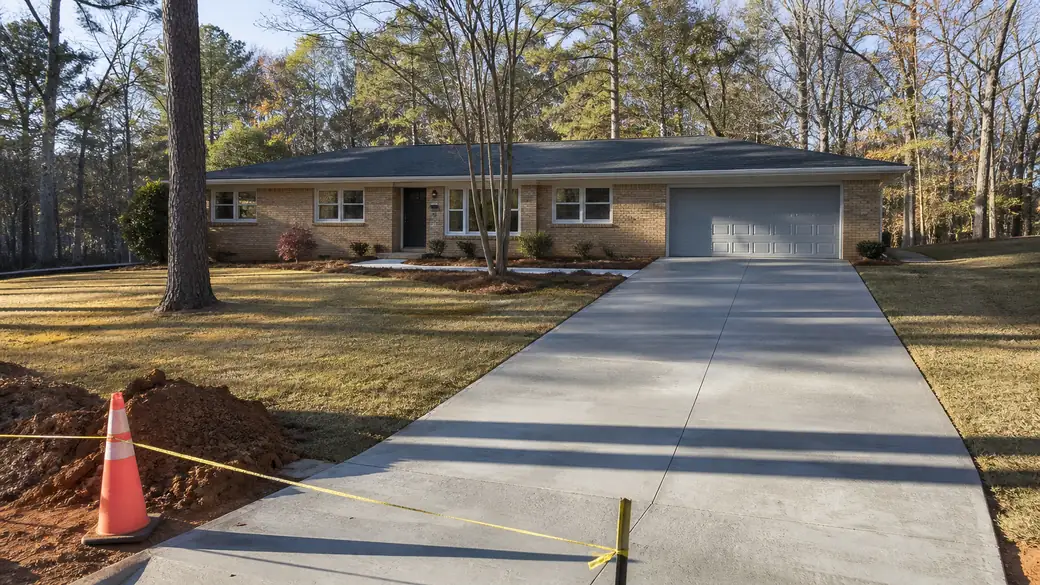
concrete repair services completed by a local contractor at a buff-brick ranch home in Alpharetta, GA, under low winter sun.

Concrete Repair Services in Alpharetta, GA

Concrete repair means fixing the slab you already have, when that slab is still worth keeping: cracked driveways, settled patio sections, spalled walks, steps that have pulled away from the house. The median home in Alpharetta was built in 1996, so much of the concrete here has been carrying cars, foot traffic and weather for close to thirty years. Some of it only needs its cracks cleaned out and sealed. Some of it has a failing base underneath and needs more than that. We look first and tell you which one you have.

Every repair starts with a walk around the property. We check where water sheds and where it sits, and how the slab meets the house, the garage and the street. Fulton County is hilly, with 241 feet of local relief within a few miles, and it changes from one block to the next, so every site is graded and tested on its own before we touch it. Then we cut out what is failing, fix what it sits on, and match the new surface to the old one as closely as the materials allow.

A patch over a problem nobody found is how most repairs fail. The crack gets filled, the base keeps washing out, and a new crack opens a foot away. The area gets about 50 inches of rain a year, and that water goes somewhere: under a slab edge, along a downspout line, into a joint that was never sealed. Rion soil drains well and is the county's most common type, but it is not what sits under every yard. Stamped and decorative surfaces add one more risk. A bad color match shows from the street.

Getting it right takes time on the parts you never see. That means cutting back to sound concrete instead of feathering a patch over a weak edge. It means compacting and replacing base material where it has moved, and setting reinforcement where the new section ties into the old. Steps get pinned back to the structure they belong to. Sometimes it means telling you a section should come out entirely, because a repair would not hold. Call for a free estimate, and we will show you on the slab itself what we would cut, what we would keep, and why.

Call +1 470-260-7028

Get a FREE Quote

Our Concrete Repair Services Work in Alpharetta

concrete slab installation completed by a local contractor at a stacked-stone and stucco home in Alpharetta, GA, in clear late-morning sun.

Concrete Slab Installation Cost

Most of the cost of a slab is decided before any concrete arrives. Fulton County has 241 feet of local relief within a few miles, and a sloped lot can need cut, fill and a compacted gravel base before forms go in. Thickness is the other lever: a 4-inch patio slab and a 6-inch slab carrying a truck take different volumes of concrete and different reinforcement. We walk the property, check grade and drainage, and write the estimate from what we find.

concrete driveway installation completed by a local contractor at a charcoal farmhouse-modern home in Alpharetta, GA, in late afternoon light.

Concrete Driveway Installation

A driveway takes more abuse than any other flat surface on the property: tire loads, turning wheels, and about 50 inches of rain a year running across it. We pour driveways at 4 to 5 inches over a compacted gravel base, reinforce with rebar or wire mesh, and pitch the surface to shed water. Control joints go in so cracks form where we put them. The finish is your call: broom texture for grip, stamped patterns, or exposed aggregate.

concrete flooring installation completed by a local contractor at a painted-white-brick two-story home in Alpharetta, GA, in early morning light.

Concrete Flooring Installation

Interior concrete floors are about flatness and moisture as much as looks. In basements, garages and workshops we lay a vapor barrier under the slab, reinforce it, and finish with a steel trowel for a tight, dense surface. From there it can be ground and polished, sealed, or coated with epoxy. The common failure is moisture rising through a slab poured without a barrier, which lifts coatings and any flooring laid over it.

concrete slab repair completed by a local contractor at a red-brick ranch home in Alpharetta, GA, at blue hour.

Concrete Slab Repair

The median home here was built in 1996, and slabs from that era show their age in predictable ways: hairline shrinkage cracks, sunken sections by the garage, joints that have opened and let water under. We find the cause before touching the surface. Fine cracks get routed and sealed. Structural cracks get epoxy injection. Settled sections can be lifted with polyurethane foam, and anything too far gone is cut out and replaced, doweled into sound concrete.

What Makes Alpharetta Craftsman Concrete's Concrete Work Different

A crack in a driveway is usually the last thing to happen, not the first. Something underneath moved, held water or lost support, and the slab simply reported it. Our repair work starts with that cause, because filling a crack without fixing what opened it only buys a season or two. With the median home in Alpharetta built in 1996, plenty of the concrete we look at has carried cars, roots and rain for decades. That history matters. We read the surface for the pattern of the damage, then decide whether the slab needs a patch, a lift, a partial replacement or a full pour.

Every site gets tested on its own before work starts. Rion soil, which drains well, is the dominant type across Fulton County, but it changes from one lot to the next. So does the ground itself: the county has about 241 feet of local relief within a few miles. On a sloped lot, water runs toward something, and we want to know what before we pour. We check the base, grade for drainage and set reinforcement to suit the load the slab will carry. We handle the permit when the project needs one. New concrete is matched to the old surface as closely as the materials allow, stamped and decorative work included.

Failed repairs tend to go wrong in the same few ways. The patch was troweled over a dirty or loose edge and popped out. The new section went in without tying into the old slab, so the two moved separately. Or the drainage problem behind the crack was left alone, and about 50 inches of rain a year found the same path again. Getting it right takes more time up front: cutting back to sound concrete, cleaning the joint, doing the grading nobody sees once the job is finished. That is the part we never skip. Call for a free estimate on your driveway, patio or slab.

Choosing the Right Concrete System

A concrete system is more than the slab you see. It is the base under it, the reinforcement inside it, the joints cut across it, and the way water leaves the surface. On a repair, choosing the right system means working out which of those parts failed. A cracked driveway with a sound base may only need the damaged section cut out and poured back with matching materials. A patio that has dropped at one corner usually points to the ground underneath, and patching the top only hides the problem for a season.

We start at the ground, not the surface. Fulton County's dominant soil is Rion, which drains well, but it changes across the county, so we test each site on its own before deciding anything. Grade matters as much. The county carries about 241 feet of local relief within a few miles, and a driveway on a slope loads its base differently from a flat patio. Once we know the conditions, we set the scope: section replacement, full tear-out, added reinforcement, or new jointing. We handle the permit where the work needs one.

A repair fails most often when it is matched to the crack instead of the cause. Water is usually behind it. This area gets about 50 inches of rain a year, and a slab that sheds it toward the house, or lets it sit along an edge, will undermine its own base. Another common miss is pouring new concrete against old without doweling the two together, so the joint rocks and breaks. With the median home here built in 1996, plenty of residential slabs are old enough that the original reinforcement and joint spacing deserve a hard look.

Getting it right costs time at the start. Testing the soil, checking the grade and lifting a failed section to see what sits under it all happen before any concrete arrives. Sometimes that means recommending more work than you asked about. Sometimes less. Stamped and decorative surfaces add a step, since matching color and pattern on an existing patio takes test pours and patience. If you are weighing a patch against a replacement, call for a free estimate. We would rather talk you out of a replacement you do not need than pour one twice.

Concrete Repair Services Pricing in Alpharetta, GA

Two cracked slabs on the same street can price very differently, and the reason is usually something you can see from the curb or find with a shovel. A repair is shaped by what is already in the ground, what has to come out, and how we reach it. These are the factors that move a repair quote, and which way they push it.

What changes the priceWhich wayWhy
A slab that has sunk, not just crackedCosts moreSettling usually means the base washed out or was never compacted, so the ground gets fixed before the surface does.
Rebar or wire mesh in the old slabCosts moreCutting out a section with steel in it takes more saw time and labor than plain concrete.
How a truck reaches the workTight access costs moreA patio behind a fence may need concrete pumped or wheeled in, while a driveway at the street takes a chute straight from the truck.
Where water goes in a hard rainPoor drainage costs moreIf downspouts or a slope send water under the slab, we redirect it first. Otherwise the repair fails the same way.
Tree roots near the damageCosts moreRoots that lifted a panel have to be cut back before new concrete goes down.
Thickness the repair calls forThicker costs moreA driveway section carrying vehicles needs more depth and reinforcement than a walkway.
Stamped or decorative finish to matchCosts moreMatching an existing pattern and color takes test work and hand finishing.
Damage only at the surfaceCosts lessIf the slab is sound underneath, resurfacing can fix it without tearing anything out.

When you compare bids, check that each one describes the same job: how much comes out, how thick the new concrete is, what reinforcement goes in, and what happens to the base and drainage. A lower number that skips the base usually buys the same crack twice. Ask every contractor, us included, to put those items in writing.

Get a Free Estimate

Get a FREE Quote

Tap to call +1 470-260-7028


