
+1 470-260-7028
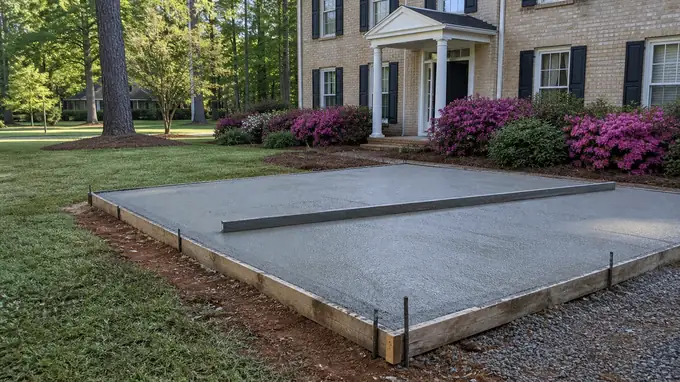
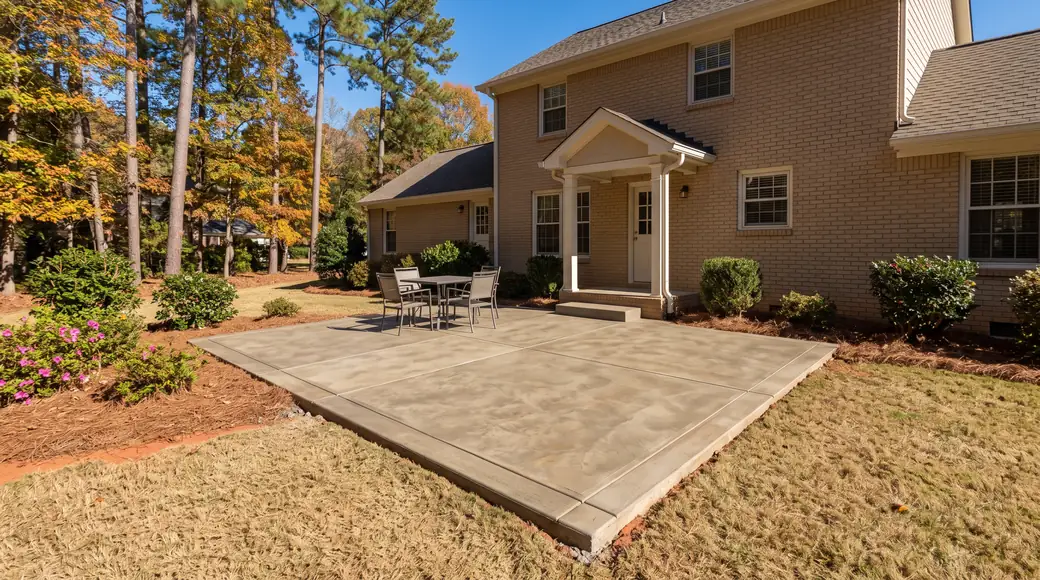
concrete patio construction completed by a local contractor at a stacked-stone and stucco home in Alpharetta, GA, in clear late-morning sun.

Concrete Patio Construction in Alpharetta, GA

We pour concrete patios for Alpharetta homes: plain broom finish, stamped, or decorative, each set on a base built for the yard it sits in. The median house here was built in 1996, and plenty of the patios poured alongside them have spent a long time out in the weather. Some have cracked. Some were simply too small from the start. Either way, we break out what needs to go and build a surface meant to hold up.

Water and slope decide most of how a patio turns out. The area sees about 50 inches of rain a year, and Fulton County is hilly, so every slab we pour is graded to shed water away from the house. Rion soil, which drains well, is the county's dominant type, but it changes from lot to lot. We test each site before the forms go in, and the base and reinforcement follow from what we find. Call for a free estimate.

Call +1 470-260-7028

Get a FREE Quote

Our Concrete Patio Construction Work in Alpharetta

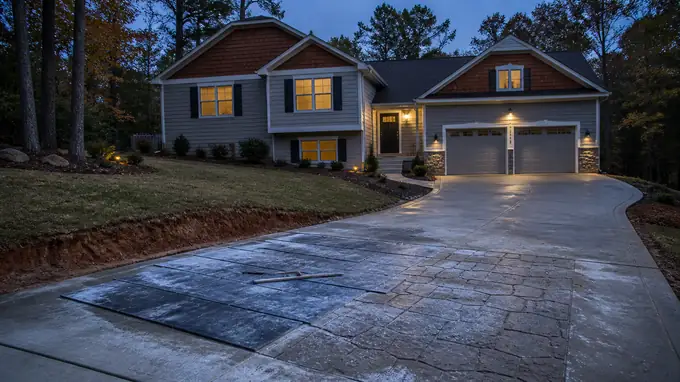
concrete slab installation completed by a local contractor at a stacked-stone and stucco home in Alpharetta, GA, in clear late-morning sun.

Concrete Slab Installation Cost

What a slab costs comes down to things we measure on site: square footage, thickness, how much ground has to be cut or filled, and how close the truck can get. A thin patio slab on level ground is a different job from a thicker pad on a slope. The ground here is hilly, though it changes block to block, so grading often decides the number. We price every job after walking it. Call for a free estimate.


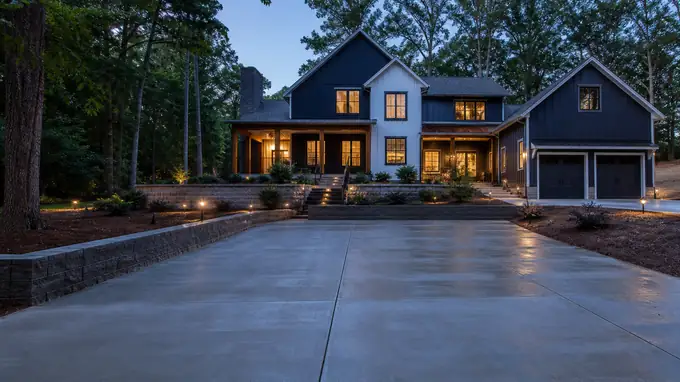
concrete driveway installation completed by a local contractor at a charcoal farmhouse-modern home in Alpharetta, GA, in late afternoon light.

Concrete Driveway Installation

Driveways carry far more weight than patios, so we pour them thicker, over a compacted gravel base, with rebar set on chairs so the steel sits mid-slab instead of lying on the dirt. Control joints go in at spacing matched to the width. With about 50 inches of rain a year, we pitch every driveway to shed water away from the garage and the house. Broom finish is standard. Stamped and exposed aggregate are options.

concrete flooring installation completed by a local contractor at a painted-white-brick two-story home in Alpharetta, GA, in early morning light.

Concrete Flooring Installation

Garage, basement, workshop and addition slabs go down over a heavy poly vapor barrier, so ground moisture stays out of the finish and out of whatever flooring goes on top. We power-trowel for a dense, smooth surface, then saw-cut joints the same day, before the slab picks its own crack lines. The floor can stay plain, get sealed, or be ground and polished. Planning stain or epoxy later? Tell us before the pour.

concrete slab repair completed by a local contractor at a red-brick ranch home in Alpharetta, GA, at blue hour.

Concrete Slab Repair

The median home in Alpharetta was built in 1996, and plenty of original slabs have had years to settle, crack and scale. Before we recommend a fix, we find out why it failed: a washed-out base, a downspout dumping on one corner, tree roots, or no reinforcement at all. Hairline cracks get routed and sealed. Sunken sections can sometimes be lifted. A slab that's broken through, or rocks underfoot, gets cut out and repoured.

What Makes Alpharetta Craftsman Concrete's Concrete Work Different

We treat every patio as its own site, because around Alpharetta it is. Fulton County is hilly, with 241 feet of local relief within a few miles, and the ground shifts from one block to the next. Rion soil is the dominant type here and it drains well, but it varies across the county, so we grade and test each property before a form goes down. Nothing gets poured on assumption.

Water is where most patios go wrong. This area sees about 50 inches of rain a year, so we set the slope, the base and the reinforcement for how runoff actually crosses your yard. The median home here was built in 1996, which means a new slab usually has to meet an older foundation, threshold or step cleanly. We plan those joints first. Then we pour.

How a Concrete Patio Construction Job Runs in Alpharetta

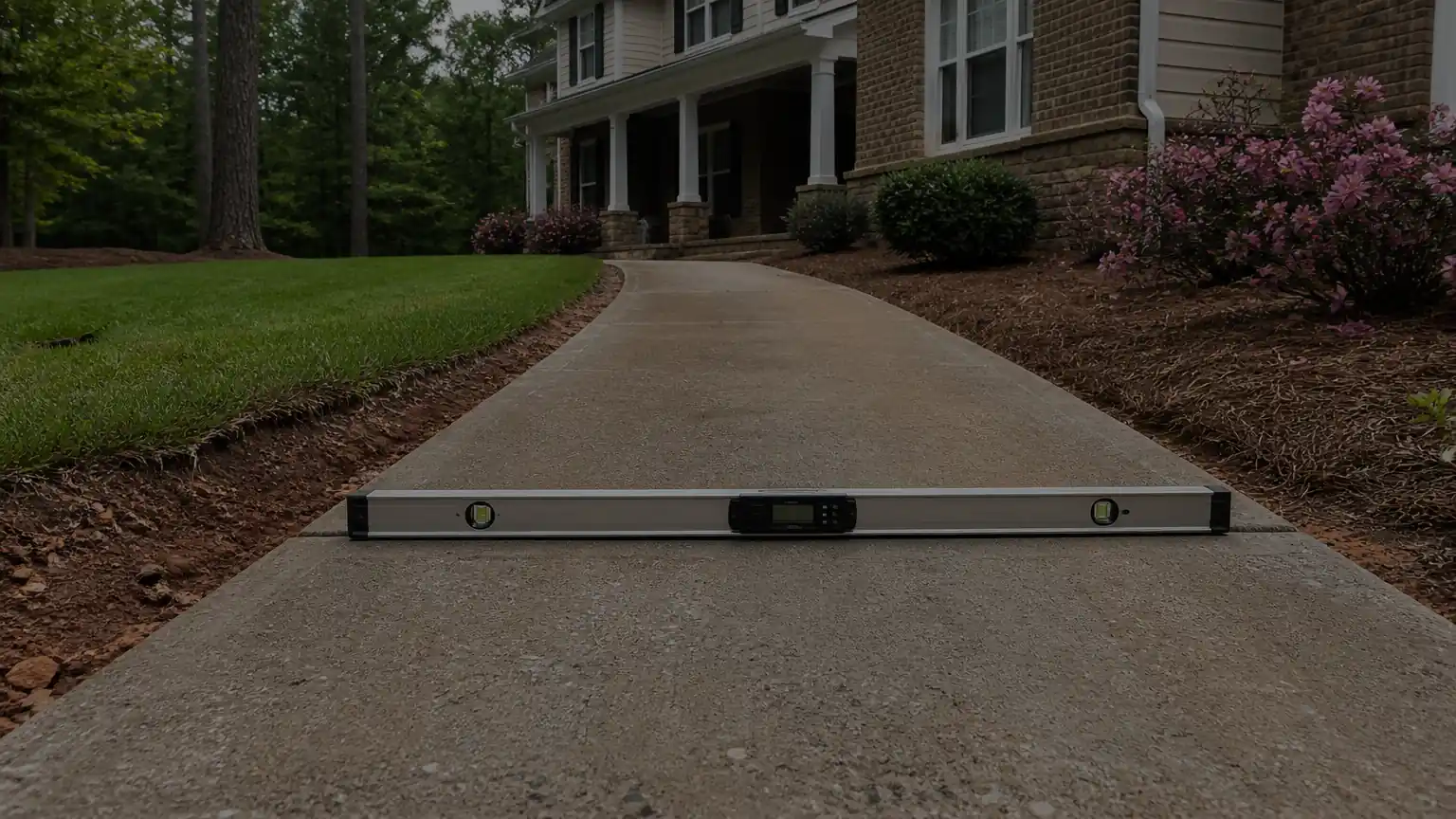
A contractor checks slope and drainage before work begins. at a tan-brick colonial in Alpharetta, GA, after a rain shower.

Step 1: Site Assessment

We walk the yard with a level and a tape before anything else. Fulton County has about 241 feet of local relief within a few miles, and it changes block to block, so one backyard can fall away sharply while the next lot sits flat. We look at where roof water and downspouts drain, how the patio will meet the foundation, and what the soil is doing. Every site gets tested on its own.

A plate compactor tamps down soil in a small excavated area. at a tan-brick colonial in Alpharetta, GA, at blue hour.

Step 2: Site Preparation

Excavation goes deep enough for a compacted gravel base plus the slab, with the grade pitched away from the house. Rion soil is the dominant type here and it drains well, but it varies across the county, so we don't assume. Roots, soft spots and old fill come out. We compact the subgrade, then the stone, in lifts with a plate compactor. Most cracked, settled patios failed here, not in the concrete.

Wooden forms outline a patio slab before the pour. at a painted-white-brick two-story home in Alpharetta, GA, under an overcast sky.

Step 3: Forming & Reinforcement

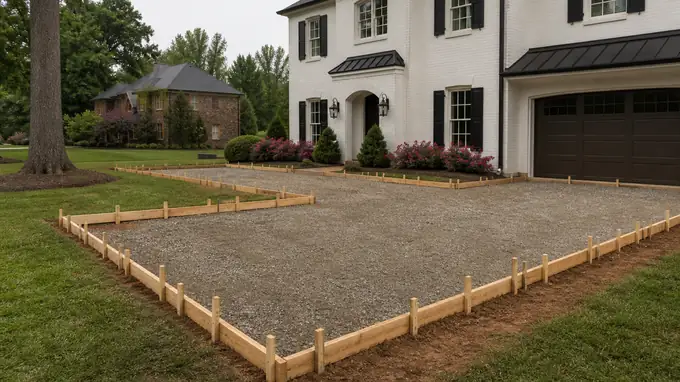
Forms go in on stakes, set to string lines so the surface falls away from the house at a steady slope. With about 50 inches of rain a year, that pitch does more work than any finish. Inside the forms we set rebar on plastic chairs so it sits in the middle of the slab. Steel lying on the gravel does nothing. Edges get thickened, and an isolation joint keeps the patio from binding against the foundation.

A screed board levels fresh concrete on a small patio. at a tan-brick colonial in Alpharetta, GA, in early morning light.

Step 4: Pouring

Ready-mix gets ordered once the forms and steel pass a final check. We place it straight from the chute, or by pump when a truck can't reach the backyard. Nobody adds water at the truck to make it flow easier; that weakens the top layer and leads to dusting and scaling later. The crew spreads the concrete, screeds it off the forms and runs a bull float over it. Once a pour starts, it moves.

Stamping mats are pressed into a patio surface to imprint a pattern. at a grey split-level home in Alpharetta, GA, at blue hour.

Step 5: Finishing

Timing is the whole job. Work the surface while bleed water sits on it and you get a weak skin that flakes off within a few winters. So we wait. Then we edge the perimeter, tool control joints so cracks form where we put them, and apply the finish: broom texture for grip, a smooth trowel under a covered porch, or stamped patterns with color hardener and release. Stamping leaves no room for second tries.

A hand sprayer applies curing compound to a finished patio. at a charcoal farmhouse-modern home in Alpharetta, GA, at blue hour.

Step 6: Curing

Concrete gains strength by holding its water, not by drying out. Right after finishing, we spray a curing compound or lay curing blankets so the top doesn't dry faster than the core. That mismatch causes the fine web of surface cracks called crazing. Average highs sit around 71°F, but a hot afternoon or a hard wind still changes how we protect a fresh slab. Foot traffic waits a while. Furniture and grills wait longer.

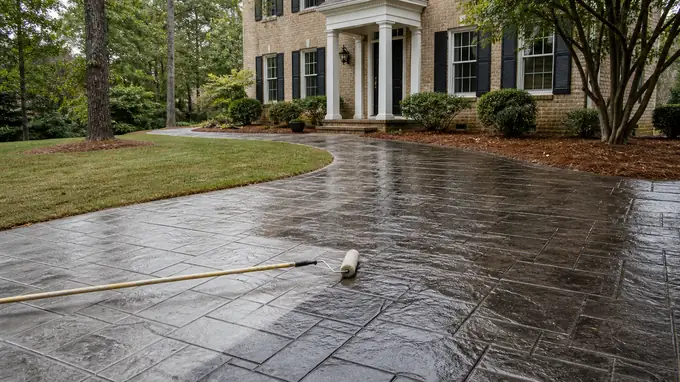
A roller applies sealer to a stamped patio surface. at a tan-brick colonial in Alpharetta, GA, after a rain shower.

Step 7: Sealing

Sealer goes on after the slab has cured and dried, never the week of the pour. On broom-finished patios we usually use a penetrating silane or siloxane sealer, which soaks in, sheds water and keeps the surface's grip. Stamped and colored work gets an acrylic that deepens the color and needs reapplying every few years. Around a pool or under a grill, we talk through which fits better. Either way, the surface gets cleaned first.

Choosing the Right Concrete System

A patio slab comes down to three choices: the finish, the reinforcement, and the base underneath. A broom finish is the plainest and grips best when wet. Stamped and decorative surfaces take color and pattern, and they need a sealer kept up over time. For reinforcement we choose rebar, wire mesh or fiber by the slab's size and load. A hot tub asks far more of it than two chairs.

The ground decides the rest. The land around Alpharetta is hilly, with about 241 feet of relief within a few miles, and it changes from block to block, so a sloped yard may call for a stepped slab instead of one flat pour. Rion soil, which drains well, is the most common type here, but we test each site before choosing a base. With around 50 inches of rain a year, every patio gets a pitch that carries water away from the house.

Frequently Asked Questions About Concrete Patio Construction in Alpharetta

How deep do commercial foundations need to be in Alpharetta?

There is no single depth that holds for every site, so we don't quote one. The right depth comes from the structural drawings, the load the slab or footing has to carry, and what the ground shows when we test it. Rion soil drains well and covers much of Fulton County, but it changes from lot to lot. We grade and test each site before work starts, and we handle the permit.

How does the crew minimize downtime and maintain commercial site safety during active business operations in Alpharetta?

We plan the pour sequence around the business's hours. Larger areas get broken into sections, so part of the property stays open while another part cures. Entrances, parking and delivery routes stay usable wherever the layout allows. Work zones are fenced and clearly marked. Equipment and materials are staged away from foot traffic, and fresh concrete stays taped off until it can take weight. Customers should always see a clear, safe way in.

How does the climate in Alpharetta affect patio longevity and what does your company do to mitigate these effects?

Water is the main thing. The area gets about 50 inches of rain a year, and a patio that holds water or sends it toward the house will not last. We set the slope so runoff clears the slab, compact the base properly, and add reinforcement where the load calls for it. Control joints go where cracks would otherwise pick their own line. Snow is light, about 2 inches a year. Stamped and decorative surfaces get sealed to help them shed water.

Do you only serve Alpharetta, or do you work in surrounding areas too?

No. Alpharetta is only part of the area we cover. We build patios across the surrounding communities, and a homeowner in Roswell gets the same crew, the same materials and the same process as anyone else we work for. The full list of towns is elsewhere on this page, and every one of them is served on the same terms. Ground conditions still change from one neighborhood to the next, so each property is tested and graded on its own.

Should a damaged Alpharetta patio be repaired or replaced?

It depends on what failed. Surface scaling, a few hairline cracks or one settled section can often be repaired. A slab that has cracked through in several places, lifted, or drains toward the house usually needs replacing, because patching only hides the problem for a while. With the median home here built in 1996, many patios are old enough that the base deserves a look first. We check what's underneath, and the answer comes from that.

What are the warranty or guarantee terms for services provided by Alpharetta Craftsman Concrete?

We don't list warranty or guarantee terms on this page. Ask about them directly when you call for a free estimate, and get any terms in writing before work is scheduled. That's good practice with any contractor you talk to. What we can describe here is the work itself: tested ground, a properly compacted base, reinforcement sized to the load, joints placed with intent, and a slope that moves water off the patio and away from the house.

Get a Free Estimate

Get a FREE Quote

Tap to call +1 470-260-7028