+1 470-260-7028
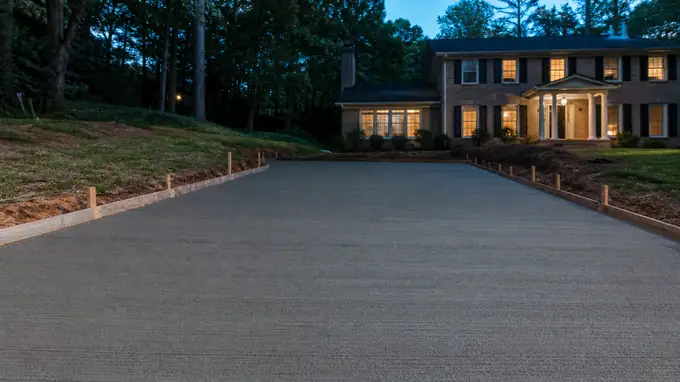
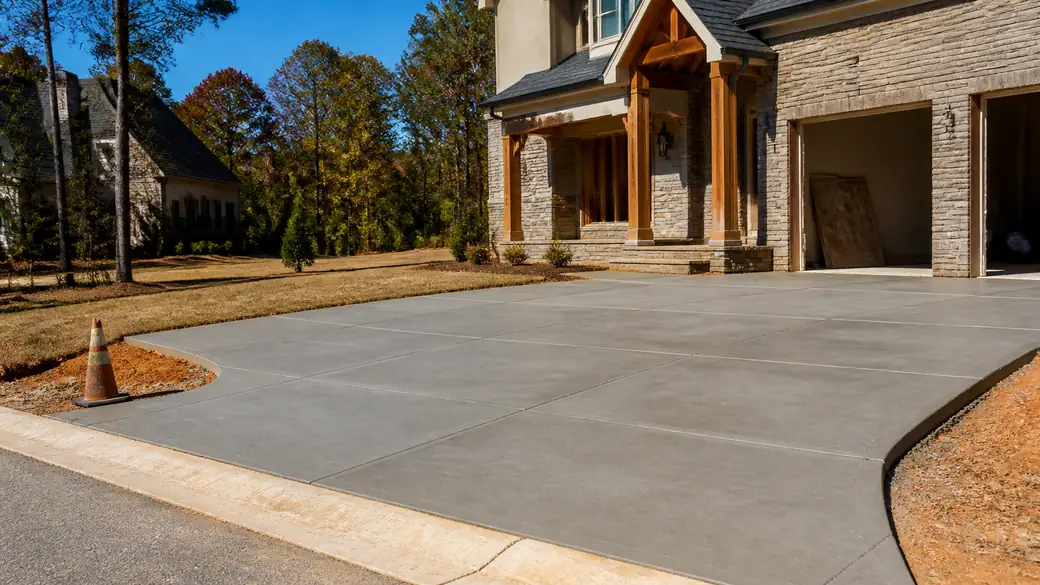
concrete slab installation completed by a local contractor at a stacked-stone and stucco home in Alpharetta, GA, in clear late-morning sun.

Concrete Slab Installation Cost in Alpharetta, GA

A concrete slab is the flat, reinforced surface that everything else sits on: a garage floor, a patio, a shed pad, the base for an addition. What one costs in Alpharetta depends less on square footage than on what sits under it and around it. The median home here was built in 1996, so many of the slabs we look at are close to thirty years old. Replacing one means breaking out and hauling off the old concrete before any new work begins, and that belongs in the number from the start.

Every site gets graded and tested before we set a form. The area is hilly, with about 241 feet of local relief within a few miles, and that changes from one block to the next. A lot on a slope needs more cut, more fill and more compaction than a flat one does. Rion soil, the dominant type in the county, drains well, but it varies too. So we check what is actually under your yard instead of assuming. The base depth, the reinforcement and the slab thickness all follow from what we find.

Water is where slabs fail. This area sees about 50 inches of rain a year, and a slab poured without proper slope or a sound base will settle, crack and hold puddles against your foundation. Doing it right takes more up front: more base stone, steel placed where it belongs, and time spent on grade before the truck arrives. Skipping those steps buys a tear-out later. We would rather quote the slab that lasts. Call for a free estimate. We measure on site and tell you plainly what the job needs.

Call +1 470-260-7028

Get a FREE Quote

Our Concrete Slab Installation Cost Work in Alpharetta

Concrete Slab Installation Cost

What moves the number on a slab is mostly what sits under it and around it. A four-inch slab on a flat, well-drained pad is simple work. Add a grade change and we are cutting, filling and compacting before any forms go up. Fulton County is hilly, with 241 feet of relief within a few miles, so we grade and test each site on its own. Thickness, rebar or wire mesh, and finish all show up on the estimate.


concrete driveway installation completed by a local contractor at a charcoal farmhouse-modern home in Alpharetta, GA, in late afternoon light.

Concrete Driveway Installation

A driveway here sees about 50 inches of rain a year, so drainage decides how long it lasts. We set a steady pitch away from the garage, compact a crushed stone base, and pour five inches of concrete with rebar where vehicles turn. Control joints are spaced to the slab width so cracks land where we want them. A broom finish is standard, and stamped or decorative borders are available on any driveway.

concrete flooring installation completed by a local contractor at a painted-white-brick two-story home in Alpharetta, GA, in early morning light.

Concrete Flooring Installation

Basements, garages and shop floors all start the same way: a vapor barrier under the slab so ground moisture does not wick up into finishes or coatings. Then we pour, power trowel to a hard, tight surface and saw-cut joints early, before shrinkage cracks pick their own path. The median home here was built in 1996, so a lot of our floors go into existing foundations. Sealed, stained and polished finishes are all options.

concrete slab repair completed by a local contractor at a red-brick ranch home in Alpharetta, GA, at blue hour.

Concrete Slab Repair

Cracks, sunken sections and flaking surfaces each point to a different cause, and we find the cause before we fix anything. A settled patio slab usually means the base washed out or was never compacted. Surface flaking often comes from finishing while bleed water was still up. Depending on what we find, we rout and seal cracks, resurface the slab, or cut out the failed section and pour it back with dowels tying new concrete to old.

What Makes Alpharetta Craftsman Concrete's Concrete Work Different

Most of the difference is in what happens before the truck shows up. Fulton County is hilly, with about 241 feet of local relief within a few miles, and that changes from one block to the next. Rion soil is the dominant type here and it drains well, but it varies across the county too. So we grade and test every site on its own before we set a single form. A driveway on a slope and a patio on a flat lot are not the same slab.

Water is the other thing we plan around. This area gets about 50 inches of rain a year, and a slab that sheds it the wrong way sends it toward a foundation or across a walk. We set the pitch before the pour, not after. Reinforcement is matched to what the slab has to carry: a residential patio, a stamped decorative surface, or a driveway that takes a loaded truck. Materials and thickness follow the conditions we found on your property, not a standard sheet.

The median home here was built in 1996, so much of what we pull out is original concrete: slabs that have settled, cracked at the joints or tipped back toward the house. The quick fix is a thin overlay on top. We don't do that over a failed base, because the new surface follows the old one down. Breaking out the old slab and rebuilding what sits under it takes more time on site. It is also the only way the project doesn't need doing again.

How a Concrete Slab Installation Cost Job Runs in Alpharetta

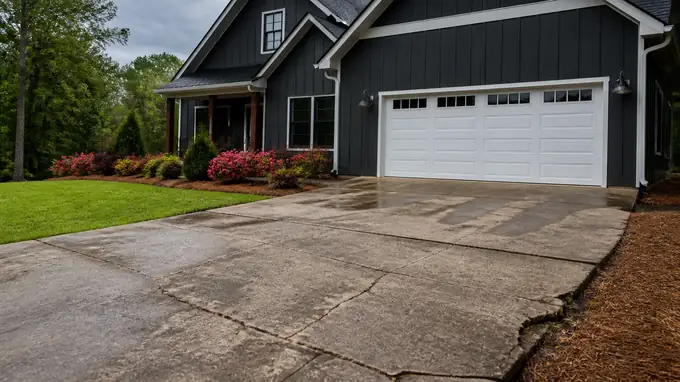
A worker examines an old driveway before replacement. at a charcoal farmhouse-modern home in Alpharetta, GA, after a rain shower.

Step 1: Site Assessment

We walk the property before anything else happens. Fulton County is hilly, with 241 feet of local relief within a few miles, so we check how the ground falls across the slab area, where roof water lands, and whether trees or buried lines sit close. Rion soil is common here and drains well, but it changes from block to block. Every site gets tested on its own, and we note what the slab has to carry.

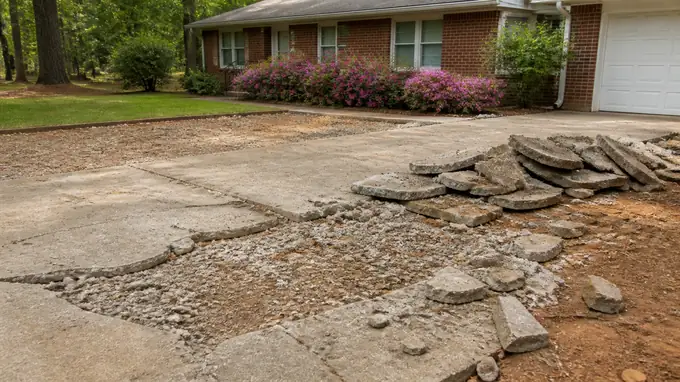
An old patio slab is broken up and hauled away. at a red-brick ranch home in Alpharetta, GA, under bright midday cloud.

Step 2: Site Preparation

Sod and topsoil come off first, down to firm subgrade. Anything organic left under a slab rots, settles, and takes the concrete down with it. We compact the subgrade, spread a crushed stone base, and compact that too with a plate compactor. On a sloped lot we cut and fill to get a level pad. With about 50 inches of rain a year, we set grade so water runs away from the house, not toward it.

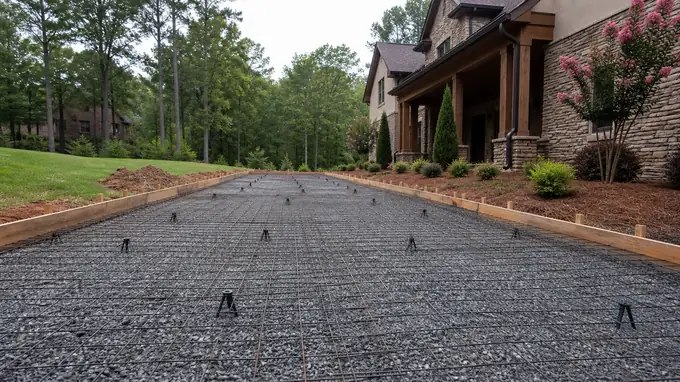
Wire mesh is unrolled across a driveway base before pouring. at a stacked-stone and stucco home in Alpharetta, GA, under an overcast sky.

Step 3: Forming & Reinforcement

Forms go up next: straight lumber, staked tight and set to string lines so the finished surface drains the way we planned it. A patio slab is typically four inches thick. A driveway or garage floor runs thicker. Inside the forms we set rebar on plastic chairs so the steel sits in the middle of the slab, where it does its job. Expansion joint material separates the new concrete from foundations, steps and old slabs.

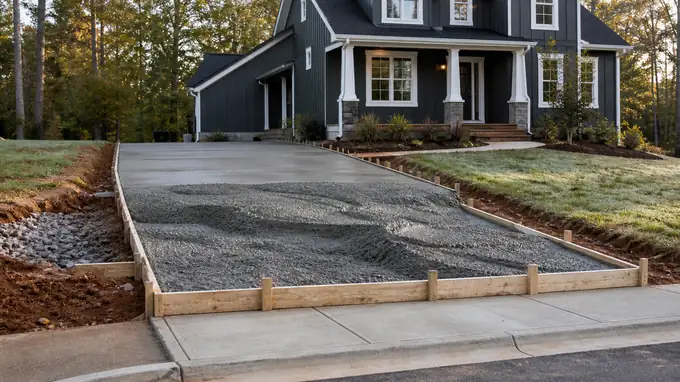
A ready-mix truck discharges concrete into a driveway form. at a charcoal farmhouse-modern home in Alpharetta, GA, in early morning light.

Step 4: Pouring

Ready-mix arrives by truck, and from then on the work doesn't stop. We place concrete from the far corner back toward the chute and never add water on site to make it spread easier. Extra water gives you a weak, dusty surface that flakes. The crew rakes it into every corner, screeds it flat off the forms, and tamps the edges so there are no voids. If rain is forecast, we move the pour.

A broom drags across a driveway creating a slip-resistant texture. at a tan-brick colonial in Alpharetta, GA, at blue hour.

Step 5: Finishing

Timing matters more here than anywhere else. We wait for the bleed water to leave the surface, then bull float, edge, and cut control joints. Work it too early and water gets trapped under the top, which flakes off later. Joints are spaced so the slab cracks where we choose. A broom finish gives grip on driveways and walks. Stamped and decorative finishes, with color and texture, get pressed in while the concrete is still workable.

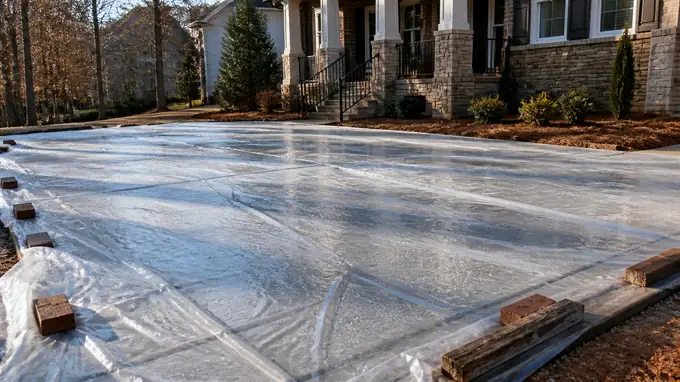
Plastic sheeting covers a curing driveway slab. at a brick-and-siding two-story home in Alpharetta, GA, under low winter sun.

Step 6: Curing

Concrete keeps gaining strength for weeks after the pour, and the first few days decide how well it holds up. We spray a curing compound or keep the slab covered and damp so the surface doesn't dry faster than the core. When it does, you get fine surface cracking and dust. Foot traffic can usually go on after a day or two. Vehicles stay off longer, and we'll tell you when the driveway is ready.

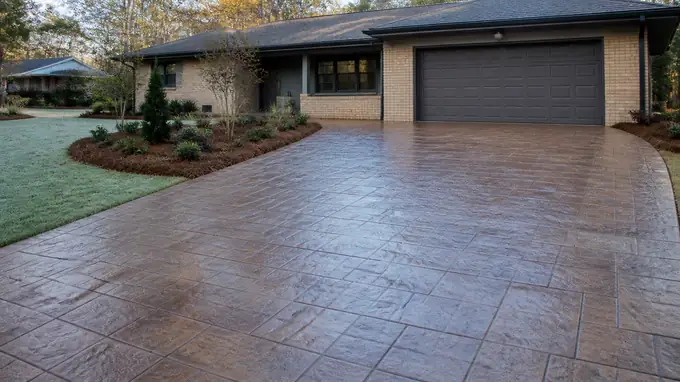
A finished stamped surface shows a glossy sealed sheen. at a buff-brick ranch home in Alpharetta, GA, in early morning light.

Step 7: Sealing

Sealer goes on after the slab has cured, not before. A penetrating or acrylic sealer slows water from getting into the concrete, which counts for a lot with 50 inches of rain a year, and keeps oil and leaf stains from soaking into a driveway. Stamped and colored concrete needs it most, since sealer deepens the color and protects the pattern. Resealing every few years keeps it working. We tell you which product we used so the next coat matches.

Concrete Slab Installation Cost Pricing in Alpharetta, GA

We price a slab after we have walked the property, not before. Two slabs the same size can land far apart once you see what sits under them, what surrounds them, and what they have to carry. Most of what moves the number is something you can check yourself this afternoon.

What changes the priceWhich wayWhy
An old slab, patio or driveway where the new one goescosts moreIt has to be broken out, loaded and hauled off before any forming starts.
No room for the truck to reach the formscosts moreConcrete then moves by pump or wheelbarrow, which adds equipment or labor to the pour.
Slope across the padcosts moreFulton County is hilly and grade changes lot to lot, so a sloped pad needs fill, taller forms and more compaction.
Parking a vehicle or a structure on the slabcosts moreThat load calls for a thicker slab and rebar in place of wire mesh.
Water that stands where the slab will sitcosts moreThe base and drainage get corrected first, or the slab settles and cracks later.
Roots, stumps or buried lines in the footprintcosts moreThey are located, dug out or worked around before the base goes down.
A stamped or decorative surfacecosts moreColor, pattern work and sealer add materials and finishing time.
An open, level spot the truck can back up tocosts lessLess prep, less handling, and a shorter day for the crew.

When you hold two bids side by side, look past the total. Check the slab thickness each one quotes, the reinforcement and its spacing, and how deep the gravel base runs. See whether removal, haul-off and the permit are written in or left out. A lower number often means one of those lines quietly went missing.

Get a Free Estimate

Get a FREE Quote

Tap to call +1 470-260-7028