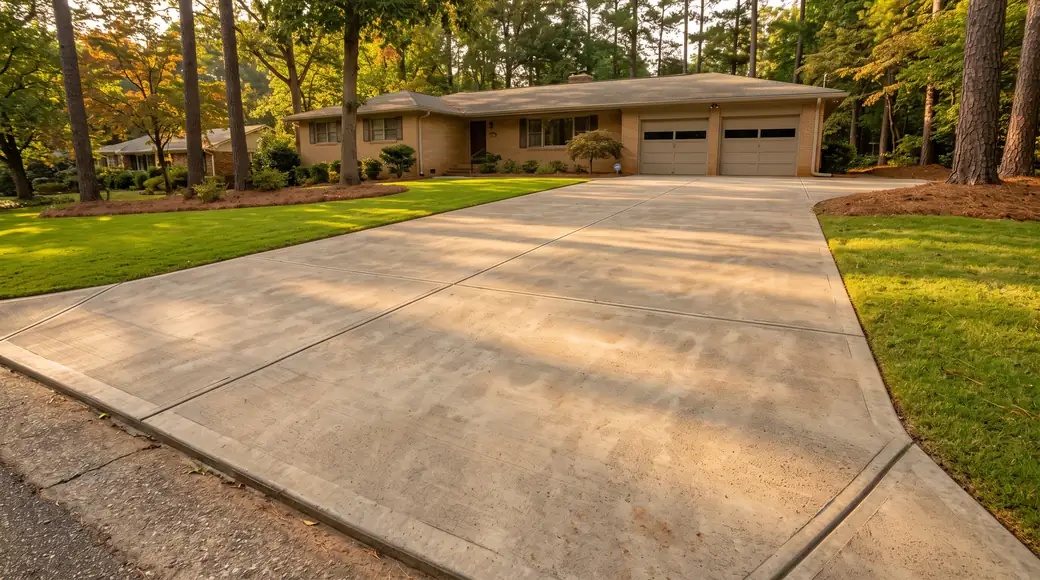
A driveway takes more load, more often, than any other concrete on a residential property. It carries cars every day, delivery trucks, the occasional moving van, and it does all of that through about 50 inches of rain a year. Around Alpharetta the median home was built in 1996, so many of the driveways we see are the originals, and they show it: panels that have settled, cracks running out from the garage apron, edges broken off where tires cut the corner. We tear those out and pour new ones. We also build driveways from bare ground on new construction.
The work starts below the surface. The county is hilly, with 241 feet of local relief within a few miles, and that changes from block to block, so we grade and test every site on its own before anything is formed. Rion soil is the dominant type here and it drains well, but it varies, and we check what is actually under your driveway instead of assuming. Then the base goes in: compacted stone, sloped to move water off the slab and away from the house. We handle the permit, set the forms and reinforcement, then pour, finish and cut control joints.
Most driveway failures come from things nobody can see once the concrete is down. A soft spot left in the subgrade. A base that was never properly compacted. A slope that sends water back toward the garage, or joints cut too late, so the slab cracks where it wants to instead of where it should. Rain finds every one of those. Getting it right is mostly patience, and we would rather spend the extra time on the ground than pour over a problem. If your driveway is cracking, sinking or holding water, or you are building new, call for a free estimate.